Decoding DTCs
DTCs or Detected Trouble Codes, vary from
vehicle to vehicle. The DTC for vehicles that
use J1939 and J1708 protocols are made up of
two parts; an Error Code ID and a Failure Mode
ID. The two parts combine to form the DTC.
Error Code ID (ID)
The Error Code number indicates the system
or component that has reported the problem.
There are hundreds of possible error codes,
so finding information about your specific
code can be a challenge. An excellent way to
determine the system or component the Error
Code refers to is to use a good search engine
on the Internet.
Use the Error Codes along with the model and
year of your vehicle as the search words. You
can add your engine type to narrow the search.
Failure Mode ID (FM)
The Failure Mode ID (FM) indicates the nature
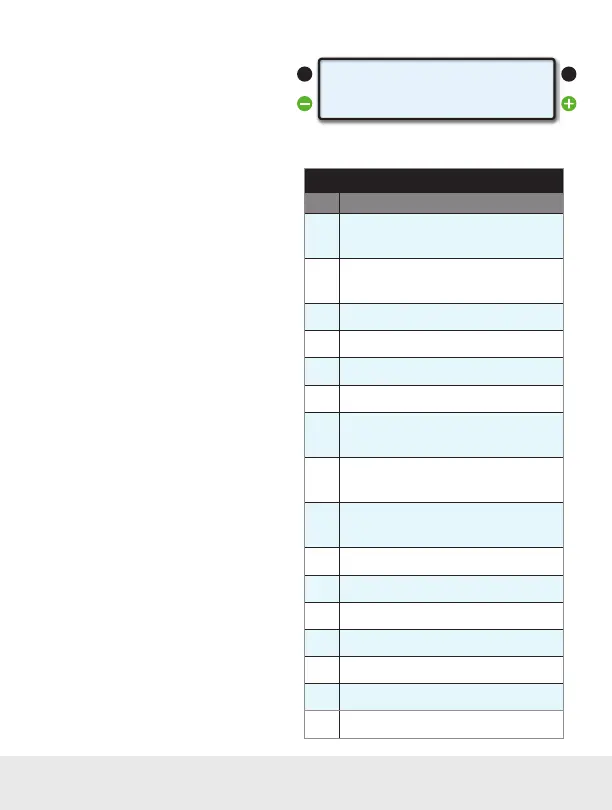
of problem that was detected. The table to the
right lists the standard Failure Mode IDs.
Example DTC Code
The code shown in the example screen to the
upper right - “100 1” would indicate:
Low Oil Pressure
ID 100 = Oil Pressure
FM 1 = Data valid but below normal
operating range
Failure Mode IDs
ID Description
0 Data valid but above normal
operational range
1 Data valid but below normal
operational range
2 Data erratic, intermittent or incorrect
3 Voltage above normal or shorted high
4 Voltage below normal or shorted low
5 Current below normal or open circuit
6 Current above normal or grounded
circuit
7 Mechanical system not responding
properly
8 Abnormal frequency, pulse width,
or period
9 Abnormal update rate
10 Abnormal rate of change
11 Failure mode not identifiable
12 Bad intelligent device or component
13 Out of calibration
14 Special Instructions
15 Reserved for future assignment
ID
100
FM
1
#
<1
CNT
42>
The above example indicates low oil pressure.
38 — www.ScanGauge.com


 To Next Page