EasyManua.ls Logo

Miller CST 280 - User Manual

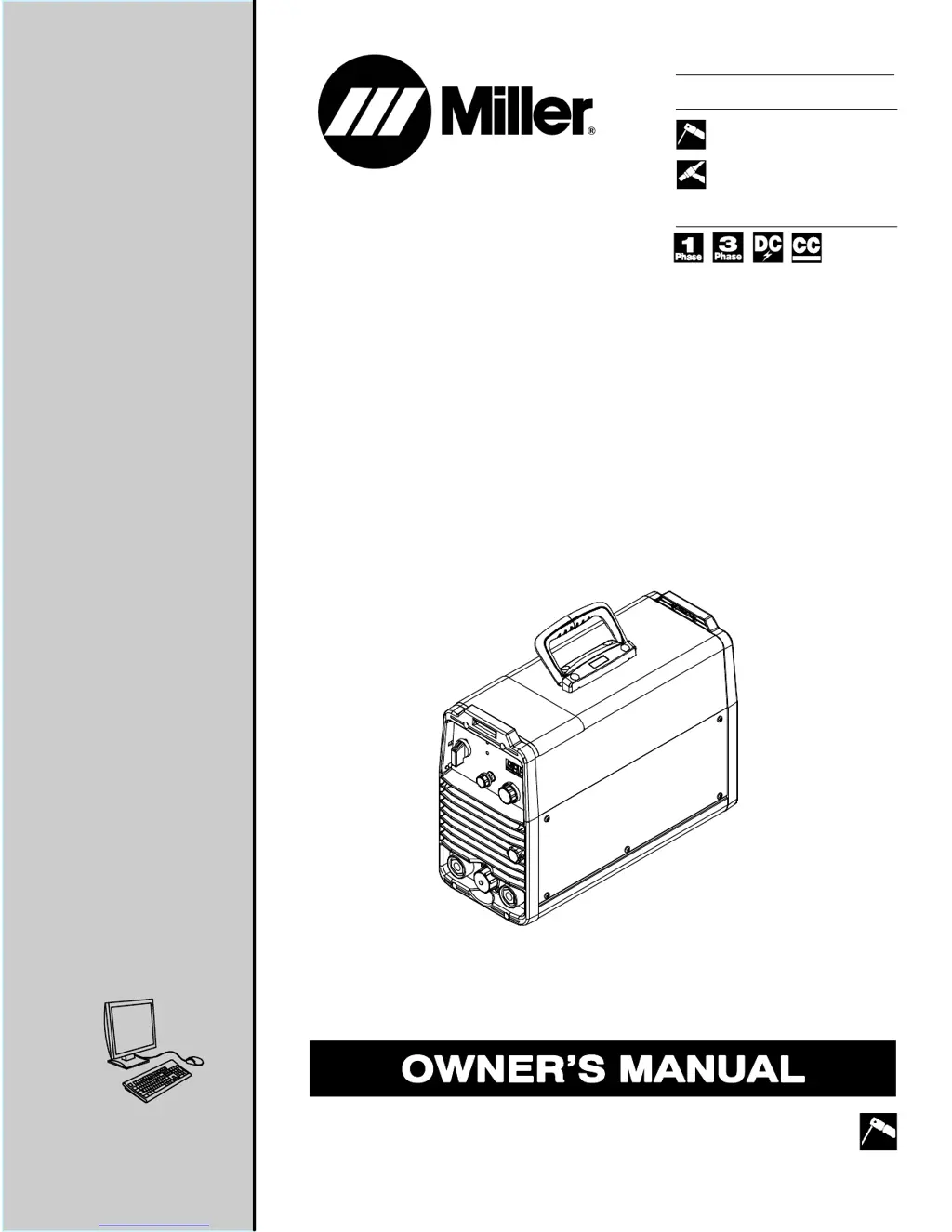
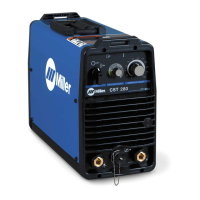
Miller CST 280
56 pages
Print Icon
To Next Page IconTo Next Page
Loading...
Processes
Description
Stick (SMAW) Welding
OM-258 035F 201508
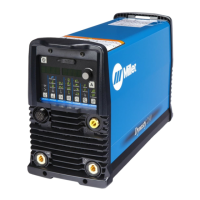
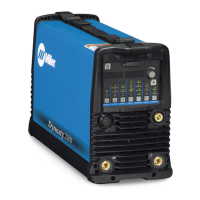
Arc Welding Power Source
CST 280 And CST 280 VRD
With Meter
TIG (GTAW) Welding
File: Stick (SMAW)
Visit our website at
www.MillerWelds.com

Table of Contents

Questions and Answers

  • H
    Hannah ShawSep 8, 2025
    What to do if my Miller CST 280 has no weld output due to voltage loss?
    • C
      Christina EvansSep 8, 2025
      If your Miller Welding System has no weld output, it might be due to a voltage loss. Check the Vfb leads to ensure they are properly wired and connected.
  • E
    Elizabeth MartinezSep 7, 2025
    Why is my Miller CST 280 overheating?
    • T
      Timothy RileySep 7, 2025
      If the Miller Welding System is overheating, allow the unit to cool down. Then, retorque PPM1, PPM2, and PPM3 mounting hardware to 25 in lbs (2.8 N·m). This may be caused by the primary (IGBT) thermistor being over temperature.
  • G
    Gregory WhitakerAug 22, 2025
    What to do if my Miller CST 280 has no weld output?
    • R
      Randall HeathAug 22, 2025
      If your Miller Welding System has no weld output, several factors could be at play. First, ensure the line disconnect switch is in the 'on' position. Secondly, verify that all input connections are correctly configured. Lastly, check the Voltage Selection Switch position to ensure it matches the input voltage. If the unit was turned on with the incorrect voltage, overheating of PTC1 and PTC2 on PC2 may have occurred. In that case, turn off the welding power source, open the rear switch cover, adjust the Voltage Selection Switch to the correct input voltage, and allow a 10-minute cooling period before restarting.
  • M
    Mark ChambersSep 4, 2025
    Why is the tungsten electrode oxidizing on my Miller CST 280?
    • T
      Troy ContrerasSep 4, 2025
      If the tungsten electrode on your Miller Welding System is oxidizing and not remaining bright after welding, it could be because gas is being blown away from the weld zone, so shield the weld zone from drafts. Another reason could be inadequate postflow time; allow adequate postflow time to shield the tungsten while it is cooling after welding stops. Loose or leaking gas fittings could also be the cause, so check and tighten all gas fittings. Finally, water in the torch could be the problem.
  • J
    Joseph ColemanSep 3, 2025
    Why is the arc wandering on my Miller CST 280?
    • C
      Cristina DavisSep 3, 2025
      If you're experiencing a wandering arc with your Miller Welding System, it could be due to using an improper size of tungsten. Make sure you are using the proper size tungsten. It could also be due to worn or defective tungsten; use properly prepared tungsten. Another potential cause is a gas flow that is too high, so reduce the gas flow rate.
  • B
    bwilsonSep 1, 2025
    How to check for thermistor failure in a Miller Welding System with no weld output?
    • M
      Miss Holly JonesSep 2, 2025
      If your Miller Welding System has no weld output, a thermistor failure could be the cause. Check the IGBT PM1 and PM2 thermistors on PC2 for shorts. Also, check the IGBT PM1 and PM2 thermistors on PC2 and associated wiring for opens. Additionally, check the thermistor on the output heatsink and associated wiring for opens and shorts.
  • E
    eric86Aug 31, 2025
    What to do if my Miller Welding System overheats and has no weld output?
    • B
      Beth SmithAug 31, 2025
      If your Miller Welding System has no weld output and you suspect it overheated, allow the unit to cool down completely. Once cooled, retorque the PM1, PM2, and PM3 mounting hardware to 25 in lbs (2.8 N m).
  • J
    Jesse CervantesAug 30, 2025
    What to do if my Miller Welding System has no weld output when using a remote trigger?
    • S
      Shannon AliAug 30, 2025
      If your Miller Welding System has no weld output and you're using a remote trigger, the trigger may have been left on. Remove the trigger, wait about 5 seconds, and then restart the system.
  • T
    Tracy MoralesAug 28, 2025
    How to troubleshoot erratic weld output on a Miller Welding System?
    • M
      Mrs. Robin Leon DDSAug 29, 2025
      If your Miller Welding System is producing erratic or improper weld output, start by ensuring you are using the proper size and type of weld cables. Also, make sure to clean and tighten all weld cable connections.
  • E
    evansdanielAug 27, 2025
    Why does the fan cycle on and off on my Miller CST 280 Welding System?
    • M
      Mark RiosAug 27, 2025
      If the fan in your Miller Welding System cycles on and off, it could be due to an over-voltage condition. Check the primary voltage and the Voltage Selection switch. Alternatively, the voltage sense circuit on PC2 may be faulty, requiring PC2 to be replaced.

Summary

SECTION 1 - SAFETY PRECAUTIONS - READ BEFORE USING

Symbol Usage

Explains symbols for hazards, warnings, and notices.

Specific Welding Hazards

Details specific risks like fumes, arc rays, fire, explosion, EMF, noise, and cylinders.

Arc Welding Hazards

Introduces general hazards associated with arc welding processes.

SECTION 3 - DEFINITIONS

Additional Safety Symbols and Definitions

Explains safety symbols and their meaning.

SECTION 4 - SPECIFICATIONS

Duty Cycle And Overheating

Explains duty cycle percentages and consequences of overheating.

SECTION 5 - INSTALLATION

Weld Output Terminals And Selecting Cable Sizes

Details how to select appropriate weld cable sizes based on amperage and cable length.

Selecting 208 - 230 Volts AC Single;Three Phase Input Voltage

Guides on how to select the correct input voltage for the unit.

Electrical Service Guide

Provides recommendations for electrical service, circuit protection, and conductor sizing.

Connecting 1-Phase Input Power

Details the steps and components for connecting 1-phase input power.

Connecting 1-Phase Input Power (Continued)

Provides further instructions for connecting 1-phase input power and safety notes.

Connecting 3-Phase Input Power

Details the steps and components for connecting 3-phase input power.

Connecting 3-Phase Input Power (Continued)

Provides further instructions for connecting 3-phase input power and safety notes.

SECTION 6 - OPERATION

Controls

Identifies and explains the function of various controls on the unit.

Process Select Control

Explains how to select different welding processes and electrode types.

SECTION 7 - MAINTENANCE AND TROUBLESHOOTING

Troubleshooting

Details common problems, possible causes, and remedies based on LED flash codes.

Troubleshooting (Continued)

Provides further troubleshooting information for various error codes and conditions.

SECTION 9 - SELECTING AND PREPARING A TUNGSTEN FOR DC OR AC WELDING WITH INVERTER MACHINES

SECTION 10 - GUIDELINES FOR TIG WELDING (GTAW)

Warranty

Miller CST 280 Specifications

General IconGeneral
Amperage Range5-280 A
Input Frequency50/60 Hz
ProcessStick (SMAW)
Rated Output280 A
Input Voltage208 V / 230 V / 460 V / 575 V

Related product manuals