48
HOW TO USE A BELT TENSION GAUGE
Before adjusting the belt tension:
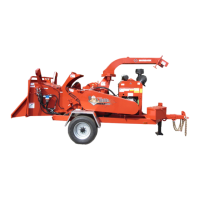
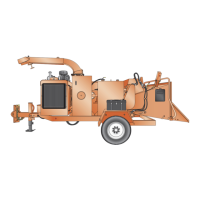
1� Throttle engine down to an idle and disengage the clutch. (This is shown in gure 1 for a electric clutch. If your machine
has a mechanical clutch you will need to manual disengage your clutch with the handle.)
2� Shut off the engine, remove the key.
DANGER/CUT and PINCH HAZARD: Shut power unit off and install lockout devices before any maintenance is
performed�
3� Remove the belt guard.
4� If maintenance is required, loosen the engine bolts, remove the belt, and x before setting belt tension.
5� Inspect and/or repair the following:
• Grease and oil on the belt: Grease and oil on a belt will cause rapid deterioration. Clean oil and grease from the
sheaves, wipe the belt with a clean cloth
• Burrs and rust in the sheave grooves: Remove burrs and rust
• Wear, damage, and misalignment of the sheaves and sprockets. Replace if excessively worn, frayed or soft
• Belt clearance and shaft misalignment: Adjust belt guard and shaft
Use a V-Belt tension gauge to set the belt tension by following these steps:
NOTE: Always install the same type of belt when installing new belts.
6� Measure belt span (see gure 1).
7� Position large O - ring on the tester scale at this measured length (see gure 2).
8� Slide the small O - ring ush with the barrel of the tester (see gure 3).
9� Place the large end of the tester on one belt, at the center of the span. Apply a sufcient force to tester to deect the
belt so that the large O - ring is ush with the other belts. If this is a single belt drive, use a straight edge as a reference.
10� Read the deection force from the position of the small O - ring on the plunger.
11� Compare this force with the value given (see table 1).
12� If the force is below the recommended value, increase the drive center distance to provide greater belt tension.
Reduce the center distance if there is too much force.
ROUTINE MAINTENANCE



 To Next Page