MT 48 | 7
Digital I/O
In addition, the MT 48 may be expanded via ADAT / S/PDIF optical and AES67
• ADAT allows for adding up to eight input and output channels via dedicated converters.
ADAT channel count depends on the sampling rate used: 8 channels up to 48 kHz, 4 channels
up to 96 kHz and 2 channels up to 192 kHz. The optical connectors can also be used in S/
PDIF mode for stereo I/O up to 96 kHz.
• AES67 is an open standard in networked audio, which has been embraced by the broadcast
market and is now gaining traction in the world of recording as well. AES67 supports high
channel counts even at double and quad sampling rates. The AES67 port is bidirectional, so
input and output devices can be connected to the MT 48 at the same time using a standard
ethernet switch.
GPIO/MIDI
• These two TRS connectors can be used in GPIO mode for switching, e.g. connecting a foot-
switch or remote switching a recording light indicator. Or you can use them in MIDI mode as
MIDI in and out, using TRS to DIN5 adapter cables (sold separately).
Powering
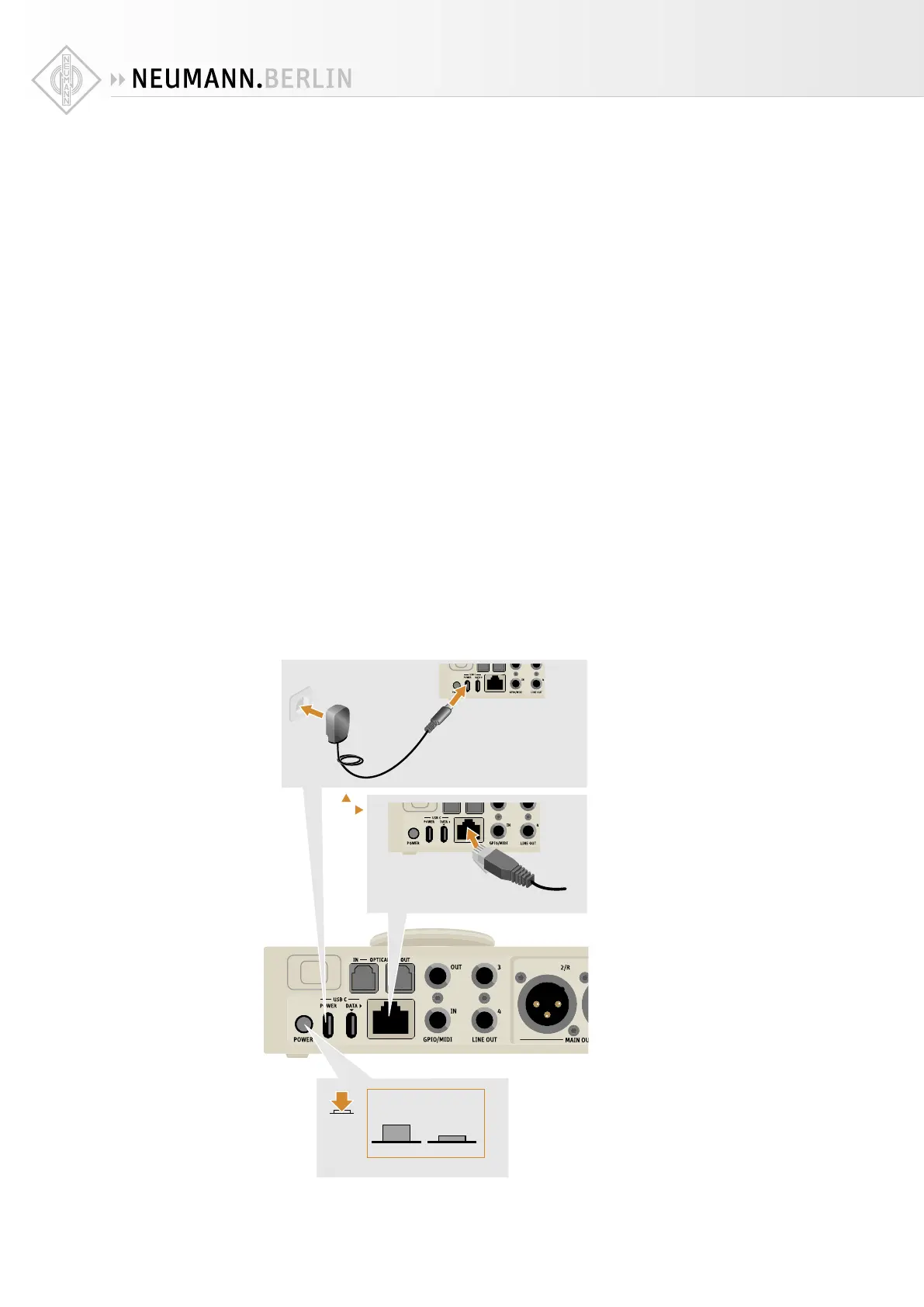
• Please use the included power supply and connect it to the USB-C port labeled POWER using
one of the cables provided.
• Alternatively, the MT 48 also works via Power over Ethernet with switches that support the
PoE+ standard.
• Switch the device on/o using the power button.
OR
Power over Ethernet
OFF ON


 To Next Page