28
6. EXPOSURE CONTROLS, PERSONAL PROTECTION
Respiratory Protection:
• In case of battery venting, providing as much ventilation as possible. Avoid confined areas with venting batteries.
• Respiratory Protection is not necessary under conditions of normal use.
Ventilation:
• Not necessary under conditions of normal use.
Protective Gloves:
• Not necessary under conditions of normal use.
Other Protective Clothing or Equipment:
• Not necessary under conditions of normal use.
• Personal Protection is recommended for venting batteries: Respiratory Protection, Protective Gloves, Protective Clothing and
safety glass with side shields.
Temperature Range Table
CHARGING 5°C~35°C
DISCHARGING -10°C~35°C
STORAGE OPTIMUM 15°C~25°C
STORAGE LIMIT -10°C~40°C
8. DO
• Use NUMATIC batteries only with NUMATIC appliances and charge them only using NUMATIC chargers.
• Charge battery before use.
• Store the battery out of the reach of children.
• Protect from rain – do not immerse in fluids.
• Protect from direct sunlight, heat, and open flames.
• Keep a battery that is not in use away from metal objects, (e.g. nails, coins, jewellery).
• Follow the disposal advice of the manufacturer and any internal waste management guidance.
• Use and store the battery with-in temperature range (as shown in Temperature Range Table).
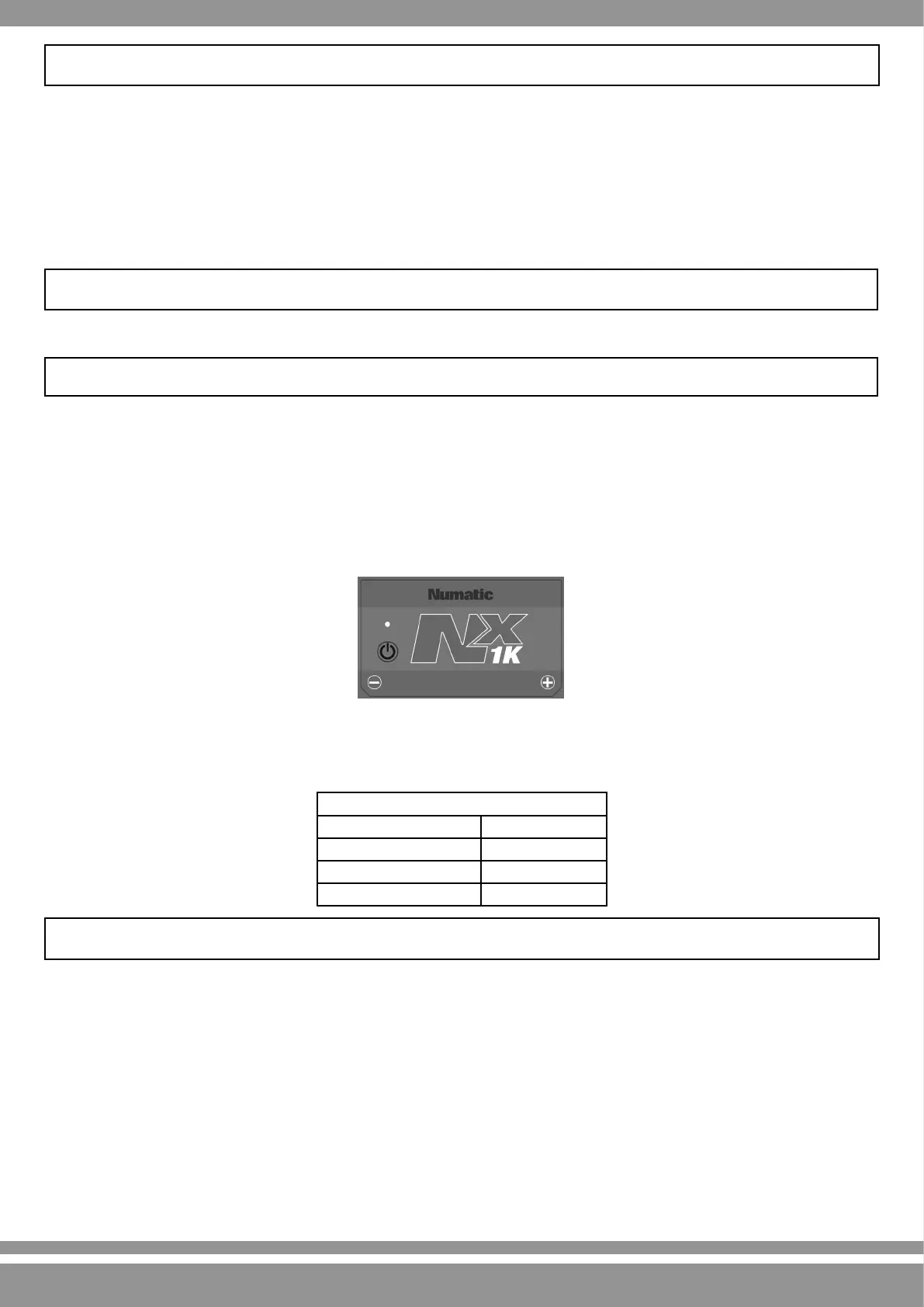
• Always switch off the battery using the button by holding it for 6 seconds, before disconnection and handling.
• To activate / turn ON the battery please hold the top button for 6 seconds or alternatively charge the battery using original
Numatic specific chargers.
Warning: The battery must only be charged by the Numatic Charger supplied with the product and under NO circumstances should an
alternative non Numatic charger be used as there is a risk of severe damage and fire could result.
Note* “If batteries are subjected to temperatures beyond normal operating limits automatic shutdown will occur. Under these conditions
allow the batteries to acclimatise at room temperature (18
0
C – 22
0
C) for several hours
to allow the battery to wake up”.
9. DO NOT
• Throw battery into fire – risk of explosion!
• Charge or use a defective, damaged or deformed battery.
• Open, damage or drop the battery.
• Expose the battery to microwaves or high pressure.
• Bridge (short circuit) the battery terminals with metallic objects since this may damage the battery.
• Use metal containers for transporting batteries.
• Expose the batteries to high temperatures including direct sunlight.
• Crush, break open or physically abuse the batteries or the equipment that contains them.
7. ACCIDENTAL RELEASE
Disposal – Wear protective clothing and equipment, wipe up with absorbent textile and dispose of as hazardous waste at collection
points for hazardous waste according to national regulations.





 To Next Page