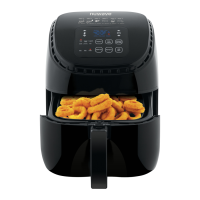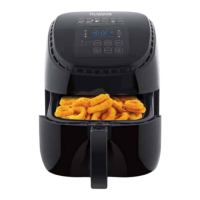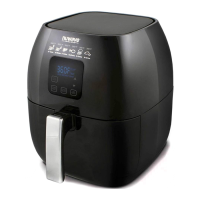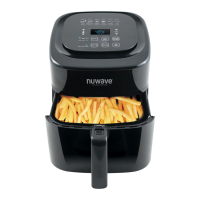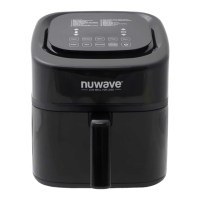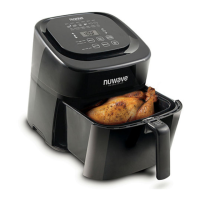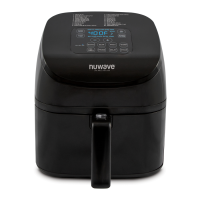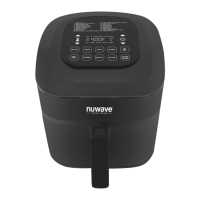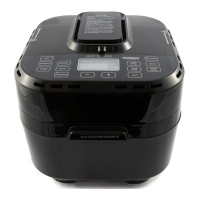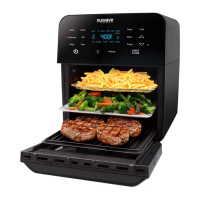
What to do if my NuWave Brio 38020 is not turning on?
- GgonzalezmichaelAug 5, 2025
First, ensure that the plug is inserted into an appropriate grounded power socket. If it is already plugged in, press the Power button to turn on the Fryer.
What to do if my NuWave Brio 38020 is not turning on?
First, ensure that the plug is inserted into an appropriate grounded power socket. If it is already plugged in, press the Power button to turn on the Fryer.
Why are my French fries not crispy in the NuWave Brio 38020?
The crispiness of the fries depends on the amount of oil and water in them. Make sure you dry the potato sticks properly before adding oil. You can also cut the potato sticks smaller and dry them for a crispier result, or put slightly more oil on the potatoes before placing them in the Fryer for crispier results.
Why are my ingredients not completely cooked in the NuWave Brio 38020?
There could be a few reasons why your ingredients aren't fully cooked. You may have used too many ingredients—smaller batches air-fry more evenly. The cooking temperature might be too low, so try cooking at a higher temperature. Or, the cooking time might be too short; set the Fryer to air-fry for a longer time.
Why are my French fries fried unevenly in the NuWave Fryer?
Unevenly fried French fries may result from not soaking the potato sticks properly before air-frying them. Soak the potato sticks in a bowl of water for at least 30 minutes, remove them, and dry them with paper towels. It could also be that you did not use the right potato type, or they were not fresh, so use fresh potatoes and make sure they stay firm during airfrying.
What to do if food is fried unevenly in the NuWave Brio 38020?
Certain types of ingredients need to be shaken or flipped halfway through the cooking process to ensure even cooking.
Why are my fried snacks not crispy when they come out of the NuWave Brio 38020 Fryer?
If your fried snacks aren't crispy, it could be because the type of snack used was meant to be prepared in a traditional deep fryer. Use snacks designed to be baked in a traditional oven, or lightly brush some oil onto the snacks before placing them into the Fryer for crispier results.
Essential safety rules for operating the appliance safely.
Guidelines for safe use of power cords and plugs.
Lists all included parts with part numbers and ordering information.
Instructions for initial setup and assembling the rotisserie skewer.
Instructions for assembling and using the rotisserie basket.
Guide for placing and using the grill/griddle plate.
Explains the control panel layout and time limits for cooking.
Details operation of Power, Start/Pause, Menu, Probe, Warm, Sear, Stage, and Rotisserie.
How to use Grill, adjust wattage, and operate the internal light.
Recommended internal temperatures and cooking times for various meats.
Steps to start the appliance and adjust temp/time.
How to preheat the unit and insert the temperature probe.
Navigating presets and reviewing cooking parameters.
How to use the warm and sear cooking modes.
Using warm function and setting up multi-stage cooking.
Saving and editing custom cooking presets.
Detailed instructions for using Sear 1 and Sear 2 functions.
Using carryover cooking and instructions for Rotisserie/Slow-Cook.
Using Grill, Lock, and muting beep sounds.
Changing temperature units, default settings, and time formats.
Methods for cleaning appliance parts by hand and in dishwasher.
Proper procedures for storing the appliance when not in use.
Steps for disassembling the door and replacing the light bulb.
Addresses problems like unit not turning on, uneven cooking, or smoke.
Explains error codes and common issues with the temperature probe.
Details what the warranty covers and common situations that void it.
Arbitration procedures, waivers, and important legal disclaimers.
California specific safety warnings regarding product chemicals.