HeatWater.com | WaterService@nyle.com | (800) 777-6953 IM-e360-122023 IM-e360-122023 HeatWater.com | WaterService@nyle.com | (800) 777-6953
29
5. Moisture Control – exterior louvers, and ducts
serving them, should be designed to limit moisture
intrusion, and to control what intrusion does occur.
6. Screens – bird screens are required on all exterior
duct terminations.
7. Duct Sizing – ducting must be sized to the design
CFM rate and external static pressure for the heat
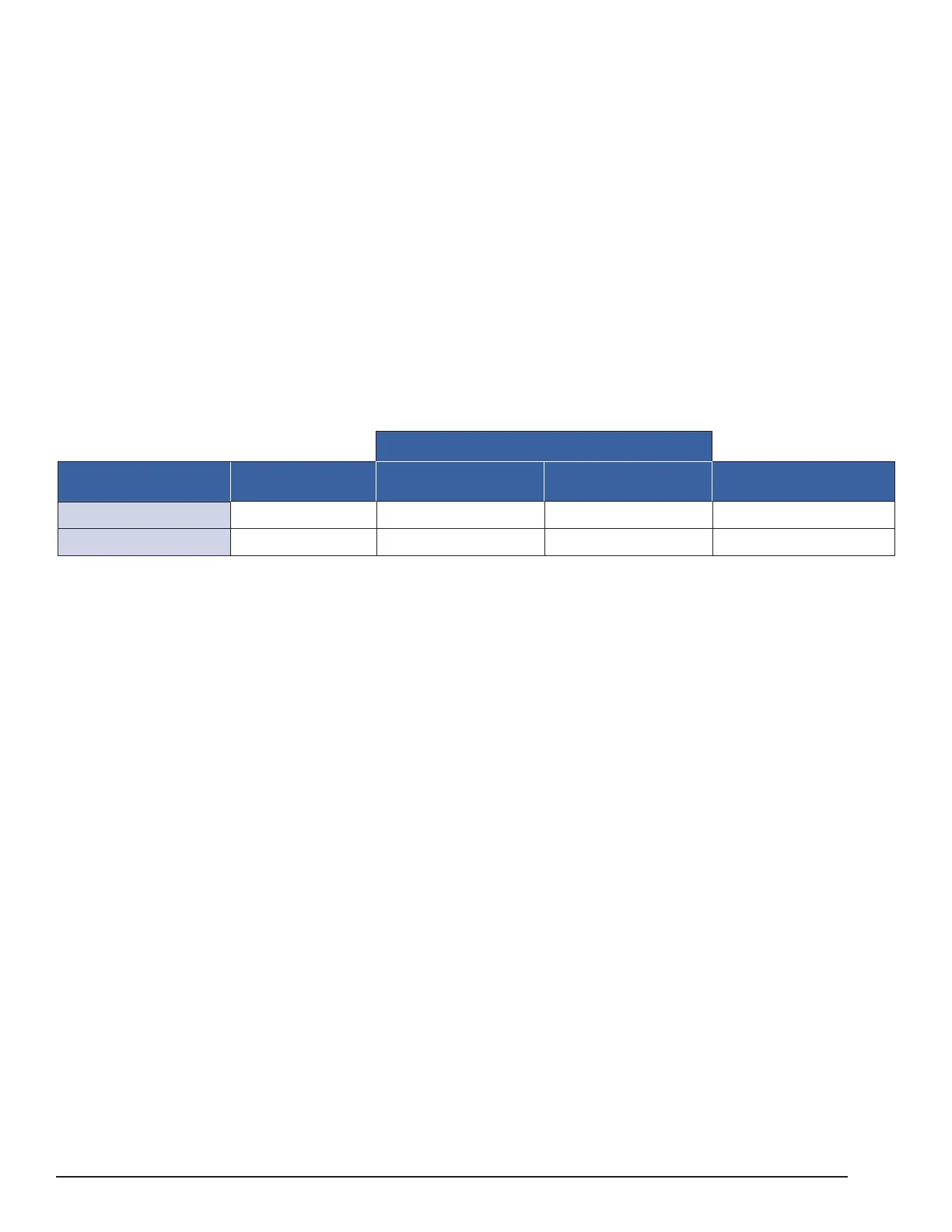
pump. Minimum area specs in Table 8 are the min-
imum cross sectional area of ducts for attachment
to an intake or discharge air plenum to maintain
typically appropriate maximum velocities, and are
not a substitute for formal duct sizing.
8. Velocity Control – Air velocity should be evaluat-
ed for each installation and ducts sized accordingly
for the particular project’s needs. Very sound sen-
sitive installations may need lower velocities, and
possibly additional noise control measures such
as duct lining or additional exterior insulation. Min-
imum attachment areas in Table 8 assume 1200
FPM maximum on intake ducting and 1600 FPM
maximum on discharge ducting.
9. Duct Construction – all ducting and sheet metal
should be constructed to SMACNA standards. Flex
Duct and berboard are not recommended.
10. Vibration Control – canvas connectors or other duct
vibration isolation measures are recommended.
11. Smoke/Fire – be aware of local smoke/re protec-
tion requirements that may apply to your ducted
system.
Table 8: Duct Specications
Sealant Temperature Rating
Duct Type Pressure Class Minimum Maximum
Minimum
Attachment Area
Intake Ducting -2 In. Winter Ambient Summer Ambient 1920 sq. in.
Discharge Ducting +2 In. See Note 1 Summer Ambient 1440 sq. in.
Note
1. Discharge minimum temperature rating is wintertime outdoor design temperature minus 15, or 0 degree Fahrenheit, whichever is higher.


 To Next Page