EasyManua.ls Logo

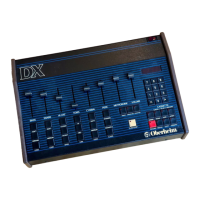
Oberheim DX - User Manual

Oberheim DX
43 pages
Print Icon
To Next Page IconTo Next Page
Loading...
T A
tf::J' . .
t .
~~~~ - "
:'C
' - . -;. . .--;
:f')
JVIA
U A L
. !''':;""., " . .
St:
-1'
. J
:P .
D R
U M
M A
CHINE
OBERHEIM ELECTRONICS
, INC.
Second Edition

Table of Contents

Question and Answer IconNeed help?

Do you have a question about the Oberheim DX and is the answer not in the manual?

Summary

Introduction to the DX Drum Machine

Welcome to the DX

Introduces the Oberheim DX Programmable Digital Drum Machine as a powerful tool for composition and performance.

Pictures and Diagrams

Sound Hookup Diagram

Illustrates the audio connection setup for the DX drum machine to a mixer or amplifier.

Getting Around the DX

DX Sequences

Explains how to select, play, record, and erase drum sequences on the DX.

DX Songs

Introduces arranging sequences into songs, selecting, playing, and creating songs.

Tempo and Sequence Length

Guides on setting tempo and the number of bars for sequences.

The Voices of the DX

DX Sounds and Library

Details factory sounds, tuning, changing sounds, and available sound chips.

Replacing Sound Chips

Step-by-step guide on how to physically replace sound chips within the DX.

Sophistication and Programming

Quantize and Swing Features

Explains how to automatically correct timing (Quantize) and add a shuffle feel (Swing).

Metronome and Signature Settings

Details metronome settings, click values, and time signature configuration.

Step Recording Mode

Explains programming sequences one step at a time for precise beat creation.

Goodies and Utilities

Advanced Recording and Erasing

Covers features like Countdown, Punch-In, Flams, and various erasing methods.

Copying and Housekeeping

Instructions on copying sequences/songs, memory management, and data checks.

Troubleshooting and Recovery

Steps for dealing with errors, lost data, and system resets.

Edit Parameters

Basic Edit Parameters (00-06)

Configuration settings for Countdown, Timing Source, Auto Start, Clock Rate, Click, Drum Outs, Trigger Input.

MIDI Edit Parameters (07-14)

MIDI settings including Channels, Omni Mode, Clock Out, Echo Notes, Song Changes, Drum Notes, Transposition.

Data Storage and Transfer

Cassette Tape Data Storage

Describes using a cassette recorder for backing up and loading programs.

MIDI Data Transfer

Explains transferring data via MIDI to other devices.

Battery Backup

Information about the internal battery maintaining memory when unplugged.

Interface and Connectivity

External and MIDI Clock Synchronization

Details syncing the DX using external clock and MIDI timing signals.

Syncing to Tape

How to record and play back sync tones on tape to control the DX.

Triggered Notes and Footswitches

Using external trigger inputs and footswitches for controlling drum sounds and playback.

MIDI Notes and Drum Mapping

MIDI Note to Drum Mapping

How to map MIDI notes to trigger specific drum sounds on the DX.

Interface Features

Realtime MIDI Record and Footswitches

Recording sequences from other MIDI devices and operating footswitches.

More Information

About MIDI and Digital Audio

Explains MIDI concepts and the principles of digital audio.

Interface Guide Chart

Glossary of Terms

DX Specifications

Summary

Introduction to the DX Drum Machine

Welcome to the DX

Introduces the Oberheim DX Programmable Digital Drum Machine as a powerful tool for composition and performance.

Pictures and Diagrams

Sound Hookup Diagram

Illustrates the audio connection setup for the DX drum machine to a mixer or amplifier.

Getting Around the DX

DX Sequences

Explains how to select, play, record, and erase drum sequences on the DX.

DX Songs

Introduces arranging sequences into songs, selecting, playing, and creating songs.

Tempo and Sequence Length

Guides on setting tempo and the number of bars for sequences.

The Voices of the DX

DX Sounds and Library

Details factory sounds, tuning, changing sounds, and available sound chips.

Replacing Sound Chips

Step-by-step guide on how to physically replace sound chips within the DX.

Sophistication and Programming

Quantize and Swing Features

Explains how to automatically correct timing (Quantize) and add a shuffle feel (Swing).

Metronome and Signature Settings

Details metronome settings, click values, and time signature configuration.

Step Recording Mode

Explains programming sequences one step at a time for precise beat creation.

Goodies and Utilities

Advanced Recording and Erasing

Covers features like Countdown, Punch-In, Flams, and various erasing methods.

Copying and Housekeeping

Instructions on copying sequences/songs, memory management, and data checks.

Troubleshooting and Recovery

Steps for dealing with errors, lost data, and system resets.

Edit Parameters

Basic Edit Parameters (00-06)

Configuration settings for Countdown, Timing Source, Auto Start, Clock Rate, Click, Drum Outs, Trigger Input.

MIDI Edit Parameters (07-14)

MIDI settings including Channels, Omni Mode, Clock Out, Echo Notes, Song Changes, Drum Notes, Transposition.

Data Storage and Transfer

Cassette Tape Data Storage

Describes using a cassette recorder for backing up and loading programs.

MIDI Data Transfer

Explains transferring data via MIDI to other devices.

Battery Backup

Information about the internal battery maintaining memory when unplugged.

Interface and Connectivity

External and MIDI Clock Synchronization

Details syncing the DX using external clock and MIDI timing signals.

Syncing to Tape

How to record and play back sync tones on tape to control the DX.

Triggered Notes and Footswitches

Using external trigger inputs and footswitches for controlling drum sounds and playback.

MIDI Notes and Drum Mapping

MIDI Note to Drum Mapping

How to map MIDI notes to trigger specific drum sounds on the DX.

Interface Features

Realtime MIDI Record and Footswitches

Recording sequences from other MIDI devices and operating footswitches.

More Information

About MIDI and Digital Audio

Explains MIDI concepts and the principles of digital audio.

Interface Guide Chart

Glossary of Terms

DX Specifications

Oberheim DX Specifications

Power IconPower
power consumption21 W
voltage (North America/Japan)95-130 VAC
voltage (Rest of World)190-260 VAC
Inputs and Outputs IconInputs and Outputs
external trigger impedance4.7 KOhm
external clock voltage5 Volt
tape input level350 mV
outputs level+ 4 dBm
outputs impedance50 Ohms
metronome pulse voltage+ 12 VDC
metronome pulse duration900 Ms.
Weight and Dimensions IconWeight and Dimensions
weight5.4 kg
length45.7 cm
width30.0 cm
height12.7 cm