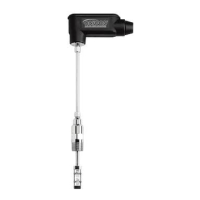
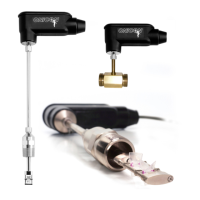
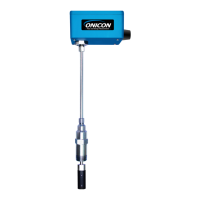
The ONICON F-3500 Electromagnetic Flow Meter is a high-quality, American-made device designed for accurate flow measurement in various applications. It operates based on Faraday's Law of electromagnetic induction, where a voltage is induced in a conductive fluid as it passes through a magnetic field generated by the meter. This induced voltage is directly proportional to the fluid's velocity, allowing for precise flow rate determination.
Function Description:
The F-3500 meter generates pulsating magnetic fields within the pipe. Electrodes on the sensor head measure the voltage induced in the flowing conductive fluid. This voltage is then converted by the meter's internal electronics into digital and analog signals, which convey flow rate and total data. These signals can be connected to ONICON's display devices, Btu meters, or other data acquisition systems. The meter is designed for insertion into existing piping systems, offering flexibility in installation. It can be installed in both vertical and horizontal pipes, with specific guidelines for horizontal placement to ensure optimal performance. The F-3500 is particularly well-suited for applications where a non-intrusive flow measurement method is preferred, as it has no moving parts, reducing wear and tear and ensuring long-term reliability.
Usage Features:
The F-3500 is designed for ease of installation and operation, though it requires careful attention to detail to ensure accuracy and safety. It employs a hot tap adapter design, allowing for insertion and removal without interrupting flow or draining the pipe, provided it is installed through an isolation valve. This feature is crucial for maintaining system uptime during maintenance or calibration.
For installation, a full 1-inch opening in the pipe wall is required to accommodate the sensor head. The installation hardware, which can be either standard or hot tap, is critical for proper meter function and includes a threaded branch outlet, an interconnecting close nipple, and a full port isolation valve. ONICON recommends using their specific installation hardware kits, as they are designed to ensure proper dimensions and stack height, which is essential for correct stem length and insertion depth.
The meter's insertion depth is precisely set using either a laminated insertion depth gauge tag for standard configurations or an insertion depth collar and alignment tool for small pipe configurations. This ensures the sensor head is correctly positioned within the flow stream for accurate readings. Proper orientation, with the flow direction arrow aligned with the fluid flow, is also critical.
The F-3500 provides various output signals, including isolated analog (4-20 mA, 0-10 V, or 0-5 V), frequency (0-15 V peak pulse, 0-500 Hz maximum), and scalable pulse (isolated dry contact, 50 VDC @ 100 mA maximum). These multiple output options allow for integration with a wide range of control systems and data acquisition platforms. The meter also includes alarm outputs for conditions like empty pipe or excessive electrical noise, providing immediate feedback on system status.
Maintenance Features:
Maintenance of the F-3500 primarily revolves around ensuring proper installation and addressing potential issues related to electrical noise or incorrect readings. The hot tap design significantly simplifies maintenance by allowing the meter to be removed and reinserted without system shutdown. This is a major advantage for systems that cannot afford downtime.
When removing the meter, it is crucial to follow a specific procedure to prevent injury due to high pressure. The electronics enclosure must be held firmly while slowly loosening the clamping nut, as the system pressure can forcefully eject the meter. Gentle twisting of the meter during withdrawal helps to clear any obstructions and ensures complete removal of the sensor head from the valve.
Electrical connections are vital for the meter's performance. The F-3500 requires a proper earth connection to minimize electrical noise, which can interfere with the microvolt signal levels detected by the electrodes. The earth wire (green/yellow) should be connected to a known good earth connection, ideally a grounding rod driven into the ground, or failing that, the building's electrical service panel or an electrical outlet. The length of this cable should be as short as possible, preferably under 25 feet. In non-metallic or lined pipes, grounding rings installed upstream and downstream of the meter are recommended to suppress electrical interference. These rings help ensure that the pipe, fluid, and meter body are all at the same electrical potential, effectively reducing noise.
Troubleshooting guidance is provided to address common issues such as no signal, high or low readings, or inconsistencies between different output signals. These steps often involve verifying installation parameters like pipe size, insertion depth, and wiring, as well as checking for ground loops or offset voltages. The meter's design, with no moving parts, inherently reduces the need for mechanical maintenance, focusing instead on electrical integrity and proper environmental conditions. Regular checks of the power supply and output signals are recommended during commissioning and as part of routine maintenance to ensure continued accuracy and reliability.


 To Next Page
 General