Pulsar
2
Service Manual
OPTIKON 2000
Cod. 111004SEN Rev.C
5-1
5. PRINCIPLES OF OPERATION
5.1 INTRODUCTION
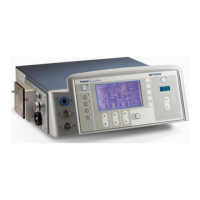
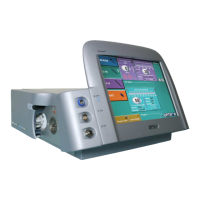
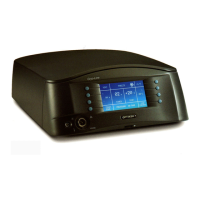
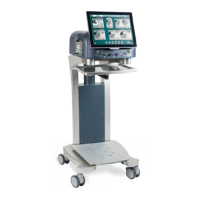
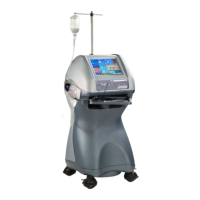
The OPTIKON PULSAR
2
is a state of the art system designed for cataract extraction. The
use of a multiple microprocessor architecture combined with some Large Scale Integration
circuits (LSI), allows concentrating high technology and top performances in a small and
compact unit.
The PULSAR
2
integrates the following functions:
• Gravity fed irrigation
• Aspiration through peristaltic and Venturi pumps, with a safe ACS
3
closed system
vacuum reading and anterior chamber stabilizer
• Electronic programmable I.V. pole
• Bipolar diathermy coagulator
• Phacoemulsifier
• Anterior and posterior pneumatic vitrectomy section
(Refer to the PULSAR
2
Block Diagram) The heart of the PULSAR2 is the Control Board
393200: it receives input from the user through the GUI (Graphic User Interface) and
footswitch, which is directly wired to the RISC microprocessor. The same processor then
controls all the output peripherals, such as pinch valves, aspiration pumps, electronic I.V.
pole, etc. The U/S Driver 347150 is one of the peripherals of the Control board: it is the
one that interfaces the phaco and diathermy handpieces.
This kind of design minimizes physical wiring and connections replacing them with the
more reliable and flexible logical connections (i.e. the first switch in the footswitch opens
the irrigation valve, but there is no physical link between the switch and the valve, they
are both wired to the microprocessor. There is a logical link established by the software).
In simple words, all digital and analogical inputs go to the microprocessor (which is
capable of up to eight analog inputs and over forty digital I/O lines) and all the digital and
analog control outputs are generated by the same microprocessor. Software establishes
the links.


 To Next Page