EasyManua.ls Logo

Panasonic 140 - User Manual

Panasonic 140
84 pages
Print Icon
To Next Page IconTo Next Page
Loading...
Panasonic. IMM_ECOI-W_140-210_EN_09.19
September 2019
Read through the Installation Instructions before you proceed with the installation. In particular, you will need to read under
the “ IMPORTANT ! ” section at the top of the page.
INSTALLATION AND
MAINTENANCE MANUAL
Original Language”
Heat Pump Chiller
This Heat Pump Chiller uses the refrigerant R410A.
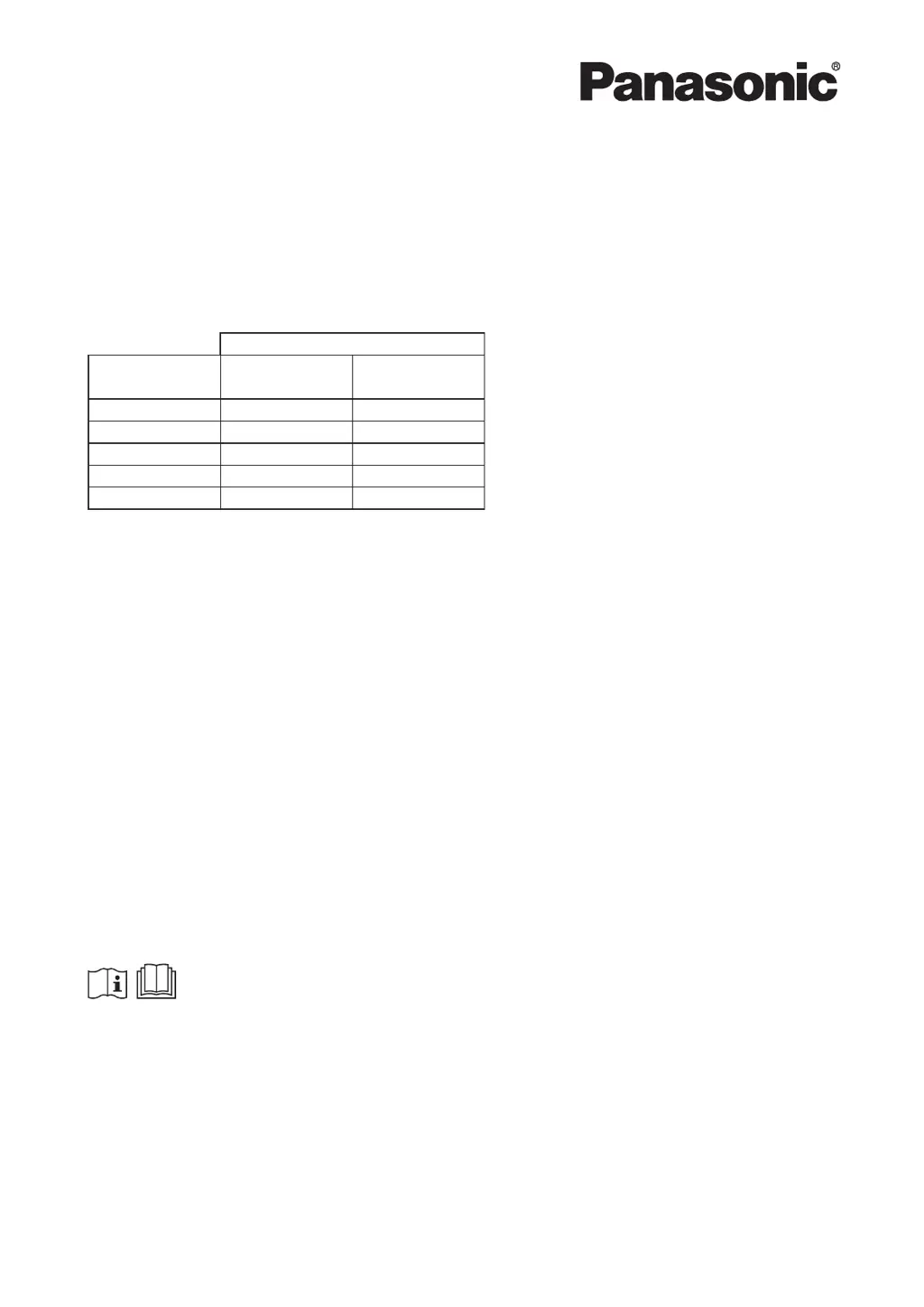
Model No.
Outdoor Unit
Class
Standard without
buffer tank
With buffer tank
140
U-140CWNB U-140CWBL
150
U-150CWNB U-150CWBL
170
U-170CWNB U-170CWBL
190
U-190CWNB U-190CWBL
210
U-210CWNB U-210CWBL

Table of Contents

Questions and Answers

  • M
    Michael PetersonAug 23, 2025
    Why is my Panasonic 140 making excessive noise?
    • R
      Robin LunaAug 23, 2025
      Excessive noise from your Panasonic Chiller could stem from various sources. Check these: * Vibrating pipe work: Attach the pipe work correctly. * Whistling noise from the thermostatic pressure relief valve: Top up the refrigerant fluid charge. * Noisy compressor: Check the condition of the valves. * Seized bearings: Replace the compressor. * Also check the pipe work attachments, the dehumidification filter, and the tightness of the compressor attachment nuts.
  • S
    Susan GonzalezAug 26, 2025
    What causes reduced output in both heating and cooling mode in my Panasonic Chiller?
    • B
      benjamin07Aug 26, 2025
      Reduced output in both heating and cooling modes in your Panasonic Chiller can be caused by: * Dirt in the evaporator water circuit: Chemically clean the evaporator water circuit. * Condenser battery blocked: Clean the condenser battery. * Insufficient refrigerant fluid charge: Top up the refrigerant fluid charge.
  • J
    Jerry LeeAug 27, 2025
    What to do if my Panasonic 140 Chiller liquid line is too hot?
    • A
      Austin HamiltonAug 27, 2025
      If the liquid line in your Panasonic Chiller is too hot, it's likely due to insufficient refrigerant fluid charge. Locate and eliminate the causes of charge losses and top up the refrigerant fluid charge.
  • H
    Hannah JonesAug 30, 2025
    What to do if my Panasonic 140 Chiller circuit stops due to the high pressure thermostat?
    • B
      Brenda LynnAug 30, 2025
      If your Panasonic Chiller circuit stops because the high pressure thermostat activated, consider these solutions: * Incorrect operation of the high pressure pressostat: Check the operation of the pressostat and replace it if required. * Outlet valve partially closed: Open the valve or replace it if necessary. * Non-condensable particles in the circuit: Bleed the circuit. * Condenser fan(s) not operating: Check the wiring and the motors, repairing or replacing as needed.
  • R
    rwrightSep 1, 2025
    What causes a frozen intake line on my Panasonic 140?
    • B
      browncarolynSep 1, 2025
      A frozen intake line on your Panasonic Chiller could be due to: * The overheating setting on the thermostatic pressure relief valve being set too low: Increase the setting. * Also check the refrigerant fluid charge.
  • B
    brent85Sep 3, 2025
    What to do if my Panasonic Chiller liquid line is frozen?
    • T
      Tina EvansSep 3, 2025
      If the liquid line in your Panasonic Chiller is frozen: * Check all valves are opening, as the liquid line valve might be partially closed. * Replace the filter cartridge, as the dehumidification filter might be clogged.
  • D
    Dawn FosterSep 5, 2025
    What causes a Panasonic 140 circuit stoppage due to low pressure thermostat activation?
    • T
      Theresa HernandezSep 5, 2025
      If your Panasonic Chiller circuit stops because the low pressure thermostat is activated: * Identify and repair any leaks. * Top up the refrigerant fluid charge if it's insufficient. * Replace the pressostat if it has an operating fault.
  • C
    Cory KeySep 7, 2025
    What can cause a low oil level in the compressor of my Panasonic 140 Chiller?
    • D
      dmooreSep 7, 2025
      A low oil level in the compressor of your Panasonic Chiller can be caused by: * Oil or gas leaks in the circuit: Locate and repair the leaks. * Sump oil heater resistance fault: Check the electrical circuit and the condition of the resistance. Replace defective parts if necessary.
  • J
    jacquelinepalmerSep 9, 2025
    Why is there insufficient water circulation in my Panasonic 140 Chiller?
    • D
      Dwayne CollinsSep 9, 2025
      Insufficient water circulation in your Panasonic Chiller can result from: * Air in the circuit: Bleed the air via the safety valve. * Deposits or impurities in the evaporator: Wash out the evaporator by back-flushing.
  • M
    moseskeithSep 10, 2025
    What to do if my Panasonic 140 Chiller unit operates continuously but isn't cooling?
    • B
      brandysullivanSep 12, 2025
      If your Panasonic Chiller runs constantly without cooling, it might be due to several reasons: * There might be insufficient refrigerant fluid. In this case, top up the refrigerant fluid charge. * A clogged dehumidification filter could be the cause. Try replacing the dehumidification filter. * Reduced output from one or both circuits. Check the compressor valves and change them if necessary.

Summary

Important Safety Information

Special Precautions

Critical safety warnings and precautions for installation and operation.

Operational Phases

When Installing

Guidelines for selecting installation location, clearance, and anchoring.

When Servicing

Procedures and safety measures to follow during maintenance and repair.

General Recommendations

Safety Directions

General safety rules and guidelines for working with the appliance.

Warnings and Cautions

Important warnings regarding power cutoff, hydraulic connections, and warranty.

Pressure Equipment Safety

Safety considerations for handling pressurized refrigerant and components.

Inspection and Storage

Equipment Safety Data

Detailed safety data regarding toxicity, handling, and properties of the refrigerant.

Disposal Information

Guidelines for proper disposal of the unit and its components according to regulations.

Warranty

Warranty Conditions

Requirements for maintaining warranty validity and consequences of non-compliance.

Presentation

Contents of Package

Optional Accessories

List of optional accessories available for purchase and integration.

Dimensions

Unit Dimensional Drawings

Technical drawings showing overall dimensions for various unit configurations.

Handling

Net Weight and Gravity Center

Specifications for unit weight and center of gravity for safe lifting.

General Handling Precautions

Essential guidelines for safe handling, lifting, and moving the unit.

Forklift and Slinging Methods

Specific instructions for using forklifts and slings for unit transportation.

Technical Specifications

Physical Characteristics

Detailed specifications including power, capacity, dimensions, and weight.

Refrigeration Specifications

Details on refrigerant type, charge, and relevant regulations.

Electric Specifications

Electrical data including current, voltage, and fuse ratings.

Operating Limits

Cooling and heating mode operating range limits based on environmental conditions.

Installation

Siting the Installation

Guidelines for selecting an outdoor location and ensuring proper air circulation.

Condensate Water Management

Managing condensate and defrost water in heating mode to prevent freezing.

Noise Reduction

Techniques to minimize noise pollution from the unit during operation.

Clearance Requirements

Minimum required clearances around the unit for maintenance and operation.

Attachment to the Ground

Instructions for securely mounting the unit to the ground or supporting structure.

Hydraulic Links

Main Hydraulic Circuit Design

Design considerations for the main hydraulic pipe network and required components.

Anti-clogging Protection

Importance of installing a water filter to prevent blockages and damage.

Water Volume Requirements

Required water volumes for cooling and heating modes for proper operation.

Rinsing the Circuit

Procedures for cleaning the hydraulic circuit before filling with water or glycol.

Frost Protection

Methods and precautions for preventing frost formation in the water loop.

Water Quality Guidelines

Guidelines for analyzing and treating water for the hydraulic system.

Heat Insulation and Filling

Recommendations for pipe insulation and safe procedures for filling the hydraulic circuit.

Wiring Diagram and Legend

Wiring Diagram Reference

Reference to detailed wiring diagrams for electrical circuits.

Legend and Symbols Explanation

Explanation of component codes and symbols used in wiring diagrams.

Electrical Connections

Control

Control System Overview

Explains the electronic control system and priority of commands.

User Interface and Navigation

Details the LCD display, buttons, menu structure, and access levels.

Initial Settings Configuration

Steps for configuring date, time, language, and glycol rate.

System Launching and Operation Modes

Procedures for starting the unit, configuring inputs, and selecting operating modes.

Alarms Management

How to view, acknowledge, and manage active alarms and warnings.

Scheduling Operations

Setting up time-based operating schedules and modes for the unit.

Commissioning

Pre-Start Checks

Essential checks before system startup to ensure proper operation.

Operating Check List

Procedures for verifying system functions after startup.

Warranty - Material Return Procedure

Ordering Service and Spare Parts

Maintenance

Weekly Checks

Routine inspection tasks to be performed weekly on the running unit.

Periodic Service Schedule

Recommended inspection and maintenance intervals for various components.

Maintenance Procedures

Detailed steps for specific maintenance tasks, including refrigerant and compressor oil.

Trouble Shooting

Refrigerant Circuit Diagram

Hydraulic Circuit Diagrams

Diagram Legends and Components

Key for symbols and abbreviations used in hydraulic diagrams.

Installation Schematics

Diagrams showing different hydraulic installation configurations and flow paths.

Pressure Losses

Hydraulic Pumps Curves

Wiring Diagram

Legend

Electrical Wiring Diagrams

Power Circuit Diagrams

Wiring diagrams for power supply to unit components across different configurations.

Control Circuit Diagrams

Wiring diagrams for unit control signals, sensors, and interface connections.

Start up form

Panasonic 140 Specifications

General IconGeneral
BrandPanasonic
Model140
CategoryChiller
LanguageEnglish