EasyManua.ls Logo

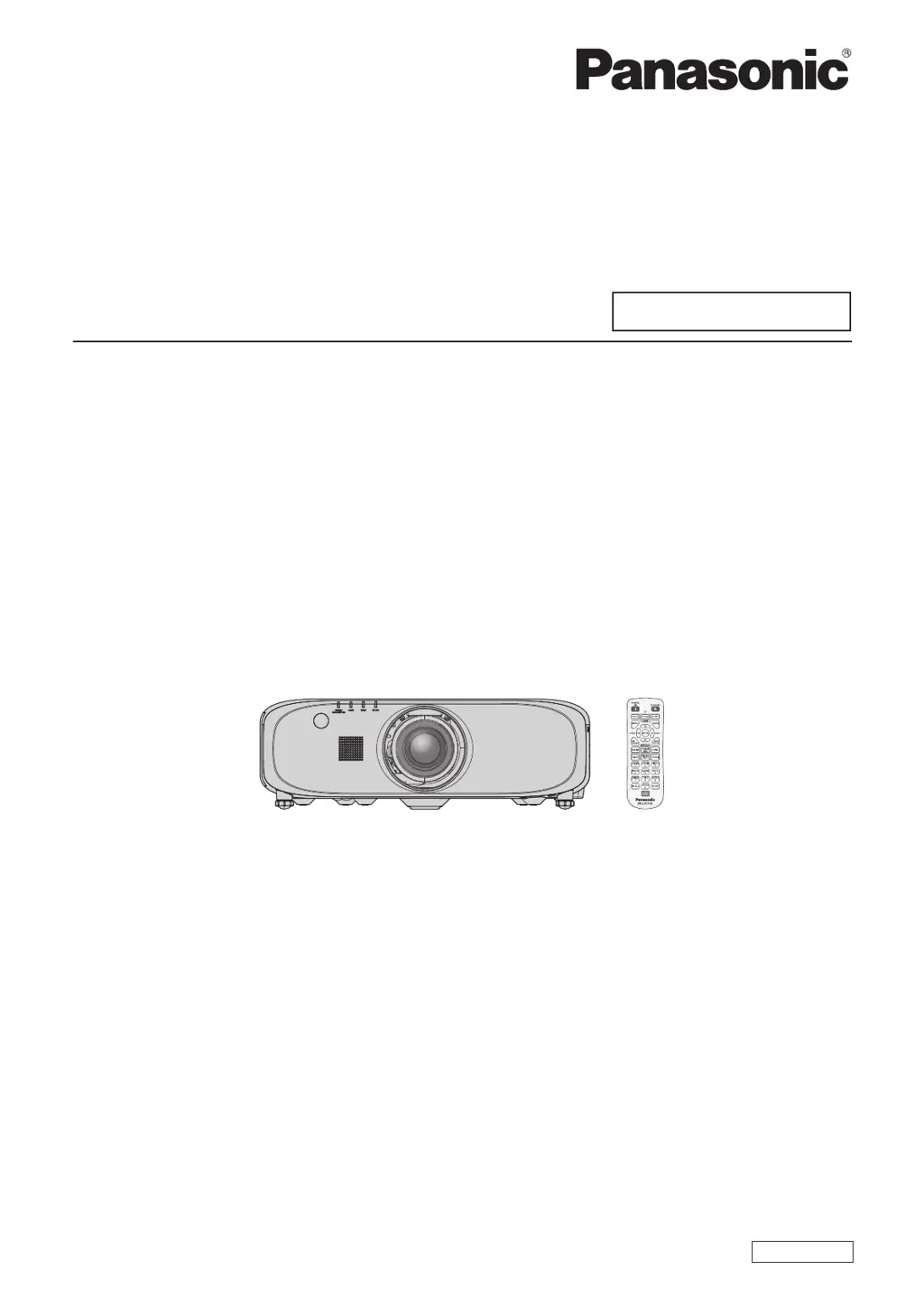
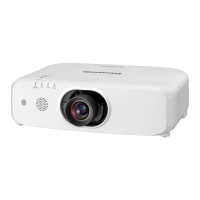
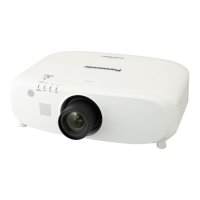
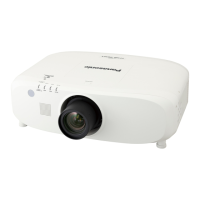
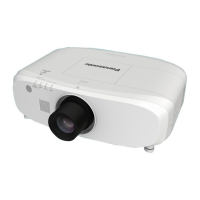
Panasonic PT-EX510 - User Manual

Panasonic PT-EX510
155 pages
Print Icon
To Next Page IconTo Next Page
Loading...
Thank you for purchasing this Panasonic product.

z
Without L : The standard zoom lens supplied With L : The lens sold separately
Before operating this product, please read the instructions carefully and save this manual
for future use.
Before using this product, be sure to read  (
x
pages 2 to 11).
TQBJ0687
LCD Projector
Commercial Use
Operating Instructions
Functional Manual
ENGLISH
Model No.
PT-EZ580
PT-EW640
PT-EX610
PT-EW540
PT-EX510

Table of Contents

Other manuals for Panasonic PT-EX510

Questions and Answers

  • E
    Erika MitchellAug 19, 2025
    Why Panasonic PT-EX510 power does not turn on?
    • M
      Mr. Gary SmithAug 20, 2025
      If your Panasonic Projector isn't powering on, check the following: Ensure the power plug is firmly inserted into the outlet. Verify that the switch is not set to . Confirm the wall outlet is supplying electricity and that circuit breakers haven't tripped. Also, check if the lamp indicator or the temperature indicator is lit or flashing, and make sure the lamp cover is securely attached.
  • M
    Ms. Maria DeanAug 21, 2025
    What to do if Panasonic PT-EX510 Projector remote control does not respond?
    • R
      Richard ThompsonAug 21, 2025
      If the remote control for your Panasonic Projector isn't responding, try these steps: First, check if the batteries are depleted and ensure they are inserted with the correct polarity. Make sure there are no obstructions between the remote control and the projector's signal receiver. Verify that you are using the remote within its effective range and that other light sources, like fluorescent lights, aren't interfering. Check if the [REMOTE CONTROL] setting in [CONTROL DEVICE SETUP] is set to [DISABLE]. Finally, ensure the terminal isn't being used for contact control, the ID number setting operation is correct, and the cable connected to the terminal is connected to the remote control wired terminal.
  • E
    Eric MckayAug 25, 2025
    How to fix fuzzy image on Panasonic Projector?
    • C
      cassandralesterAug 25, 2025
      If the image on your Panasonic Projector appears fuzzy, try the following: Ensure the lens focus is set correctly. Verify that the projection distance is appropriate for the projector. Check if the lens is dirty and clean it if necessary. Confirm that the projector is installed perpendicular to the screen.
  • K
    Katherine GeorgeAug 27, 2025
    What to do if video from HDMI compatible device does not appear or it appears jumbled on Panasonic PT-EX510 Projector?
    • A
      Amanda HowardAug 27, 2025
      If video from an HDMI compatible device does not appear or appears jumbled on your Panasonic Projector, ensure the HDMI cable is securely connected. Try turning off and on the power of both the projector and the external device. Also, ensure that the input signal is compatible with the projector.
  • X
    xmorenoAug 28, 2025
    What to do if image output from DVI-D of the computer does not appear on Panasonic PT-EX510 Projector?
    • L
      Lori DennisAug 28, 2025
      If the image output from the DVI-D of your computer does not appear on the Panasonic Projector, check if the [DVI-D IN] setting is [EDID3] or [EDID2:PC]. You may also need to update the graphics accelerator driver of the computer to the latest version. Restarting the computer after performing the [DVI-D IN] setting might also resolve the issue.
  • H
    Heather JacksonAug 30, 2025
    Why Panasonic PT-EX510 Projector menu screen does not appear?
    • K
      Kathy CarpenterAug 30, 2025
      If the menu screen does not appear on your Panasonic Projector, confirm that the on-screen display function is not turned off (hidden).
  • B
    Brian MosleySep 1, 2025
    What to do if image output from DisplayPort of the computer does not appear on Panasonic Projector?
    • S
      Suzanne PorterSep 1, 2025
      If the image output from the DisplayPort of your computer does not appear on the Panasonic Projector: If connecting the projector to a computer that uses an early-type chipset or graphics card compatible with DisplayPort, the projector or computer may not be operated properly. The graphics accelerator driver of the computer may need to be updated to the latest version. Turn off and on the power of the projector and the external device. Also, ensure that a signal which is not compatible with the projector is not being input.
  • J
    John MaySep 3, 2025
    What to do if the DIGITAL LINK input image or sound is not output on Panasonic PT-EX510?
    • H
      Heather BurtonSep 3, 2025
      If the DIGITAL LINK input image or sound is not output on your Panasonic Projector, ensure that the connections between the twisted-pair-cable transmitter and the projector or an external device are correctly done. Verify that [DIGITAL LINK MODE] is set to [AUTO] or [DIGITAL LINK] and not to [ETHERNET]. Also, confirm that a signal which is not compatible with a twisted-pair-cable transmitter is not being input.
  • E
    Eddie ManningSep 5, 2025
    Why no image appears on Panasonic PT-EX510?
    • T
      Tiffany JonesSep 6, 2025
      If no image is appearing on your Panasonic Projector, check the following: * Ensure connections to external devices are correctly performed. * Verify the input selection setting is correct. * Confirm the [BRIGHTNESS] adjustment is not at a minimum. * Check that the external device connected to the projector is working properly. * Ensure the shutter function is not in use. * If the power indicator is flashing red, consult your dealer. * Make sure the lens cover is removed from the lens.
  • X
    xhansenSep 7, 2025
    Why Panasonic PT-EX510 Projector audio is not output?
    • V
      vbrownSep 8, 2025
      If you're not getting any audio output from your Panasonic Projector, make sure that the external device is connected correctly to the audio input terminal. Also, check whether [MUTE] in [AUDIO SETTING] is set to [ON]. Finally, verify that the audio input selection in [AUDIO SETTING] is set correctly.

Summary

General Safety Warnings

General Safety Warnings

Essential safety precautions for operation and electrical hazards.

Regional Safety and Compliance Notices

Specific safety and compliance requirements for different regions.

FCC Compliance Information

Regulatory compliance details for the United States market.

UK Plug Safety

Safety instructions specific to the UK mains plug.

Power and Installation Safety

Critical warnings regarding power handling and installation environment.

Operational and Environmental Safety

Safety guidelines for projector operation, environment, and mounting.

Accessory and Battery Safety

Safety precautions for accessories, batteries, and lamp replacement.

Cautionary Operational Guidelines

Additional cautions for power, usage, installation, and accessories.

Maintenance and Battery Handling Cautions

Cautions related to maintenance procedures and battery handling.

Battery Handling and Disposal (Brazil)

Specific guidelines for battery handling and disposal in Brazil.

Projector Features and Quick Setup

Key Projector Features

Highlights the main advantages and functionalities of the projector.

Quick Setup Guide

Step-by-step instructions for initial projector setup and configuration.

Preparation and Safety Precautions

Transportation and Installation Cautions

Guidelines for safely transporting and installing the projector.

Security and Connectivity

Information on security measures, DIGITAL LINK technology, and general usage cautions.

Lens and Setup Precautions

Specific precautions related to the projector lens and setup methods.

Environmental and Security Guidelines

Guidelines for projector environment, security, and achieving optimal picture quality.

Component Care and Disposal

Advice on care for projector components and proper disposal procedures.

Supplied Accessories

Details of the accessories provided with the projector.

Optional Accessories

Information on optional accessories available for the projector.

Remote Control Overview

Detailed explanation of the remote control buttons and their functions.

Projector Body Identification

Diagram and description of the projector's physical components and indicators.

Projector Terminals and Control Panel

Explanation of projector terminals and the main control panel buttons.

Connecting Terminals

Pin configuration details for various projector terminals.

Remote Control Usage

Instructions for using the remote control, including battery insertion and ID setup.

Wired Remote Control Connection

Procedure for connecting the projector using a wired remote control.

Getting Started with Projector Setup

Projector Installation Modes

Explains the four available installation methods for the projector.

Ceiling Mount Bracket Information

Information on optional ceiling mount brackets and installation requirements.

Image Size and Throw Distance

Technical data for calculating projected image size and throw distance.

Projection Distance Tables

Tables detailing projection distances based on lens type and screen aspect ratio.

Projection Distance Calculation Formulas

Formulas for calculating projection distance based on screen size and lens.

Adjustable Feet Usage

Instructions on using the adjustable feet for projector leveling and angle adjustment.

Projection Lens Removal and Attachment

Procedures for removing and attaching the projector's projection lens.

Connecting External Devices

Important considerations and procedures before connecting external devices.

Terminal Pin Assignments

Pin configuration details for key input/output terminals.

AV Equipment Connection Example

Example diagram for connecting various AV equipment to the projector.

Computer Connection Example

Example diagrams showing how to connect different types of computers.

Twisted-pair-cable Transmitter Connection

Procedures for connecting the projector using a twisted-pair-cable transmitter.

Basic Projector Operations

Powering the Projector On and Off

Instructions for connecting, disconnecting, and understanding the power indicator status.

Initial Setup and Focus Adjustment

Steps for initial projector setup, including focus adjustment.

Initial Settings Configuration

Guide to configuring initial settings like language, projection method, and standby mode.

Screen and Image Adjustments

Procedures for setting the screen format and making basic image adjustments.

Projector Power-Off Procedures

Instructions on how to properly turn off the projector and use the direct power off function.

Projecting Images

Steps for selecting input signals and adjusting image focus, zoom, and position.

Lens Position Adjustment

Guide to moving the lens to its home position and understanding its adjustment range.

Remote Control Operations: Input and Shutter;Mute

How to use the remote control for input selection and image/audio muting.

Remote Control Operations: Mute, Volume, Freeze

Using the remote control for audio muting, volume control, and image freezing.

Remote Control Operations: On-Screen Display, Timer, Auto Setup

Utilizing on-screen display, presentation timer, and automatic setup features.

Remote Control Operations: Keystone, Digital Zoom, Aspect Ratio

Adjusting image distortion, zooming, and aspect ratio using the remote control.

Remote Control Operations: PiP, Function, Status, ECO

Using Picture-in-Picture, function buttons, status display, and ECO management.

Projector Settings and Menu Navigation

Menu Navigation Basics

Guide to navigating the main and sub-menus for projector settings.

Resetting Settings to Factory Defaults

Procedure for resetting individual settings to their factory default values.

Main Menu Structure

Overview of the main menu items and their corresponding page numbers.

Sub-menu Details: Picture and Position

Specific settings available within the [PICTURE] and [POSITION] menus.

Sub-menu Details: Advanced, Display Language, Display Option, Projector Setup, PiP, Test Pattern

Overview of settings in Advanced, Display Language, Display Option, Projector Setup, PiP, and Test Pattern menus.

Sub-menu Details: Signal List, Security, Network

Overview of settings related to signal lists, security, and network configuration.

Picture Settings: Mode and Contrast

Adjusting the picture mode and contrast for optimal image display.

Picture Settings: Brightness, Color, Tint, Color Temperature

Adjusting brightness, color saturation, tint, and color temperature for image quality.

Picture Settings: White Balance and User Name

Fine-tuning white balance and customizing color temperature names for user settings.

Picture Settings: Gamma, Sharpness, Noise Reduction, Iris

Adjusting gamma, sharpness, noise reduction, and iris for image enhancement.

Picture Settings: Daylight View and System Selector

Adjusting daylight view for ambient light and selecting the system signal format.

sRGB-compliant Video Setup

Steps to configure settings for faithful sRGB color reproduction.

Position Settings: Shift and Aspect Ratio

Adjusting the image's vertical/horizontal position and aspect ratio.

Position Settings: Aspect Ratio Options and Zoom

Exploring various aspect ratio modes and using the zoom function for image size adjustment.

Position Settings: Zoom Options, Clock Phase, and Keystone

Adjusting zoom, clock phase for image stability, and keystone distortion.

Keystone and Corner Correction

Correcting image geometry using keystone and corner correction features.

Advanced Menu: Digital Cinema Reality and Blanking

Adjusting video quality with digital cinema processing and screen blanking.

Advanced Menu: Input Resolution, Clamp Position, Raster Position

Adjusting input resolution, black level, and image position within the display area.

Display Language Settings

Procedure for selecting and changing the projector's display language.

Display Option: Color Adjustment and Correction

Calibrating color across multiple projectors or for specific input signals.

Display Option: Screen Setting and Auto Signal

Setting screen format and enabling automatic signal detection for convenience.

Display Option: Auto Setup, Signal Level, RGB Input

Utilizing auto setup, adjusting signal levels, and configuring RGB input settings.

Display Option: RGB2 Input, DVI-D Input, HDMI Input

Specific settings for RGB2, DVI-D, and HDMI input terminals.

Display Option: Digital Link, DisplayPort, On-Screen Display Position

Settings for DIGITAL LINK, DisplayPort inputs, and on-screen display position.

Display Option: OSD Design, OSD Memory, Input Guide

Customizing OSD appearance, memory, and input guide settings.

Display Option: Warning Message, Closed Captioning

Managing warning messages and setting closed caption display options.

Display Option: Back Color, Startup Logo, Shutter Settings

Setting background color, startup logo, and automatic shutter operation.

Display Option: Presentation Timer

Configuring and operating the built-in presentation timer.

Display Option: Freeze Function and Digital Zoom

Using the freeze function and digital zoom for image manipulation.

Digital Zoom Function Notes

Important notes and limitations concerning the digital zoom function.

Projector Setup: Projector ID and Projection Method

Setting a unique ID for multiple projectors and defining the projection method.

Projector Setup: ECO Management

Adjusting ECO management settings for power consumption and lamp life.

Projector Setup: Signal Shut-off and Standby Mode

Setting automatic power-off for no signal and managing standby power consumption.

Projector Setup: Schedule and Command Details

Setting up scheduled operations and understanding command parameters for control.

Projector Setup: Startup Input Select and RS-232 C

Setting the default input source and configuring RS-232C serial communication.

Projector Setup: Emulation Modes

Selecting emulation modes for compatibility with different projector series.

Projector Setup: Remote 2 Mode, Function Button, Audio Setting Volume

Setting up remote control modes, function buttons, and adjusting audio volume.

Projector Setup: Audio Balance, Speaker Output, Mute Mode

Adjusting audio balance, speaker output, and mute settings.

Projector Setup: Status Information

Viewing projector status such as input, runtime, and temperature.

Projector Setup: Date and Time Settings

Setting the projector's time zone, date, and time manually or automatically.

Projector Setup: User Data Save;Load and Initialization

Backing up, restoring, and resetting all projector settings to factory defaults.

Projector Setup: Registered Signals, Service Password

Managing registered signals and accessing the service password.

Picture-in-Picture (PiP) Function

Setting up and using the Picture-in-Picture (PiP) function for dual displays.

PiP Function Combinations

Information on compatible signal combinations for Picture-in-Picture display.

Test Patterns

Using built-in test patterns to aid in projector adjustments and alignment.

Signal List Management: Registration and Renaming

Managing registered input signals, including registration and renaming.

Signal List Management: Lock-in Range, Protection, Deletion

Controlling signal recognition range, protecting registered signals, and deleting them.

Sub Memory Function

Utilizing sub memory to store and recall custom image adjustment settings.

Security Settings: Password Entry and Change

Setting up and changing the projector's security password for access control.

Security Settings: Display, Text Change, Menu Lock

Managing display settings, custom text, and locking menu operations.

Security Settings: Control Device Setup

Restricting or enabling operations via the control panel and remote control.

Network Settings: Digital Link Mode and Setup

Setting the communication mode for DIGITAL LINK and Ethernet connections.

Network Settings: Digital Link Status and Network Setup

Monitoring network status and configuring network settings like IP address.

Network Settings: Network Config, Control, Status, Digital Interface Box

Detailed network configuration, control options, status monitoring, and interface box settings.

Network Connections Overview

Diagrams showing typical network connection setups for the projector.

Web Browser Access

Instructions for accessing and controlling the projector through a web browser interface.

Web Control Descriptions

Descriptions of various items and controls available on the web control interface.

Projector Status Page

Explanation of the data shown on the projector status page via web control.

Error Information Page

Guide to interpreting error messages and troubleshooting common projector problems.

Network Status and Error Logs

Information on network status and logs for access and mail errors.

Web Control Basic and Advanced Operations

Functions available for basic and advanced control through the web interface.

Network Configuration via Web

Steps for configuring network settings like IP address and DNS via the web interface.

Network Connectivity Testing

Procedure for testing network connectivity to servers using the ping test.

Clock Adjustment via Web

Instructions for setting the projector's time zone and clock via the web interface.

Email Setup via Web

Configuring email alerts for warnings or lamp status.

Web Authentication and ECO Management Setup

Setting up web authentication for email and configuring ECO management functions.

Email Content Examples

Examples of emails sent for projector status reports and error notifications.

Password Change and Crestron Connected Control

Changing user passwords and accessing the Crestron Connected control interface.

Web Control Tool Pages: Tools and Info

Explains the functionality of the Tools and Info pages within the web control interface.

Web Control Help Page

Information on accessing the Help Desk for assistance with web control.

Projector Maintenance and Troubleshooting

Indicator Lights and Lamp Status

Understanding projector indicators for lamp status and troubleshooting related issues.

Temperature and Filter Indicators

Interpreting temperature and filter indicators for projector health and maintenance.

General Maintenance Procedures

Guidelines for cleaning the projector's exterior, lens, and removing the air filter unit.

Air Filter Cleaning and Attachment

Step-by-step instructions for cleaning and reattaching the projector's air filter.

Lamp Unit Replacement

Critical safety warnings and procedures for replacing the projector's lamp unit.

Air Filter Unit Replacement

Procedure for replacing the air filter unit with a new one.

Air Filter Usage Note

A note regarding projector operation without the air filter unit attached.

Troubleshooting Common Problems

A guide to diagnosing and resolving common projector problems by checking specific points.

Troubleshooting Specific Connection Issues

Troubleshooting specific connection problems for HDMI, DisplayPort, and DIGITAL LINK.

Appendix and Technical Information

PJLink Protocol and Control Commands

Technical details on the PJLink protocol and available control commands.

PJLink Security and LAN Control Commands

Information on PJLink security authentication and control commands via LAN.

LAN Control Commands and Error Responses

Further details on LAN control commands and error response codes.

Serial Communication via RS-232 C

Technical information on connecting and communicating with the projector via RS-232C serial port.

Serial Communication Formats

Details on the basic and subcommand formats for serial communication protocols.

Cable Specifications and Control Commands

Information on cable specifications and a list of projector control commands.

Projector Control Commands

Additional projector control commands and their parameters.

Remote 2 Terminal Pin Assignments

Pin assignments for the <REMOTE 2 IN> terminal used for external control.

Two-Window Display Combination List

Compatible combinations for PiP display.

Two-Window Display Combinations and Menu Lock Operations

Further details on PiP combinations and operations for menu lock passwords.

List of Compatible Video Signals

A comprehensive table of compatible video signals and their formats.

DisplayPort Signal Compatibility Notes

Specific notes regarding DisplayPort signal compatibility and recommendations.

Projector Specifications

Comprehensive technical specifications including power, LCD, lens, lamp, and dimensions.

Operating Environment and Scanning Frequencies

Information on operating environment conditions and compatible scanning frequencies.

Terminal Specifications

Technical specifications for all available projector terminals.

Projector Dimensions

Diagrams and measurements of the projector's physical dimensions.

Ceiling Mount Bracket Precautions

Safety guidelines and specific instructions for installing ceiling mount brackets.

Panasonic PT-EX510 Specifications

General IconGeneral
Brightness5000 lumens
ResolutionXGA (1024 x 768)
Contrast Ratio2000:1
Display TypeLCD
Screen Size30 - 300 inches
Lamp Life6000 hours (Eco)
ConnectivityHDMI, VGA, S-Video, Composite Video
Lamp TypeUHM lamp
Output TerminalsVGA, Audio Out
Noise Level37 dB (Normal mode), 29 dB (Eco mode)

Related product manuals