Positioning:
Seat the user in the chair into the correct seating position. Define the position for the
chest strap. To d o this, loosen the bolt with the Smm Allen Key and position the chest strap in the
correct height on each side of the backrest. Tighten the bolts securely with 2,3 Nm. To prevent
choking hazards the belt may not be adjusted too high or too low relative to the users body. Make
sure your belt position chosen does not interfere with any other device attached to the wheelchair.
Adaptation:
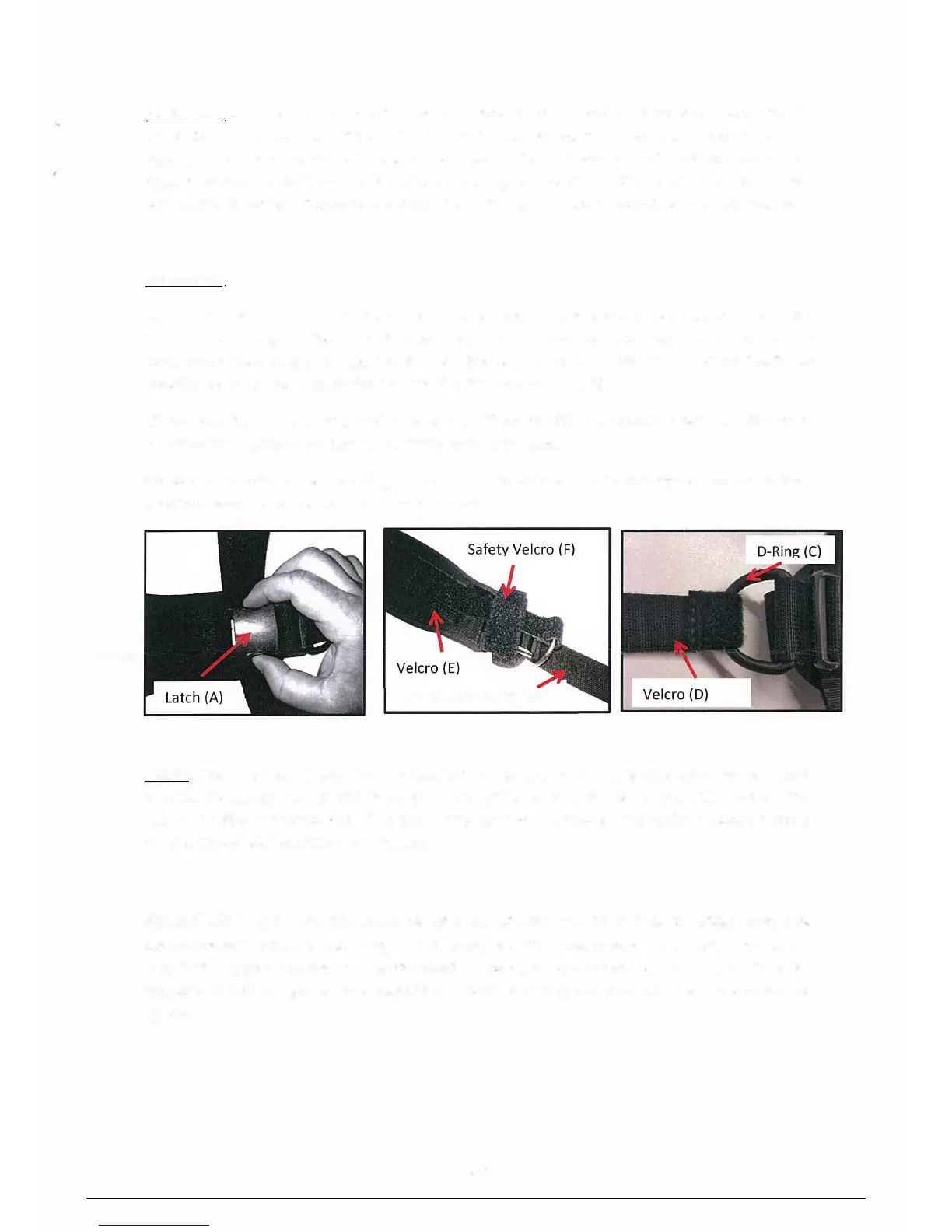
(1) Seat the user into the chair. Buckle the chest strap securely so you can hear the latches (A) click in.
If the chest strap is fitted correctly, it shall fit tight but also comfortable to position and hold the users
upper body in a safe way. Smaller adjustments can be done with the adjustment belt (B)
attached to the latches. The D-Ring (C) simplifies the adaptation for the user.
(2)
Connect the Velcro (D) attached to the D-Ring (C) safely with the opposite Velcro (E) attached to
the upholstered part of the belt over a length of at least 10cm.
(3) Above this Velcro close the Safety Velcro (F). For any further adjustments required to suit the user
comfort/safety please use the adjustment brackets.
Adaptation Strap (B)
Safety: The chest belt incorporates in addition to the latches 2 additional safety features which
prevent the unintended opening of the belt. Each of the belts latches is secured with an overlaying
Velcro. In addition on each side of the chest strap there i s a "catching" strap which is guided through
the D-Ring and adds another safety feature.
WARN I NG!
Never use the stand-up function without the knee fixation, chest strap and
positioning belt attached and safely locked. Make sure the rider does not slide in the wheelchair
seat. If this occurs, the rider may suffer chest compression or suffocate due to pressure from the
supports. NEVER use positioning supports as a patient restraint or on a rider who is comatose or
agitated.
Jive Up / QM-710 Stand Up 57
Rev.2.0


 To Next Page