4.4. Technical specification
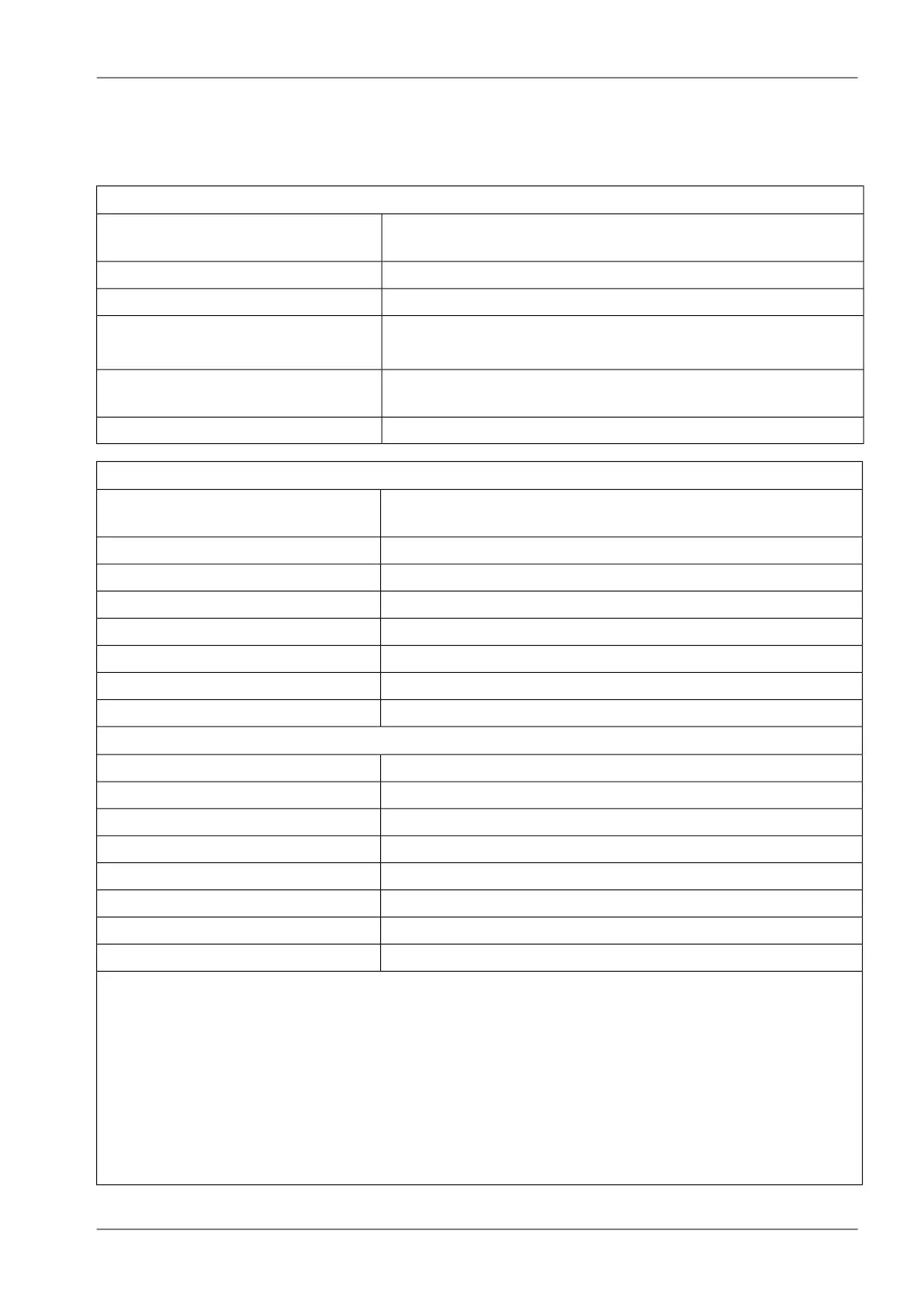
Tab. 4.6: Technical parameters
Radio parameters
135–154; 154–174; 215–240; 300–320; 320–340; 340–360;
368–400; 400–432; 432–470; 470–512; 928–960 MHz
Frequency bands
6.25 / 12.5 / 25 / 50 kHz
[1]
Channel spacing
±1.0 ppmFrequency stability
QAM (linear): 16DEQAM, D8PSK, π/4DQPSK, DPSK
Modulation
FSK (exponential): 4CPFSK, 2CPFSK
> 200 kbps@50 kHz; >100 kbps@25 kHz; >50 kbps@12.5 kHz;
>25 kbps@6,25 kHz
[2]
Data speed (up to)
On/Off, ¾ Trellis code with Viterbi soft-decoderFEC (Forward Error Correction)
Transmitter
QAM: 0.5 - 1.0 - 2.0 W
FSK: 0.1 - 0.2 - 0.5 - 1.0 - 2.0 - 3.0 - 4.0 - 5.0 - 10 W
[3]
RF Output power
(Both Carrier and Modulated)
ContinuousDuty cycle
< 1.5 msRx to Tx Time
> 40 dBIntermodulation Attenuation
< −36 dBmSpurious Emissions (Conducted)
< −36 dBmRadiated Spurious Emissions
< −60 dBcAdjacent channel power
< −60 dBcTransient adjacent channel power
Receiver
see detailsSensitivity
50 kHz @ −3 dB BWAnti-aliasing Selectivity
< 1.5 msTx to Rx Time
20 dBm (100 mW)Maximum Receiver Input Power
< −57 dBmRx Spurious Emissions (Conducted)
< −57 dBmRadiated Spurious Emissions
see detailsBlocking or desensitization
> 70 dBSpurious response rejection
[1]
50 kHz channel spacing is HW dependent. Units with older version boards are still in production.
50 kHz channel spacing requirement kindly specify in your order.
6.25 kHz channel spacing is not available for RipEX-928.
[2]
This is gross data speed in above table. User data speed varies and depends heavily
on the data structure, optimization effectivity, protocol on Radio channel, signal budgets
and many other parameters of the network. Practical tests are recommended.
[3]
For output power 10 W it is recommended to use input power above 11 VDC.
RipEX-470, RipEX-928 – max. RF Output power 8 W.
55© RACOM s.r.o. – RipEX Radio modem & Router
Product


 To Next Page