DRIVER CORRECTION DEVICES AND AIDS
3
212 - Driving
Dependingonthevehicle,theymayin
clude:
– an anti-lock braking system
(ABS);
– the electronic stability control
(ESC) with understeer control, side
winds assistance and traction con
trol;
– driver assistance with a trailer;
– emergency brake assist;
– the traction control;
– hill start assistance.
Anti-lock braking system (ABS)
Underheavybraking,theABSpre
vents the wheels from locking, allowing
the stopping distance to be managed
and keeping control of the vehicle.
Underthesecircumstances,thevehi
clecanbesteeredtoavoidanobsta
clewhilstbraking.Inaddition,thissys
tem can increase stopping distances,
particularly on roads with low surface
grip (wet ground etc.).
The ABS does not in any way improve
thevehicle’s"physical"performance
relatingtotheroadsurfaceandroad
holding. It is still essential to follow the
rules of good driving practice (such as
drivingatasafedistancefromtheve
hicle in front etc.).
In an emergency, apply
firm and continuous pres
sure to the brake pedal.
Thereisnoneedtopumpitre
peatedly. The ABS will modulate
the force applied in the braking
system.
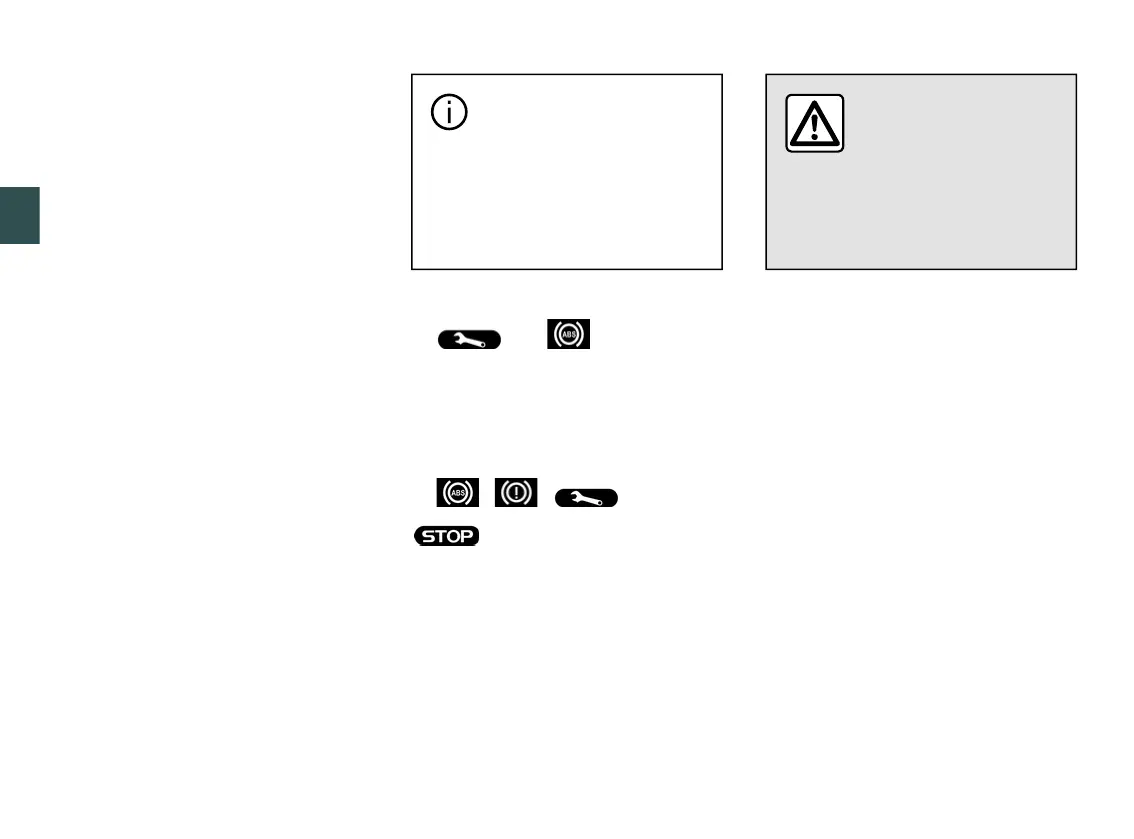
Operating faults:
– and lituponthein
strument panel accompanied by the
messages "Check ABS" and "Check
ESC": this indicates that the ABS, the
ESC and the emergency brake assist
are deactivated. Braking is always
enabled;
– , , and
litontheinstrumentpanelac
companiedbythe"WARNING:Braking
System" message: this indicates a
fault with the braking system.
Inbothcases,pleasecontactanap
proved dealer.
Your braking systems
are partially operational.
However, it is danger
ous to brake suddenly
anditisessentialtostopimmedi
ately, as soon as traffic conditions
allow. Call an approved dealer.
Electronic stability control
(ESC) with understeer control
and traction control
Electronic stability program ESC
This system helps you to keep control
ofthevehicleincriticaldrivingcondi
tions (avoiding an obstacle, loss of grip
on a bend, etc.).
Operating principle
A sensor in the steering wheel detects
the direction selected by the driver.
Other sensors throughout the vehicle
measure the actual direction.
The system compares driver input to
the actual trajectory of the vehicle and
corrects the trajectory if necessary by
controlling the braking of certain
wheels and/or engine power. In the
eventthatthesystemisengaged,indi







 To Next Page