EasyManua.ls Logo

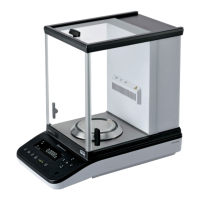
Shimadzu AP124X - User Manual

Shimadzu AP124X
169 pages
Print Icon
To Next Page IconTo Next Page
Loading...
SHIMADZU
Analytical Balance
Instruction Manual
321-78382
Oct. 2021
Read the instruction manual thoroughly before you use the product.
Keep this instruction manual for future reference.
1
3
5
2
4
6
7
8
12
13
9
10
11
Foreword
Table of Contents
Setup
Component Names
and Functions
Display and Icons
Basic Operations
Calibration
Settings
Applications
Ionizer
Connecting and Communicating
with Peripheral Devices
Errors and Recovery
Maintenance
Specifications
Technical
Documentation
AP W Series
AP225W
AP135W
AP225WD
AP125WD
AP324W
AP224W
AP124W
AP X Series
AP324X
AP224X
AP124X
AP Y Series
AP324Y
AP224Y
AP124Y
AP W-AD Series
AP225W-AD
AP135W-AD
AP225WD-AD
AP125WD-AD
AP324W-AD
AP224W-AD
POWER
ION
ALARM

Table of Contents

Questions and Answers

  • S
    Shannon SchwartzAug 10, 2025
    What to do if the serial communication function doesn't work with a USB serial converter on Shimadzu AP124X Laboratory Equipment?
    • S
      Sarah HarmonAug 10, 2025
      First, verify that the correct COM number has been set in the Windows settings. If the issue persists, the driver provided with the USB serial converter may not be set up correctly. Please refer to the Shimadzu website for details on checking/changing the COM number and setting up the driver.
  • M
    Melissa BradfordAug 15, 2025
    Why doesn't the serial communication function work after rebooting the PC with Shimadzu AP124X Laboratory Equipment?
    • J
      jeffsullivanAug 15, 2025
      The serial communication function cannot be used if Balance Keys has not been started up. For details on Balance Keys, refer to the Shimadzu website.
  • K
    kyle27Aug 22, 2025
    What to do if the cells are not transferred when entering data on Excel with Shimadzu Laboratory Equipment?
    • B
      brendarobersonAug 22, 2025
      This issue may occur if Excel is not set to move cells after pressing the Enter key. To resolve this, in Excel, go to File > Options > Advanced Settings, and enable 'Move cell after pressing the [Enter] key.' Also, ensure that the Japanese conversion function in Windows is set to OFF, as this can interfere with data transfer.
  • M
    Mary HubbardAug 28, 2025
    Why do operations sometimes seem strange with Shimadzu Laboratory Equipment?
    • A
      Amanda LeeAug 28, 2025
      Strange operations can occur if the communication speed is set too slow in Balance Keys, depending on your PC's performance. Adjust the communication speed to align with your PC's capabilities. Also, if the interval for transmitting data from the balance is too short, it can cause malfunctions. Ensure data is transmitted after it has been displayed on the screen and avoid using the continuous output function. Additionally, ensure nothing is touching the PC keyboard or mouse when data is being transmitted from the balance.
  • L
    Lisa MurraySep 2, 2025
    What to do if garbled text is loaded onto the PC from Shimadzu AP124X Laboratory Equipment?
    • E
      Erik CordovaSep 3, 2025
      If garbled text appears on your PC, the serial communication function settings on either the balance or the PC are likely incorrect. Reset these settings to resolve the issue.

Summary

Safety Precautions

Precautions on Use

Guidelines for safe and correct use of the balance.

Precautions Related to Place of Installation

Advice on selecting a safe and suitable installation environment.

Precautions Related to Installation Work

Safety measures during balance and ionizer installation.

Precautions Related to Work;Operations

Safety guidelines for operating the balance and ionizer.

Risks Involved in Repairs;Dismantling;Modifications

Warnings against unauthorized repair attempts due to shock or malfunction risks.

Measures to be Observed during Emergencies

Actions to take in case of abnormal situations or burning smells.

Setup

Inspecting the Contents of the Package

Checklist to verify all included parts are present and undamaged.

Deciding on an Installation Environment

Guidance on choosing an optimal environment for accurate measurement.

Parts attachment (W-AD Series)

Step-by-step instructions for attaching glass doors to W-AD series models.

Attaching the Parts (Semi-micro models)

Instructions for attaching components like shield plate and pan supporter.

Attaching the Parts (Semi-Micro Models)

Instructions for attaching shield case, stage, and multi-stand for semi-micro models.

Adjusting the Horizontal Level of the Balance

Procedure for leveling the balance using the level indicator and screws.

Turning on the Power

Steps to connect the AC adapter and turn on the balance.

Component Names and Functions

Display and Icons

Measurement Keys + Application Function Operation Keys

Explains the function of various keys for measurement and menu operations.

Basic Operations

Measurements (Standard measurement Mode)

Step-by-step guide to performing standard weight measurements.

W-AD Series functions (standard measurement mode)

Details on automatic door and manual trigger operations for W-AD series.

Measuring using the touchless sensor (IR sensor touchless function)

How to use touchless sensors for hands-free operation.

How to use Menus

Explanation of menu structure, navigation, and parameter settings.

Setting Up and Amending the Measurement Mode

How to select and configure different measurement modes.

Entering Numerals and Characters

Explains methods for entering numerical and character data using keys or USB.

Calibration

CAL key setting

How to register and assign calibration functions to the CAL key.

Adjustment and Tests with Internal Weights (W-AD; W; X Series only)

Steps for adjusting and testing balance accuracy using internal weights.

Adjustment and Tests with External Weights

Steps for adjusting and testing balance accuracy using external weights.

Adjustment of internal weight (W-AD; W; X Series only)

Procedure for re-performing internal weight adjustment for sensitivity.

Perfect Self Calibration (PSC) Settings (W-AD; W; X Series only)

Configuration for automatic sensitivity adjustment based on temperature changes.

Time-Specified Adjustment (Timer CAL) Settings (W-AD; W; X Series only)

How to set timers for automatic PSC or calibration tests.

Periodic inspections (W-AD; W; X Series only)

Functionality for performing regular inspections to ensure performance.

Settings

Taring Settings

Explains functions like Zero Tracking, Auto Zero, and Auto Tare.

Zero tracking Function

Corrects zero point changes due to temperature fluctuations.

Auto zero Function

Automatically corrects zero point discrepancies caused by residue.

Adjusting Stability and Response

Methods to adjust balance stability and response for optimal measurements.

Log-in Function

Enhances security by enabling user IDs and passwords for balance control.

User Management (User Name Changes, Function Restrictions, etc.)

Manages users, their names, and assigns function access permissions.

Applications

Application Function Mode

Overview of application modes for specialized weighing tasks.

Measuring the Specific Gravity of Solids (Solid specific gravity)

Procedure for measuring solids' specific gravity in air and liquid.

Measuring Liquid Density (Liquid density)

Steps for measuring liquid density using sinkers.

Comparator Function

Compares weighing values against target values and displays status.

Minimum Weighing Value Mode

Evaluates data reliability and warns when measurements fall below the minimum value.

Ionizer

Removing Static Electricity

How to activate the ionizer to remove static electricity from samples.

Connections and Communications with External Equipment

Serial Communication Function Troubleshooting

Common issues and solutions for serial communication problems.

Automatic Printing;Output (Auto-Print)

How to configure the balance to automatically print measurements.

Errors and Recovery

Troubleshooting

Table of common problems, their causes, and recovery steps.

Error Messages

Lists various error messages, their causes, and recommended actions.

Maintenance

Maintaining the Balance

General cleaning and care instructions for the balance and its parts.

Precautions when moving the balance or shipping the balance for repair

Safety guidelines for moving the balance or preparing it for shipping.

Shimadzu AP124X Specifications

General IconGeneral
TypeAnalytical Balance
Capacity120 g
Readability0.1 mg
Repeatability (Standard deviation)0.1 mg
Linearity±0.2 mg
Pan Sizeø80 mm
InterfaceRS-232C
Response Time3 seconds
CalibrationAutomatic Calibration
Operating Temperature5°C to 40°C
DisplayLCD
Power SupplyAC adapter (100 V to 240 V AC)
Operating Humidity85% RH or less (no condensation)

Related product manuals