EasyManua.ls Logo

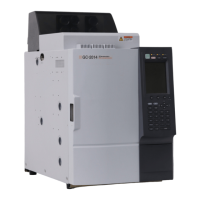
Shimadzu GC-2014 - Service Manual

Shimadzu GC-2014
98 pages
Print Icon
To Next Page IconTo Next Page
Loading...
221-79077
GC-2014
(Preparation Model for RoHS)
Service Manual
Read the service manual thoroughly before you use the product.
Keep this service manual for future reference.

Table of Contents

Other manuals for Shimadzu GC-2014

Questions and Answers

  • R
    Richard BarrettSep 23, 2025
    What to do if carrier gas still leaks after tightening the O-ring on Shimadzu Laboratory Equipment?
    • A
      Alexandra SwansonSep 23, 2025
      If carrier gas continues to leak from your Shimadzu Laboratory Equipment even after tightening the O-ring, replace it, as it may be deteriorated.
  • P
    pwhiteAug 23, 2025
    How to resolve unstable inlet pressure in Shimadzu GC-2014 Laboratory Equipment?
    • J
      joshua89Aug 23, 2025
      If the inlet pressure fluctuates (unstable) in your Shimadzu Laboratory Equipment, first check that [I time] = "1", [P term] = "100", and [I term] = "150". If not, enter these values and press the pf4 key to write them in the ROM. If using a glass insert for WBI, adjust the column insertion length to approximately 15 mm (normally 34 mm). Additionally, set the inlet pressure to 0 kPa and the total flowrate to 400 mL/min to check the flow-line resistance of the split line. Finally, ensure there is no clogging in the purge-line flow line.
  • M
    Matthew RichardsonAug 25, 2025
    How to reduce noise in Shimadzu Laboratory Equipment (FID)?
    • W
      Willie BarnesAug 26, 2025
      If you're experiencing a lot of noise (high level) with the FID on your Shimadzu Laboratory Equipment, the collector might be dirty. Try removing the igniter and cleaning the metal portion of the collector with a liquid like hexane. Alternatively, the H flowrate may be fluctuating, in which case you should replace the APC.
  • R
    ryan53Aug 27, 2025
    What to do if ignition is not possible in Shimadzu GC-2014 Laboratory Equipment (FID)?
    • J
      Jennifer JacksonAug 27, 2025
      If experiencing ignition issues with the FID in your Shimadzu Laboratory Equipment, the igniter filament may have burnt out, requiring replacement. Another potential cause is a fault in the igniter circuit; check the voltage at both ends of the connector (between 1 (+) and 2 (-) of CN2) during ignition with the igniter filament connected. Lastly, the nozzle might be clogged with sample or graphite ferrule residue; clean (using, for example, CLEANING WIRE, 201-79229-01) or replace the nozzle.
  • A
    Angelica PhillipsAug 27, 2025
    What causes the total flowrate to be higher than the setting in Shimadzu Laboratory Equipment?
    • N
      nthorntonAug 27, 2025
      If the total flowrate is higher than the setting in your Shimadzu Laboratory Equipment, verify that [I time] = "1", [P term] = "15", and [I term] = "40". If not, enter these values and press the pf4 key to write them in the ROM. Also, check the [Offset] and [Gain] values for the flowrate. If the gas continues to flow into the carrier line even when the power is off, the AFC may need replacement.
  • A
    acevedoshariSep 18, 2025
    How to improve poor retention time reproducibility on Shimadzu Laboratory Equipment?
    • W
      Walter StewartSep 18, 2025
      To improve poor retention time reproducibility on your Shimadzu Laboratory Equipment: * Condition the septum. * Re-pack the silica wool in the glass insert. * Cleanse the glass insert.
  • R
    Rachel LeeSep 15, 2025
    Why are ghost peaks detected in my Shimadzu Laboratory Equipment?
    • C
      Clayton MartinezSep 15, 2025
      Ghost peaks in your Shimadzu Laboratory Equipment may be due to: * Septum issues: Condition the septum. * Silica wool position: Re-pack the silica wool in the glass insert. * Stains in the glass insert: Cleanse the glass insert. * Capillary column issues: Condition the capillary column.
  • S
    Sandra OsborneSep 16, 2025
    What causes poor peak area reproducibility in Shimadzu Laboratory Equipment?
    • M
      Michael HarperSep 16, 2025
      Poor peak area reproducibility in Shimadzu Laboratory Equipment can stem from: * Septum problems: Condition the septum. * Silica wool issues: Re-pack the silica wool in the glass insert. * Stains in the glass insert: Cleanse the glass insert.
  • B
    Becky HendersonSep 5, 2025
    Why is the display dark or going out on my Shimadzu Laboratory Equipment?
    • S
      Sean SullivanSep 5, 2025
      If the display is dark or goes out on your Shimadzu Laboratory Equipment, try readjusting the backlight ON/OFF and contrast settings. If that doesn't work, the value set for automatic OFF operation of the backlight in [Other configuration settings] may be inappropriate; try changing this value.
  • T
    Tammy RoseSep 3, 2025
    How do I troubleshoot high noise levels in Shimadzu GC-2014 Laboratory Equipment (FPD)?
    • J
      Jason MitchellSep 3, 2025
      If you're experiencing a lot of noise (high level) with the FPD on your Shimadzu Laboratory Equipment, the photomultiplier may be faulty, requiring replacement. Alternatively, the H flowrate may be fluctuating, in which case you should replace the APC.

Summary

Installation Guide

1.3 Power Supply Specifications

Information on voltage, capacity, and safety precautions for power connection.

1.4 Gas Purity and Pressure

Purity requirements and supply pressure for carrier and detector gases.

GC-2014 System Configuration

2.1 Configuration Diagrams

Visual representations of various GC-2014 model assemblies and components.

Sample Injection Systems

4.1 Sample Injection Unit Configuration

Details on SPL and WBI injection unit assemblies and their parts.

4.3 Injection Unit Component Details

In-depth view of the injection unit's internal components and heaters.

Detector Unit Details

Maintenance Parts and Consumables

6.2 Replacement Maintenance Parts

Comprehensive list of replacement parts for the GC-2014 main unit.

Troubleshooting Procedures

7.1 Gas & Flowrate Troubleshooting

Common issues and solutions related to gas control and flow settings.

7.2 Temperature Control Issues

Diagnosing and resolving temperature-related problems in the system.

7.3 Detector Troubleshooting

Specific troubleshooting for FID, FPD, and FTD detectors.

Service Window Operations

8.1 Flow Adjust (CAR) Settings

Adjusting carrier gas flow parameters for optimal performance.

Appendix and Software Updates

9.1 GC-2014 Software Update Manual

Guide for updating the instrument's firmware via ROM.

Shimadzu GC-2014 Specifications

General IconGeneral
TypeGas Chromatograph
DisplayLCD
Maximum Heating Rate120°C/min
Data AcquisitionDigital
Maximum Number of Detectors4
WeightApprox. 45 kg
Carrier GasHelium, Nitrogen, Hydrogen
Detector OptionsFID, TCD, ECD, FPD
Injection PortSplit/Splitless, On-column
Gas ControlElectronic Flow Control (EFC)
Temperature Programming Rate0.1 to 120 °C/min
Power Requirements230 V AC, 50/60 Hz
Detector Temperature RangeUp to 400°C (depending on detector type)

Related product manuals