Reconfiguring the function
26
Siemens Building Technologies
Fire Safety & Security Products 07.2008
12.4 Programming the configuration card
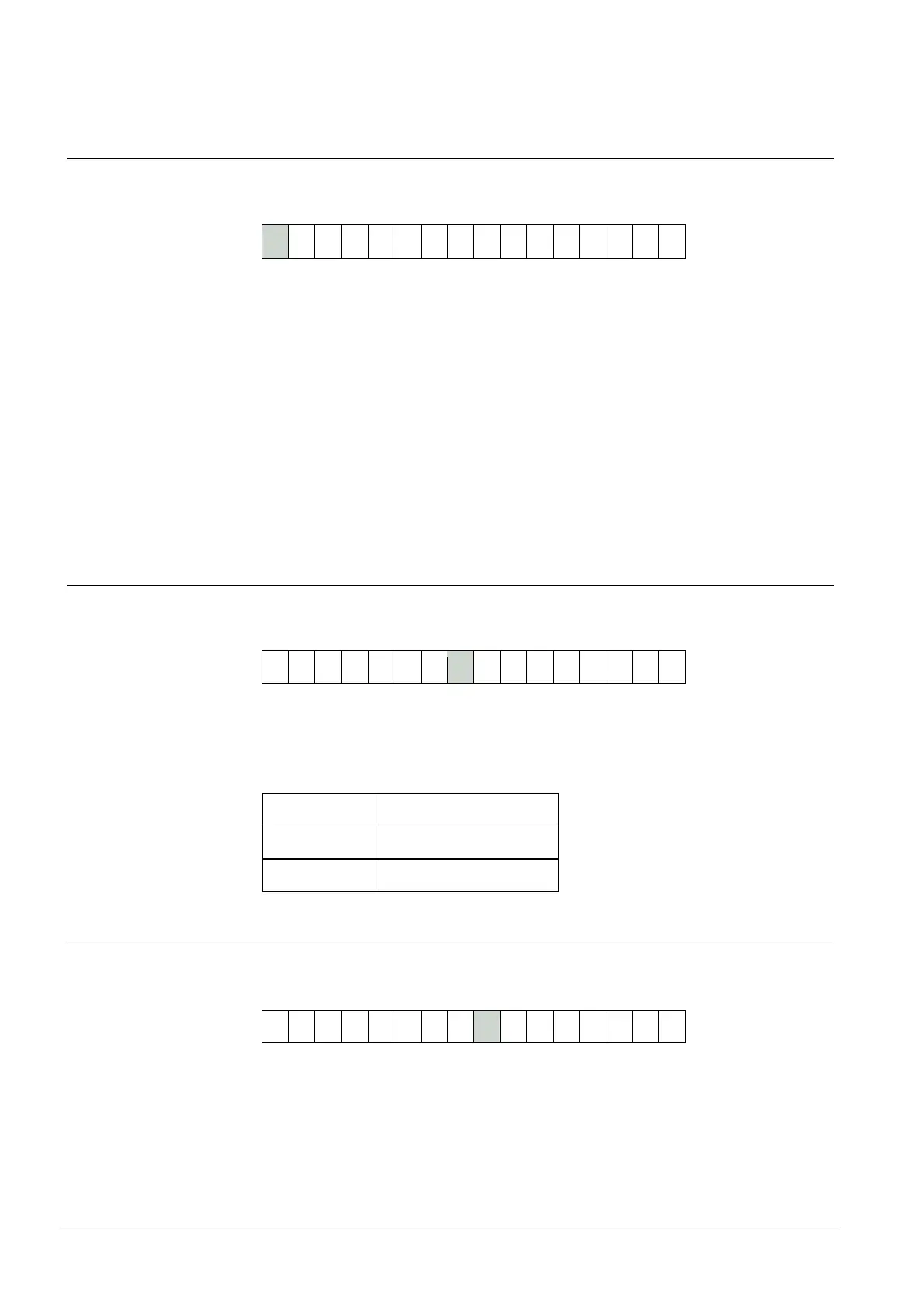
12.4.1 0xxs (secondary code swap)
1
0 0 0 0
0
The s bit determines whether the secondary code is output from the Reader’s data
interface as bits 33 to 48 (the position which it occupies in the code which is pro-
grammed into the cards and tags), or whether its position in the data output is
swapped to bits 17 to 32.
This feature is available so that cards programmed in the Dec/Dec display format
on the 633-2 Programmer can output secondary code data using the 32-bit Wie-
gand or 26-bit Wiegand data interfaces (interface numbers 02 and 12 hex respec-
tively). This feature is invalid for interfaces 47, 4D, 4E, 4F, 59, BC, BD and BE.
Secondary code swap bit (s):
0 The secondary code is output in its normal position (bits 33 to 48).
1 The secondary code is output in the swapped position (bits 17 to 32).
12.4.2 xxxh (Data Hold input signal polarity)
8
0 0 0 0 0
The h bit determines the polarity (active-low or active-high) of the Data Hold input.
To work out the hex number you need to type into the Programmer, refer to the fol-
lowing table:
Hex number Data Hold polarity
0 Active-low
1 Active-high
12.4.3 xxhe (horn configuration)
9
0 0 0 0 0
The h bit determines whether the horn bleeps for 100ms when the Reader reads a
valid card.
The e bit determines how the horn operates when it is controlled externally by the
host. If this bit is 0, the horn sounds when the host pulls the horn input down to 0V
and continues sounding until the host lets the horn input float high again. If this bit
is 1, the horn sounds for 1 second when the host pulls the horn input down to 0V
and then switches off automatically, irrespective of the state of the horn input.



 To Next Page