S5-115F Manual Rules Governing the Use of the S5-115F
10.17.1 Passivation of I/O Modules
The system response to an I/O error must not necessarily result in PLC STOP.
If your automated process consists of several independent subprocesses, the following is possible
over the operating system:
• Passivation of the relevant I/O word (individual passivation via signal group 1)
• Passivation of the I/O modules belonging to one signal group (group passivation)
Passivation of I/O modules means software shutdown and power shutdown of I/O modules. Only
I/O modules in autonomous and in self-contained subprocesses can be passivated.
Every signal group passivated by the operating system is entered in block 0 of the error DB. You
can evaluate this entry in your control program and respond accordingly.
Passivation results in the following:
• In the case of DI modules
without interrupt capability: Deletion of the PII section of the relevant DI module
• In the case of DI modules with
interrupt capability: Deletion of the status and interrupt registers. OB 2 ceases
to be processed.
• In the case of DQ modules: Deletion of the DQ and the PIQ section of the relevant DQ.
• In the case of AI modules: When 250 ANEI is called, the programmed passivation
value is output as a result ( Vol. 2, 6.1 of the Manual)
When an I/O module is passivated, the relevant R (readback) or CH (check) module is simul-
taneously passivated. You must note this in the case of an I/O mix on an I/O module.
Analog output modules are not passivated since they are not safety-related.
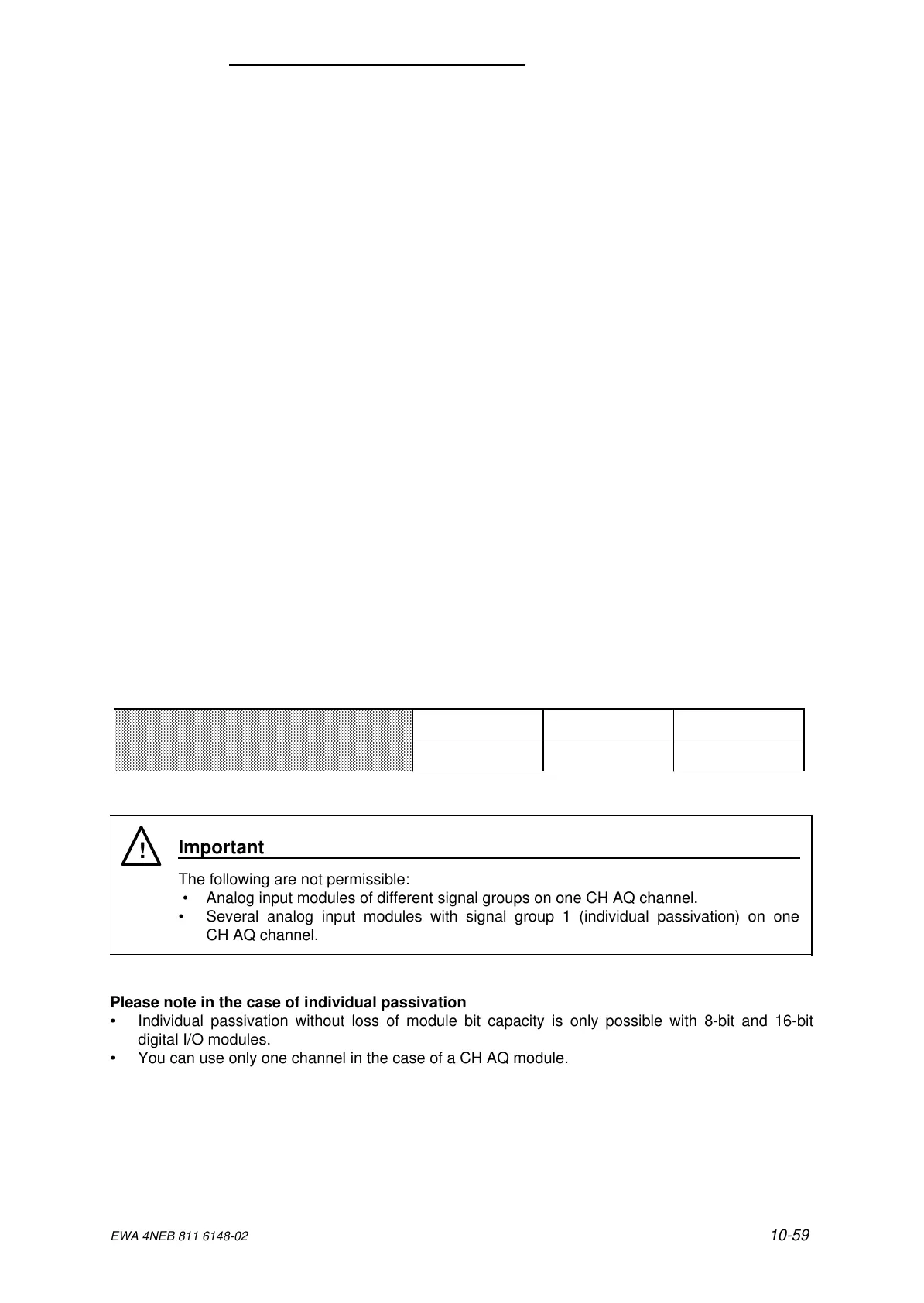
Table 10-10. Passivating I/O Modules
Passivated module
Relevant passivated module CH DQ R DI
CH AQ
DI DQ AI
a
a
a
a
a
a
a
a
a
a
a
a
a
a
a
a
a
a
a
a
a
a
a
a
a
a
a
a
a
a
a
a
a
a
a
a
a
a
a
a
a
a
a
a
a
a
a
a
a
a
a
a
a
a
a
a
a
a
a
a
a
a
a
a
a
a
a
a
a
a
a
a
a
a
a
a
a
a
a
a
a
a
a
a
a
a
a
a
a
a
a
a
a
a
a
a
a
a
a
a
a
a
a
a
a
a
a
a
a
a
a
a
a
a
a
a
a
a
a
a
a
a
a
a
a
a
a
a
a
a
a
a
a
a
a
a
a
a
a
a
a
a
a
a
a
a
a
a
a
a
a
a
a
a
a
a
a
a
a
a
a
a
a
a
a
a
a
a
a
a
a
a
a
a
a
a
a
a
a
a
a
a
a
a
a
a
a
a
a
a
a
a
a
a
a
a
a
a
a
a
a
a
a
a
a
a
a
a
a
a
a
a
a
a
a
a
a
a
a
a
a
a
a
a
a
a
a
a
a
a
a
a
a
a
a
a
a
a
a
a
a
a
a
a
a
a
a
a
a
a
a
a
a
a
a
a
a
a
a
a
a
a
a
a
a
a
a
a
a
a
a
a
a
a
a
a
a
a
a
a
a
a
a
a
a
a
a
a
a
a
a
a
a
a
a
a
a
a
a
a
a
a
a
a
a
a
a
a
a
a
a
a
a
a
a
a
a
a
a
a
a
a
a
a
a
a
a
a
a
a
a
a
a
a
a
a
a
a
a
a
a
a
a
a
a
a
a
a
a
a
a
a
a
a
a
a
a
a
a
a
a
a
a
a
a
a
a
a
a
a
a
a
a
a
a
a
a
a
a
a
a
a
a
a
a
a
a
a
a
a
a
a
a
a
a
a
a
a
a
a
a
a
a
a
a
a
a
a
a
a
a
a
a
a
a
a
a
a
a
a
a
a
a
a
a
a
a
a
a
a
a
a
a
a
a
a
a
a
a
a
a
a
a
a
a
a
a
a
a
a
a
a
a
a
a
a
a
a
a
a
a
a
a
a
a
a
a
a
a
a
a
a
a
a
a
a
a
a
a
a
a
a
a
a
a
a
a
a
a
a
a
a
a
a
a
a
a
a
a
a
a
a
a
a
a
a
a
a
a
a
a
a
a
a
a
a
a
a
a
a
a
a
a
!
Important
The following are not permissible:
• Analog input modules of different signal groups on one CH AQ channel.
• Several analog input modules with signal group 1 (individual passivation) on one
CH AQ channel.
Please note in the case of individual passivation
• Individual passivation without loss of module bit capacity is only possible with 8-bit and 16-bit
digital I/O modules.
• You can use only one channel in the case of a CH AQ module.
EWA 4NEB 811 6148-02
10-59



 To Next Page