
 Need help?
Do you have a question about the Siemens TP700 Comfort and is the answer not in the manual?
Details the three safety functions: Main Machine Door, Cutter Safety Function, and Emergency Stops.
Describes the screens and reset procedures for Emergency Stop and Main Machine Door open events.
Introduces the Caterpillar panel and its general function on the home screen.
Details Cutter panel functions, including cycle control and manual cuts.
Explains batch size settings and performance tracking for batch production.
Details the user login process for accessing administrator functions.
Details Product Jam detection and Air Bush functionality.
Explains the Broken Blade Sensor and its parameters.
This document outlines the original operating instructions for a Gillard cutting machine, specifically detailing the use of its Siemens TP700 Comfort Touch-screen operator control panel. The manual emphasizes safety, operational procedures, and maintenance features to ensure proper and efficient use of the equipment.
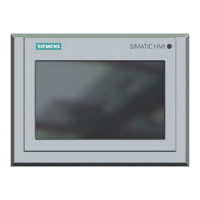
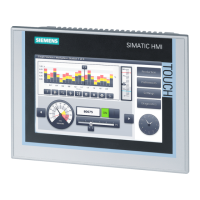
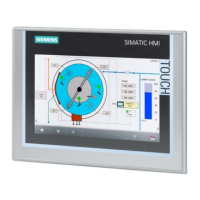
The machine's operation is primarily managed through the Siemens TP700 Comfort touch-screen, which serves as the Human Machine Interface (HMI). This interface is designed to be intuitive, allowing operators to control various aspects of the cutting process. Upon power-up, the HMI displays an initialization screen, and once all parameters are loaded, a "start" button appears, signaling readiness for operation. The HMI is divided into three main operational areas: Caterpillar, Cutter, and Batch, each with dedicated panels for specific settings.
The machine incorporates three critical safety functions monitored by a Siemens S7-1214FC Safety PLC: the Main Machine Door, the Cutter Safety Function, and Emergency Stops. Activating an Emergency Stop or opening the main machine door will bring the machine to a controlled halt, removing all torque and energy from motors and actuators. If an Emergency Stop is triggered, a "CHECK E-STOP" screen appears. Once the emergency stop is released and the circuit is complete, a blue safety circuit reset button flashes, allowing the operator to reset the system and return to the main control screen. Similarly, opening the main door displays a "DOOR OPEN" screen, requiring the same reset procedure.
The Cutter Safety Function is an independent safety mechanism that allows the cutter block to slide away, enabling product to be drawn through the machine by the belts even if the cutter is disengaged. If any part of this function is activated, a pop-up on the home screen indicates an incomplete safety circuit. Once the circuit is complete, a blue reset button flashes, which, when pressed for approximately 1.5 seconds, resets the safety function and allows the cycle to continue.
In the event of a serious system fault, such as internal communication issues or safety-related malfunctions, a "MACHINE FAULT" screen will appear. This screen advises the operator to load the diagnostics screen and note the fault. Pressing the yellow warning symbol on this screen provides access to system diagnostic information, which is crucial for troubleshooting and contacting Gillard technical support.
The Home Screen is the primary interface for day-to-day cutting operations. It is divided into three sections: Caterpillar, Cutter, and Batch. Pressing the green bottom bar opens the respective panels for detailed settings.
This panel controls the transport belts.
The Caterpillar panel offers three modes:
This panel controls the machine's cutting mode.
The cutter panel supports various cutting modes: Auto Mode, Camera Mode, Sensor Mode, Timer Mode, and Stop & Cut.
This panel manages batch-related settings.
The Tools screen provides access to all machine options and is password-protected for modifying settings, though all users can view them. Options not purchased with the machine appear with a black cross.
The manual stresses the importance of regular HMI calibration (every 6 months). The "Working Times" display allows monitoring of run hours for the PLC, belts, and blade, which is useful for scheduling maintenance and tracking component lifetime. The "Reset Drive Faults" button on the Drive Screen helps clear errors, and if faults persist, contacting Gillard technical support with the error code is advised. The "Broken Blade Sensor" and "Product Jam" features also serve as maintenance alerts, prompting operators to address issues promptly to prevent further damage or operational disruptions.
 General
| Display Size | 7 inch |
|---|---|
| Resolution | 800 x 480 pixels |
| RAM | 512 MB |
| Protection Rating | IP65 (front) |
| Power Supply | 24 V DC |
| Touch Technology | Analog resistive |
| Processor | ARM |
| Interfaces | Ethernet, USB |
| Dimensions | 214 x 158 mm |


 To Next Page