INDEX Page. 36 of 92
11.2 Operating
You need only take a few precautions when using the amplifier, thanks its high level of
automation.
The use of both the ALC and CAT connections is highly recommended.
If ALC is not used, SPE reminds you that it is better to lose a fraction of dB in transmitted
power, by slightly reducing the driving power, than to over drive the amplifier and have a
poor quality transmission and frequent alarms.
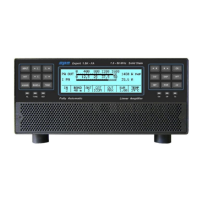
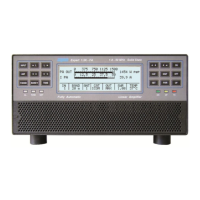
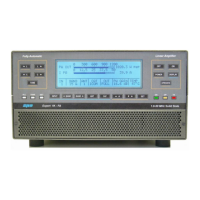
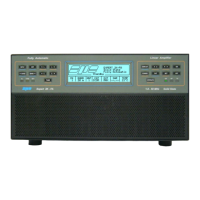
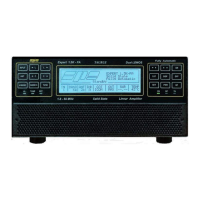
During transmission always glance periodically at the parameters on the display. SPE has
selected, designed and adjusted them with care for your use in monitoring your amplifier.
SPE recommends, when using the ALC link, that the transceiver be set to its maximum
output power as the ALC will automatically reduce the driving power to the optimum driving
level.
To reduce the linear output, if required, just switch the amplifier to “MID” or “LOW” with the
[POWER] key.
Of course you may also continuously regulate the amplifier’s output power by changing the
level of drive power from your transceiver , even with the ALC connected.
If an output power less than 1 KW or 500 Watts is desired, for best efficiency begin
reducing drive from the “MID” or “LOW” power state. It is not recommended to reduce
the drive while in MAX or MID to an output that is close to the next lower power.
For example, delivering only 500 Watts in MAX thinking not to stress the amplifier
you will get exactly the opposite result.
In fact in this case the MOSFET dissipates about 680 W, while in LOW delivering the
same output power would dissipate just 250.
430 W lost used only to raise the temperature of the MOSFET and possibly damage
it.
If the ALC link is not used, at each switching from MAX to MID or LOW, remember to
first manually reduce the driving power to avoid dangerous overdriving.
The heatsink temperature is continuously monitored:
in MAX it switches to MID at 75°C (167.00°F), it switches to LOW at 76°C (168.80°F),
it is switched to STANDBY at 77°C (170.60°F). If this last unlikely state is reached, it
is a good idea to investigate the possible causes starting with cleaning the air filter
where present.
Setting Driving Levels
a) SSB: Regulate the “MIC GAIN” of the transceiver until, speaking normally into the
microphone, the signal peaks on the display and does not quite reach the
maximum rated output power. Monitoring the transmission is a good way of
checking your settings. If there is however some distortion, decrease the
mike gain or decrease the power of the transceiver until a small
reduction of the output power of the amplifier is seen.
In any case the indication of the ALC on the transceiver display must be
respected.


 To Next Page