2-13 PERIODIC MAINTENANCE AND TUNE-UP PROCEDURES
REAR BRAKE LIGHT SWITCH
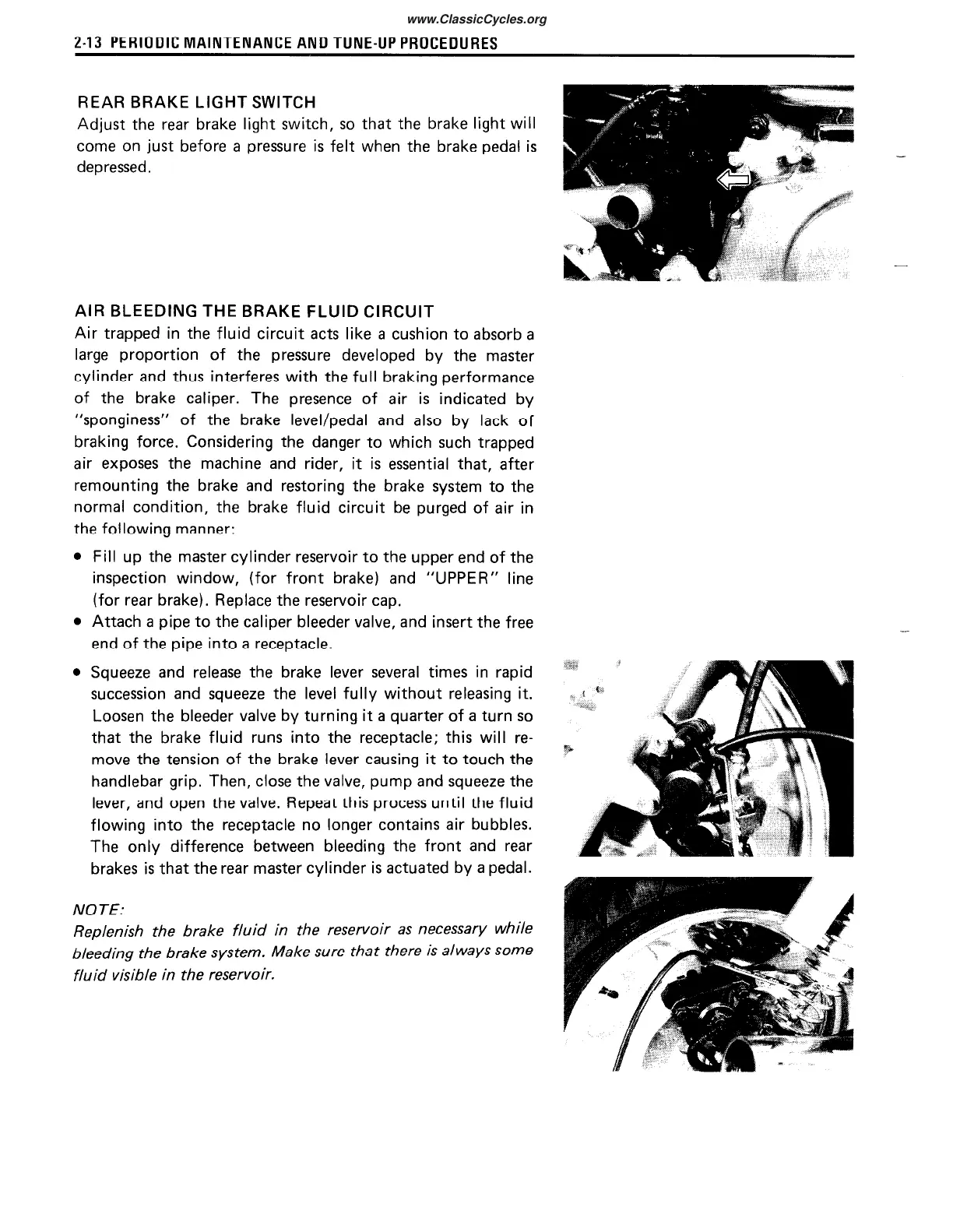
Adjust the rear brake light switch, so that the brake light will
come on just before a pressure is felt when the brake pedal is
depressed.
AIR BLEEDING THE BRAKE FLUID CIRCUIT
Air trapped in the fluid circuit acts like a cushion to absorb a
large proportion of the pressure developed by the master
cylinder and thus interferes with the full braking performance
of the brake caliper. The presence of air is indicated by
“sponginess” of the brake level/pedal and also by lack of
braking force. Considering the danger to which such trapped
air exposes the machine and rider, it is essential that, after
remounting the brake and restoring the brake system to the
normal condition, the brake fluid circuit be purged of air in
the following manner:
Fill up the master cylinder reservoir to the upper end of the
inspection window, (for front brake) and “UPPER” line
(for rear brake). Replace the reservoir cap.
Attach a pipe to the caliper bleeder valve, and insert the free
end of the pipe into a receptacle.
Squeeze and release the brake lever several times in rapid
succession and squeeze the level fully without releasing it.
Loosen the bleeder valve by turning it a quarter of a turn so
that the brake fluid runs into the receptacle; this will re-
move the tension of the brake lever causing it to touch the
handlebar grip. Then, close the valve, pump and squeeze the
lever, and open the valve. Repeat this process until the fluid
flowing into the receptacle no longer contains air bubbles.
The only difference between bleeding the front and rear
brakes is that the rear master cylinder is actuated by a pedal.
NOTE:
Replenish the brake fluid in the reservoir as necessary while
bleeding the brake system. Make sure that there is always some
fluid visible in the reservoir.


 To Next Page