EasyManua.ls Logo

TriMark e-ASK - User Manual

Default Icon
16 pages
Print Icon
To Next Page IconTo Next Page
Loading...
Page 1 of 16
e-ASK
electronic Access Security Keyless-entry
e-ASK Keyless-entry System Installation and Instruction Manual
OEM / Dealer / Installer
Cargo Lock/Unlock Version
This manual provides the necessary information for the proper installation and use of
TriMark’s e-ASK system. Included in this comprehensive access, security, keyless-entry
system are the following elements:
e-FOB: keyless entry radio frequency [RF] remote FOB transmitter and receiver
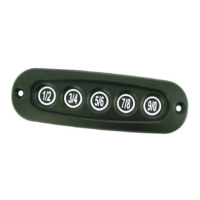
e-PAD: Convenient keypad user interface
e-ASK: I/O module
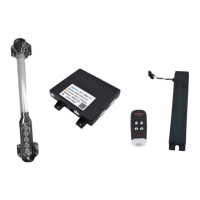
The following illustrations are provided to properly identify the contents of this system.
e-FOB with RF receiver,
2 remote transmitters FOBs,
and wiring harnesses
e-PAD keypad e-ASK I/O module
(Note: Horizontal or Vertical e-PADs are available)
UM04
18990-04
01/05-2

Other manuals for TriMark e-ASK

Questions and Answers

  • C
    clutzSep 3, 2025
    What to do if output relay latches on or off on TriMark Car Alarm?
    • K
      kaylasnyderSep 4, 2025
      If the output relay of your TriMark Car Alarm latches on or off, verify that power to the relay comes from the external relay power pin. If the condition continues, cycle power to the system; if it still persists, replace the relay.
  • E
    Erica WebbSep 4, 2025
    What does three short blinks mean on my TriMark Car Alarm?
    • R
      Rebecca CrawfordSep 4, 2025
      If your TriMark Car Alarm displays three short blinks, it means the I/O module couldn't claim its CAN address, likely because another I/O module on the bus is set to the same function instance. The I/O module will reset itself and try again, as this is considered a fatal error.
  • M
    Matthew AverySep 5, 2025
    What does two short blinks mean on my TriMark Car Alarm?
    • C
      Carol OliverSep 5, 2025
      If your TriMark Car Alarm displays two short blinks, it indicates an electrical problem with the CAN bus, possibly a problem with bus termination, or simply that the I/O module is the only node attached to the bus. If the I/O module is the only CAN unit on the network, the CAN communication must be disabled.
  • W
    wilsonashleySep 5, 2025
    What to do if the access code is not recognized on my TriMark Control Unit?
    • A
      Anthony WalkerSep 5, 2025
      If the access code for your TriMark Control Unit is not recognized, first ensure that the code hasn't been changed. If necessary, reassign the keypad following the instructions. Also, confirm you are using an access code and not the authority code.
  • M
    Matthew WillisSep 6, 2025
    Why is my TriMark Control Unit experiencing intermittent operation?
    • L
      Laura SmithSep 6, 2025
      If your TriMark Control Unit experiences no operation or intermittent operation, try mounting the RF receiver away from enclosed metal areas and fully extend the antenna. Also, check the FOB transmitter battery voltage; these batteries typically need replacement every 1-2 years, depending on usage.
  • C
    Corey DavisSep 6, 2025
    How to fix a TriMark Control Unit when button press does not provide correct operation?
    • L
      lesliehallSep 6, 2025
      If a button press on your TriMark Control Unit doesn't provide the correct operation, verify the power to the RF receiver. You may also need to replace the FOB transmitter battery or re-teach the FOB transmitter to the receiver.
  • C
    Christopher BoydSep 7, 2025
    What to do if my TriMark Control Unit has no response with button press?
    • P
      patricia09Sep 7, 2025
      If there is no response when you press a button on your TriMark Control Unit, verify the connection of the keypad.
  • M
    Michelle JohnsonSep 7, 2025
    Why does one particular e-FOB function not work on my TriMark Control Unit?
    • T
      Thomas RussellSep 7, 2025
      If a specific e-FOB function on your TriMark Control Unit isn't working, check the wire connection of the affected function at both the RF module and the wiring harness.

Summary

e-ASK Keyless-entry System Introduction

System Components Overview

Introduces the main components of the e-ASK system: e-FOB, e-PAD, and e-ASK I/O module.

e-FOB Operation and Features

e-PAD Operation and Features

e-PAD Configurations

Details the different operational configurations available for the e-PAD based on DIP switch settings.

e-PAD Security Features

Explains the protective deactivating security feature for the e-PAD to prevent unauthorized access.

e-ASK I;O Module Operation and Features

e-ASK System Configuration and Controls

S2 DIP Switch Assignments

Describes the functional assignments based on S2 DIP switch settings for relay banks and system configurations.

Trim Pot Variable Resistors

Explains adjustable settings for timed outputs like dome/porch light and auxiliary compartment lighting.

S1 Learn Switch Connector

Details the use of the S1 Learn Switch Connector for resetting keypad codes and assigning new ones.

Miscellaneous I;O Module Features

Covers features like status LEDs and basic door locking/unlocking pulse outputs.

System Modes and Confirmations

Locking and Unlocking Confirmation

Describes the audible and visual feedback provided upon locking and unlocking the system.

Panic Mode Operation

Explains how to activate and the effects of the panic mode function.

Alarm Mode Activation

Details the conditions under which the alarm mode is triggered and its response.

Timed Dome;Porch Light Activation

Describes the activation of the dome/porch light via keypad or FOB, and its duration control.

Mounting e-ASK Components

General Mounting Guidelines

Provides recommendations for optimal placement and mounting of the RF receiver and I/O modules.

Automatic Locking and Unlocking

Explains the feature for automatic locking after engine start and unlocking when turned off.

Wiring Color Code Tables and Diagrams

RF Receiver Assignments

Lists wire colors and their corresponding pin assignments for the RF receiver using various harnesses.

Lock, Unlock, and Door Actuate Relay Outputs

Details the relay output connections for locking, unlocking, and actuating different door banks.

Other Vehicle Connections on I;O Board

Outlines connections for trim pots, learning inputs, keypad connectors, and power sources on the I/O board.

Wiring Diagrams

Presents visual diagrams illustrating actuator wiring, auxiliary outputs, and switch inputs.

Programming and Setup Procedures

Teaching Additional Transmitter Fobs

Step-by-step instructions for programming additional e-FOB transmitters to the system.

Teaching Keypad New Authority; Access Codes

Guide for resetting the keypad, assigning a new authority code, and programming access codes.

Assign New Access Codes

Details the process for assigning up to five different access codes to the keypad.

Troubleshooting Guide

TriMark e-ASK Specifications

General IconGeneral
Operating Voltage12V DC
Remote StartYes
Keyless EntryYes
WeatherproofYes
Operating Temperature-40°C to 85°C
CompatibilityMost vehicles with automatic transmissions
Security SystemYes
Number of Buttons5

Related product manuals