Page 13
CHAPTER 2 - INSTALLATION
2.5.1 Single Temperature Probe
Install a single temperature probe in the area that best
reflects the overall room temperature. Connect the two
leads and the shield of the temperature probe to the
control panel terminals labeled “Probe”, as indicated in
figure 4.
2.5.2 Averaging (optional)
Four temperature probes are required if temperature
averaging is desired in larger rooms. Place the probes in
appropriate locations to best average room temperature.
Refer to figure 5.
2.5.3 Humidity Probe (optional)
Install one humidity probe in the area that best reflects the
overall room humidity. Connect the humidity probe to the
control panel terminals labeled “Probe”, as indicated in
figure 4.
2.6 ALARM
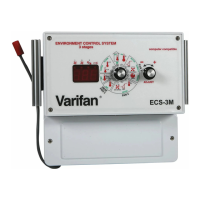
The ECS-3M provides a normally open and normally
closed dry contact for alarming low or high temperature
conditions. In addition, this same contact can be used to
signal a power failure. This contact may be connected to
an alarm system, or directly to a siren and/or auto-dialer.
Make normally open or normally closed connections as
indicated in figure 4.
Use shielded cabling for probes . Connect the shields
to the “SHLD” terminal. Failure to do so may result in
inaccurate readings!
Momentary power interruptions may trigger false
alarms! To avoid them, when the ECS-3M is connected
to an alarm system, install a time delay relay between
the ECS-3M and the alarm system.


 To Next Page