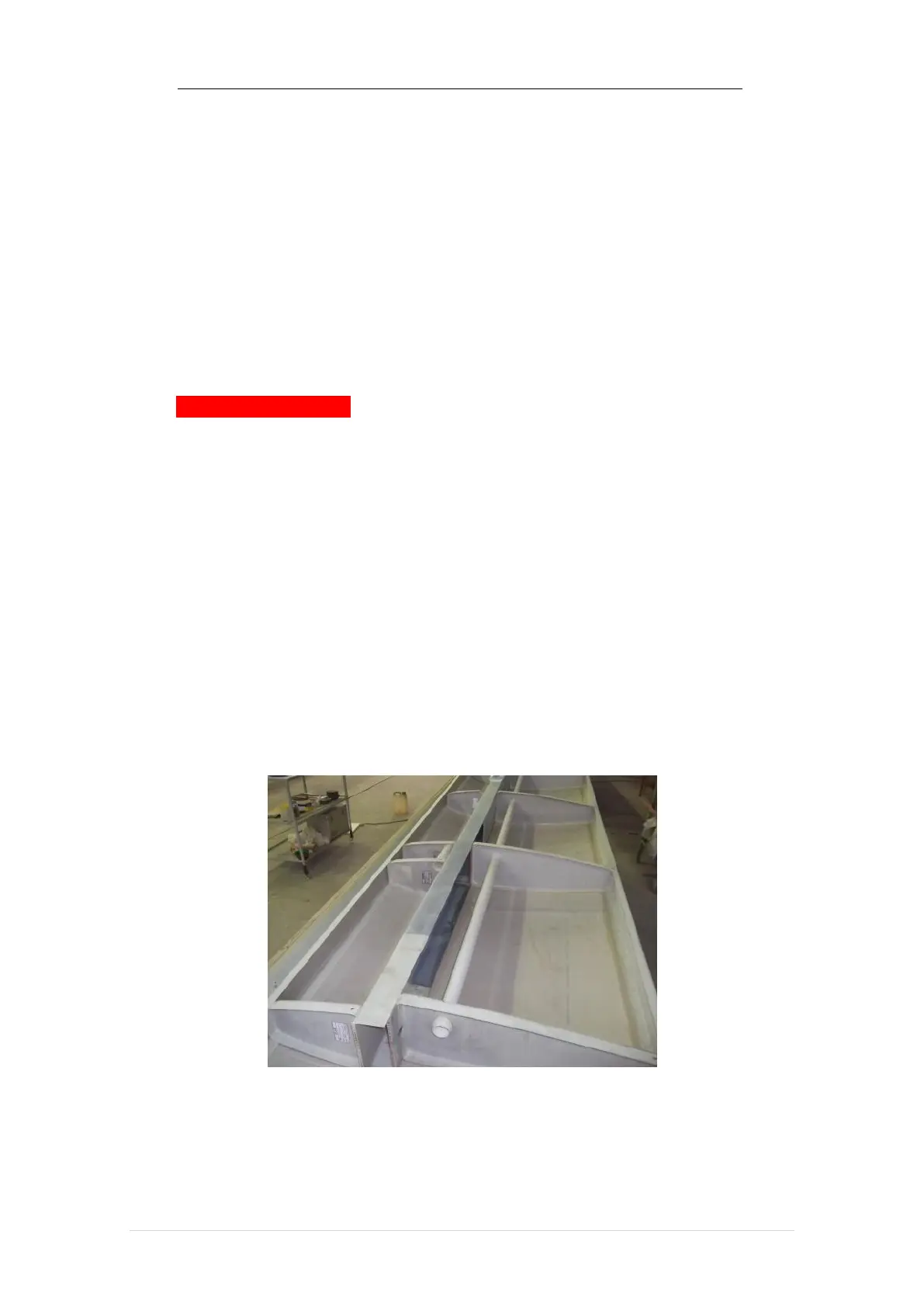
3.12 fuel proof
After the tank closing lamination has cured, remove the wing from the jig and place
it in the flight position (reverse position) and fill the tanks with water. Check for any leaks
or porosity, if any, empty the tank, wait for the product to dry and proceed with the
appropriate repairs immediately.
If any repairs were carried out, perform the procedures again to check for possible
failures. When satisfactory proceed with wing assembly.
3.13 static pitot lines
DEFINE AND WRITE
3.14 electrical conduit
Even if you are planning an aircraft for daytime VRF only, it’s a good idea to make
provisions for the wiring to come out at the wing tip. The easiest way to ensure protected
access for rear cabling is to purchase thin-walled PVC pipe and install conduit through
the inner rib and all the way through the outer rib. The layout of this conduit is completely
optional, just make sure there is no interference with flight controls. This is a good time
to check that there are vent holes to vent all wing compartments to prevent them from
becoming over-pressurized during a change in altitude.
If necessary, drill small holes of no more than ¼” in each section of conduit pipe to
ventilate the bays.


 To Next Page