VESDA
®
LaserPLUS Product Guide
1
1.1 Scope
The LaserPLUS Product Guide is written to provide you with comprehensive knowledge of the
detector.
This guide introduces you to the LaserPLUS features, technical specifications and gives an
understanding of its components and their function. You will also find instructions on installing,
cabling and powering up the detector.
This guide is for anyone involved with the design, maintenance and purchasing of a VESDA
system. It is assumed that anyone using this manual has knowledge and the appropriate
certification from the local fire and electrical authorities.
1.2 Introduction to the LaserPLUS
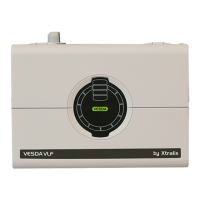
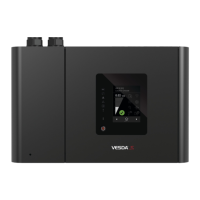
The LaserPLUS is an aspirating smoke detector providing very early warning of fire conditions by
drawing air samples through an air sampling pipe network. The detector chamber can detect
presence of smoke at very low concentrations. The embedded and PC software complimenting
the LaserPLUS provides a wide range of user defined parameters and reporting capabilities. The
detector easily interfaces with fire warning and fire suppression release systems, and can be
easily integrated into a building management system.
LaserPLUS Features
The LaserPLUS features make it a versatile smoke detection product:
• Each detector can cover an area up to 2,000 m
2
(20,000 sq. ft.)
• Wide sensitivity range
• Four programmable alarm thresholds
• AutoLearn feature
• Four pipe Inlets
• Individual pipe flow monitoring
• Replaceable air filter cartridge
• Option for inverted mounting
• Recessed mounting option
• Modular to meet site specific requirements
• Modular Display Module and LCD Programmer
• Seven programmable relays
• High efficiency aspirator
• Programmable general purpose Input
• PC capable programming and monitoring
• Multilingual displays
• Event log for up to 18,000 events
1.3 Operation of the LaserPLUS
An air sampling pipe network collects air samples from a protected area. The VESDA integrated
aspirator draws air into the sampling pipes through a pipe inlet manifold (up to four pipes can be
connected to a LaserPLUS detector). For further information on air sampling pipe networks
please see the Pipe Network Design and Installation Manuals.
Some of this air flows to the dual stage filter. The first stage air filter removes dust and dirt from
the sampled air and flows to the laser detector chamber to detect the presence of smoke.



 To Next Page