Using effects
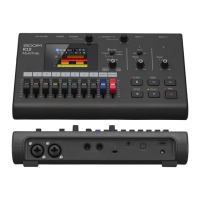
The R20 has effects that are equivalent to those in ZOOM multi-effects processors. Patch memories that
contain up to three effects can be selected. By selecting patch memories, a variety of effects can be applied
to instruments, voices and other sound sources.
Using the free Guitar Lab effect management application on a computer (Mac/Windows), you can add
effects that are distributed online as well as edit and back up patch memories, for example.
Effects can be used in the following two ways.
• Send effect
The input or playback sounds from individual tracks are sent to this effect. The sound with the effect
applied is output through the PHONES and OUTPUT jacks, so it can be checked through headphones
or powered monitors. The amount the effect is applied can be adjusted by setting the level sent to the
effect (send level).
The send effect does not affect recording data, but it does affect mixdown data.
This effect can be applied to multiple tracks, allowing it to be used, for example, to add reverb to every
track.
• Insert effect
This effect is applied directly to the track, so it does affect recording data.
Use this to record a guitar with distortion, for example.
Note: The insert effect can only be used on one track.
NOTE:
At any time, only a send or an insert effect can be used. The send and insert effect functions cannot be used
at the same time.
Using send effects
The send levels for signals sent to the effect can be adjusted for all tracks. The higher the send level the
greater the effect.
1. Tap “Send Effect” on a Track Settings Screen (→ Opening Track Settings Screens).
58



 To Next Page