8-4 VECTOR CONTROL AND MOTORS
SB1391 Hardware and Setup Guide - Document revision no. 1.14
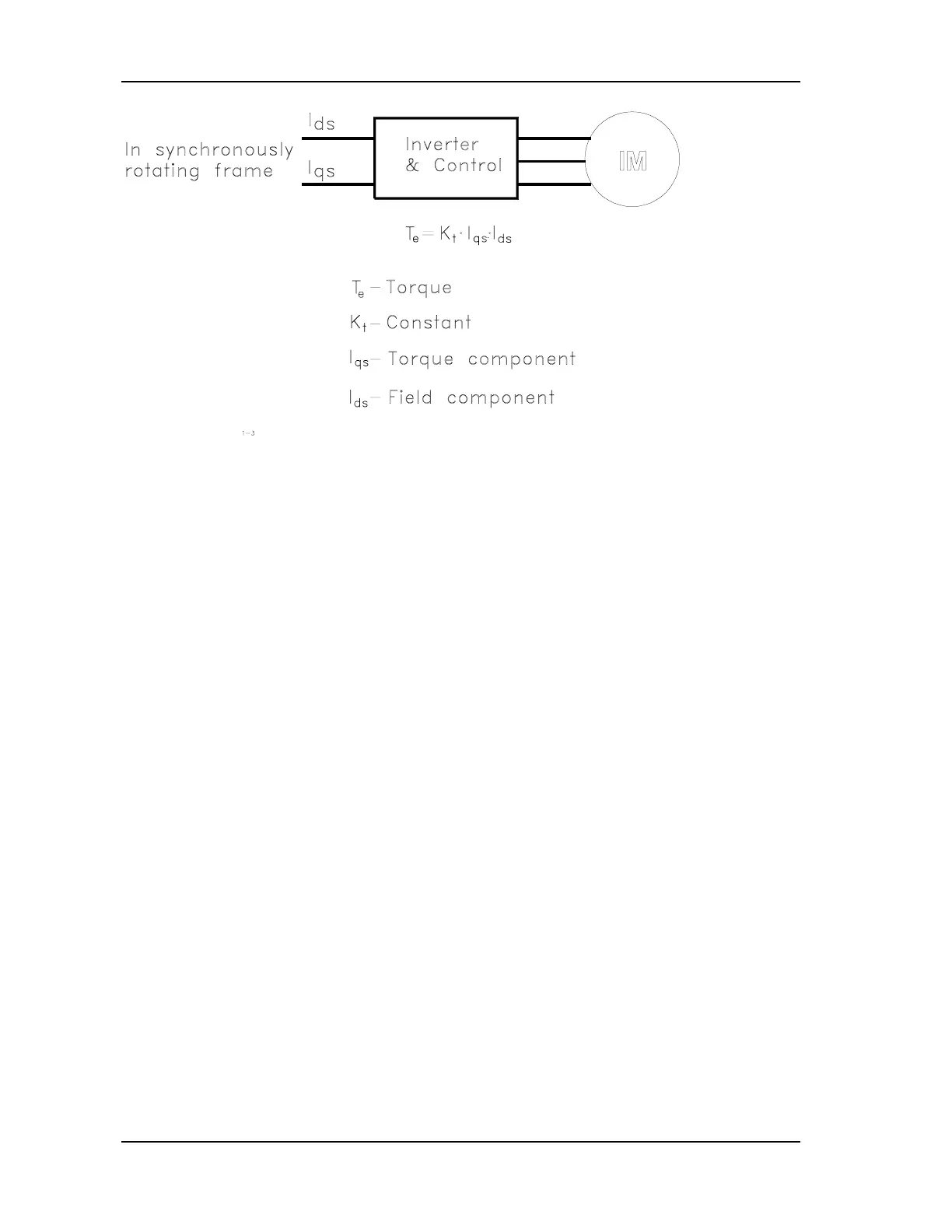
FIGURE 8-4 Model of induction motor in synchronously rotating reference frame
I
ds
- Direct axis component, analogous to the field current of the DC motor. (The Field Current -
FC parameter controls the magnitude of I
ds
.)
I
qs
- Quadrature axis component, analogous to the armature (torque generating) current of the DC
motor.
The synchronously rotating frame is rotating at an angular velocity that is equal to the speed of
the rotor (as measured by the encoder) plus the slip speed - W
s
. The angle of the rotating frame is
CP
t
. For a fixed magnetic field the necessary slip speed is directly related to the desired
torque/current I
qs
. (This is the reason that Vector Control is often referred to as Slip Control). The
relation constant is defined by the SK parameter.
By fixing I
ds
, setting I
qs
to be proportional to the torque command (= velocity loop output), and
transforming the two components to the rotating frame (F1 in FIGURE 8-1) according to the
instantaneous CPt, the AC motor acts like a DC motor. It is now suitable for servo applications.
The Vector Control method for DC brushless (AC servo/AC synchronous) motors is a private
case of the above. All that is required is to set I
ds
and SK to zero (which the control unit does
automatically when the axis type (XT) is changed from AC induction to DC brushless (AC
servo/AC synchronous).
8.2. When to Use an AC Induction Motor
The standard AC induction motor is larger and heavier than a permanent magnet DC brushless
(AC servo/AC synchronous) motor, and its inertia is higher. Therefore its dynamic characteristics
are inferior to that of a DC brushless motor (AC servo/AC synchronous). Its main advantage is its
low price. Here are some guidelines for using an AC induction motor:
When already using an AC induction motor and better velocity regulation or more accurate
positioning capabilities is required. The ACS-Tech80 control module makes these goals
achievable with superb performance at no price penalty (when compared with available vector
control based inverters).


 To Next Page