Chapter 1: Overview
Product Overview
Page 5
Product Overview
Unit Operation
The air conditioning system has three key components:
1. The free cooling system
2. The mechanical cooling system
3. The control system
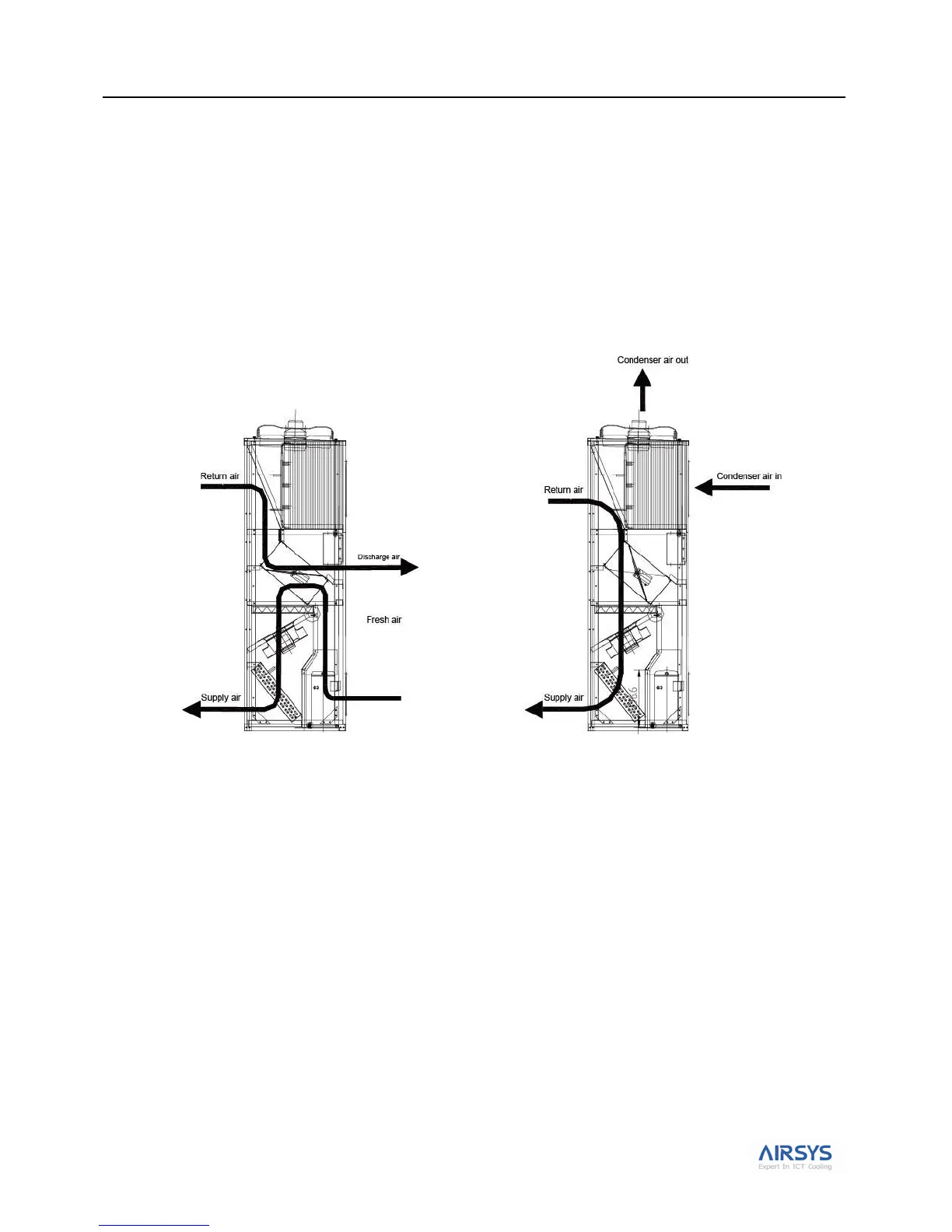
The control system determines the unit’s mode of operation: free or mechanical, as shown in Figure 1.
Figure 1: Basic Operating Modes
Free Cooling System
When the operating conditions for free cooling are met, the control system switches the air damper to the free
cooling position. Cooler air from outside is delivered to the shelter by the supply air fan. At the same time, hot air in
the shelter is discharged to the outdoor environment.
Mechanical Cooling System
When the operating conditions for mechanical cooling are met, the control system switches the air damper to the
mechanical cooling position. The compressor compresses the refrigerant gas and sends it to the condenser. The
condenser is a heat exchanger, removing heat from the hot compressed gas and allowing it to condense into a liquid.
The liquid refrigerant is then routed to the thermal expansion valve, which acts as a restriction device by forcing the
refrigerant to go through a small hole. This causes the pressure to drop. Then the liquid refrigerant is routed to the
evaporator. The evaporator is also a heat exchanger, absorbing heat from the indoor hot air causing the liquid
refrigerant to change back into gas. The refrigerant gas is then routed back to the compressor to complete the cycle.



 To Next Page