43
(3.6.1) Trigger Zones
Trigger Zones are the arrival point to the software for data from the Trigger Inputs.
Voltage is used for high-resolution velocity.
In Trigger mode, you can tap the zone objects to bring up Trigger settings for editing.
Each Trigger Zone is broken down into multiple articulations. Articulations are chosen
based on the analysis of the Trigger Input signal. Kit Pieces are the collection of
articulations that comprise an instrument. For example, a snare drum is a Kit Piece,
and is comprised of the articulations Head, Rimshot, Rim Click, and XStick. Each
articulation is assigned a MIDI note and plays the sound in that Trigger Zone.
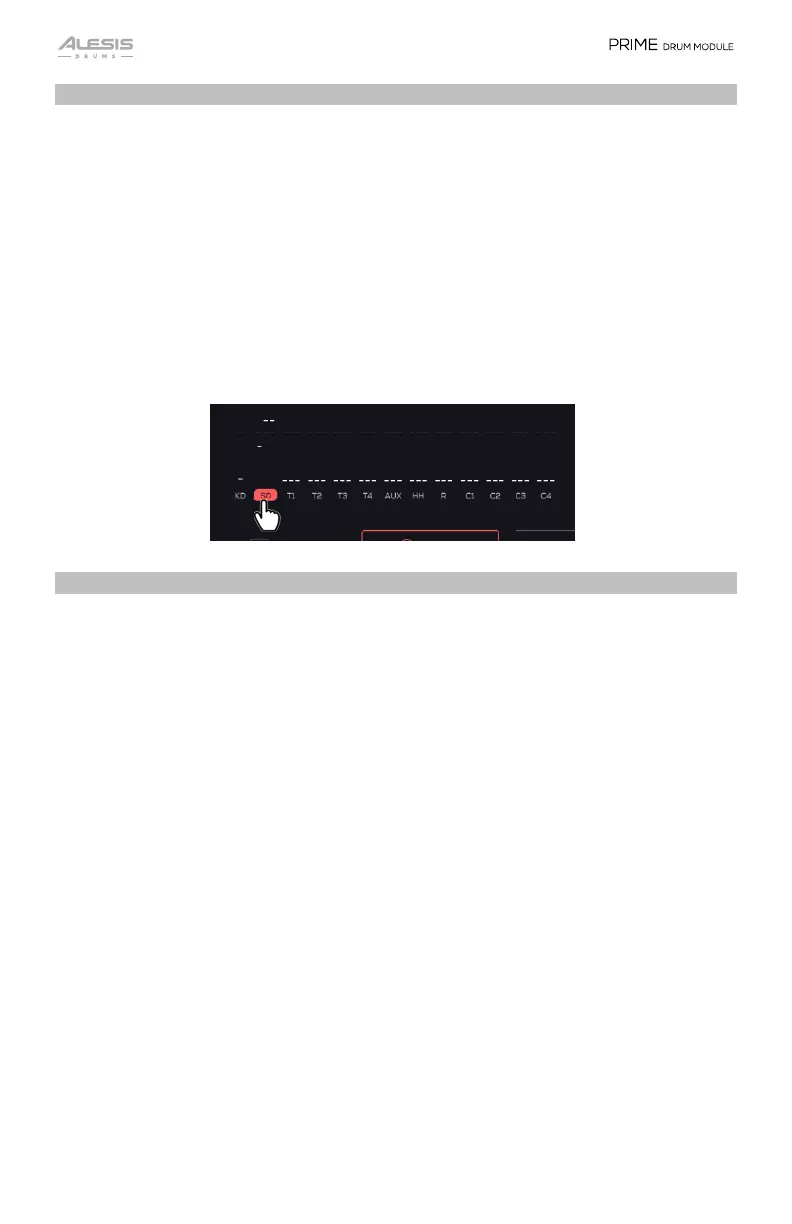
To select the different Trigger Slots, tap the Hit Select option or tap the letters at
the bottom of the meter section as seen below.
(3.6.2) Crosstalk
When striking a trigger causes another trigger to sound unexpectedly, it is referred to
as crosstalk (or XTalk). This is a normal part of all electronic drum kits, and Alesis has
created a new easy and automatic method for removing it.
Out of the box, the PRIME drum module has default crosstalk filter sections that should
work well in most instances. If there is any remaining crosstalk (such as if a cymbal is
mounted in an unexpected position), then you can either listen for the crosstalk,
and/or look at the meters on the trigger mode to see if crosstalk is occurring. If it is,
then select the trigger that is CAUSING the crosstalk, and begin XTalk Learn on that.
Follow these tips to further troubleshoot crosstalk:
• Make sure your drum and cymbal pads aren’t touching each other or their clamps.
• Firmly tighten (but do not overtighten) the clamps that fasten the pad to the
stand to ensure it is securely attached.
• Adjust the tightness of the cymbal wingnuts. Wingnuts that are too loose can let
the cymbal overly “bounce,” which can cause unwanted vibrations through the
boom arm and rack. Alternatively, wingnuts that are too tight do not allow
enough “bounce,” so the force from a strike will transfer directly to the rack.
• If possible, set up your kit on a soft, carpeted surface. Hard floors will generally
cause more vibration through the drum rack.


 To Next Page