Altera Corporation 9
Features
■ A Cyclone
TM
EP1C20F400C7device
■ 8 Mbytes of flash memory
■ 1 Mbyte of static RAM
■ 16 Mbytes of SDRAM
■ On board logic for configuring the Cyclone device from flash
memory
■ EPCS4 serial configuration device
■ On-board Ethernet MAC/PHY device
■ Two 5-V-tolerant expansion/prototype headers each with access to
41 Cyclone user I/O pins
■ CompactFlash
TM
connector header for Type I Compact Flash (CF)
cards
■ Mictor connector for hardware and software debug
■ Two RS-232 DB9 serial ports
■ Four push-button switches connected to Cyclone user I/O pins
■ Eight LEDs connected to Straix user I/O pins
■ Dual 7-segment LED display
■ JTAG connectors to Altera devices via Altera download cables
■ 50 MHz Oscillator and zero-skew clock distribution circuitry
■ Power-on reset circuitry
General
Description
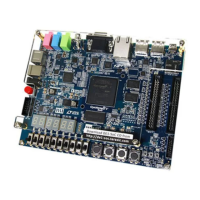
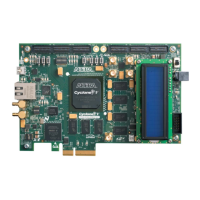
The Nios Development Board, Cyclone Edition, provides a hardware
platform for developing embedded systems based on Altera Cyclone
devices. The Nios development board features a Cyclone EP1C20F400C7
device with 20,060 logic elements (LEs) and 294 Kbits of on-chip memory.
The Nios development board comes pre-programmed with a 32-bit Nios
processor reference design. Hardware designers can use the reference
design as an example of how to use the features of the Nios development
board. Software designers can use the pre-programmed Nios processor
design on the board to begin prototyping software immediately.
Default Reference Design
When power is applied to the board, the on-board configuration logic
configures the Cyclone FPGA using hardware configuration data stored
in flash. When the device is configured, the Nios processor design in the
FPGA wakes up and begins executing boot code from flash memory.
Board Components


 To Next Page