Copyright © 2019 ANK Audio Kits
www.AudioNoteKits.com
audionotekits@rogers.com
Page 41
Also, be sure to solder on the underside of the board and check that you have nice little “volcanoes”
on each solder joint. (While it's not necessary, you can solder these through hole resistors on the top
as well as the bottom. If you hold the heat when soldering on the bottom for about an extra 1/2
second or so, usually just enough solder will flow through the hole to the top so that it forms a nice
volcano on the top without the need to touch it up.) When you go to clip a lead be sure to clip above
the volcano so that you don’t slice off this nice joint. You can also cup your hand over where you're
cutting to keep the clipped lead from flying off somewhere — and you can wear protective glasses,
which is a good idea! Hopefully we didn’t make any mistakes and you got all the right resistors and
quantities. If not, just drop me an email (audionotekits@rogers.com) and we'll get it straightened out
ASAP!
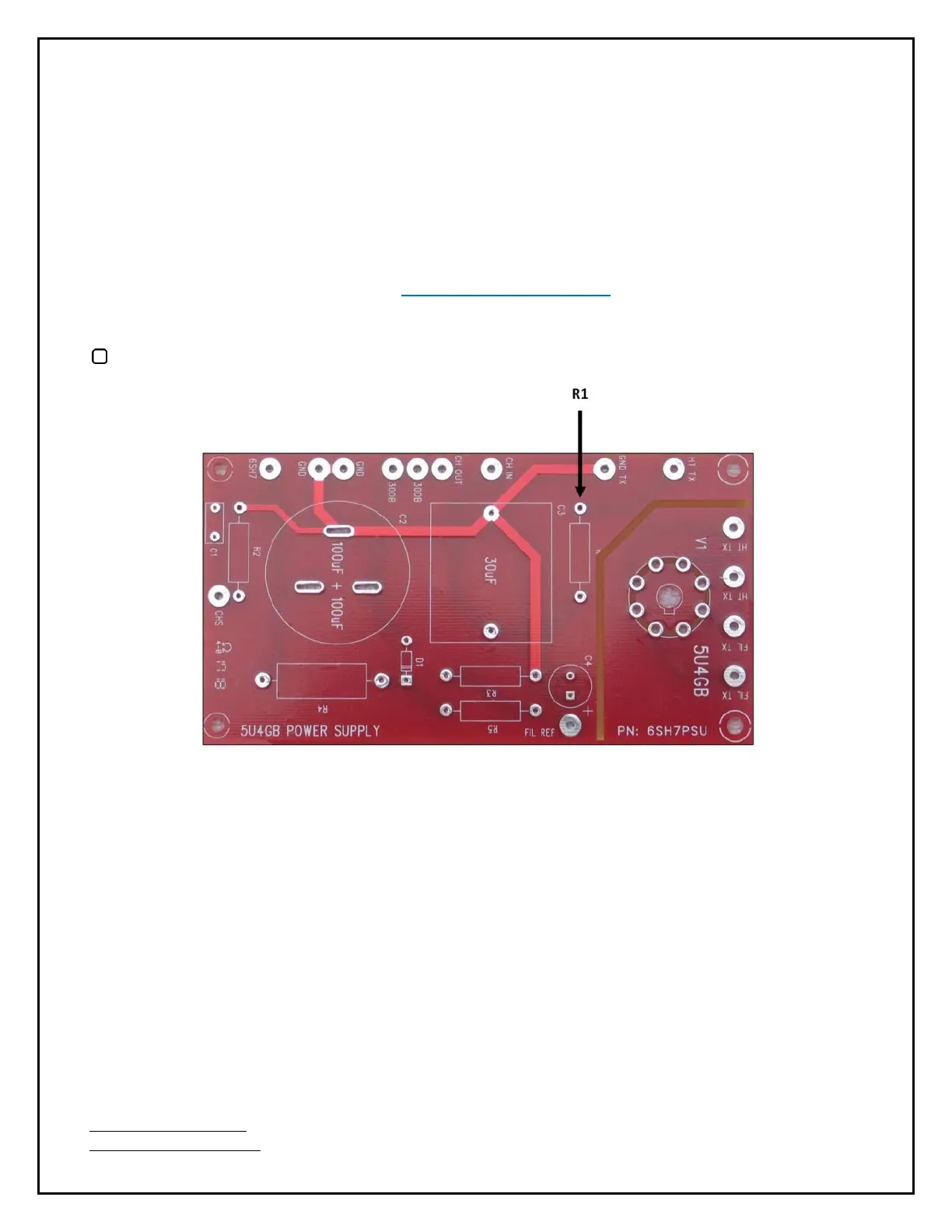
Install the resistors on the Power Supply board following the parts list above.
Take your time. When you're done, if you want to double check your connections, here's a way to be
absolutely sure the connections are good:
1. Set your multimeter to the Ohm position.
2. Touch one end to the lead of a resistor above the PCB (not the PCB solder pad to which it's
connected).
3. Touch the other end to a distant point that is directly connected (i.e., with no additional
resistance) to the other end of the resistor. (You'll may have to flip the PCB over and back to
determine where to position the lead.) You'll be able to read the value of that resistor and
assure yourself that both leads are properly soldered
. Note: If some part of this path has a
large capacitor in it, it may take a little time to register the value of the resistor you're
expecting.


 To Next Page