12
WIRE ROPE INSTALLATION
Winches are rated at bare drum line pull, meaning the maximum load capability will be reached on the fi rst layer of wire
rope. As the cable drum fi lls and adds layers of wire rope, the line pull will decrease (loss of leverage) as the line speed
increases (larger circumference). Therefore, it is best to install the minimum length of wire rope possible for your ap-
plication so the winch will operate on the lowest layers, delivering the maximum load capability.
Use of larger diameter wire rope will not always increase strength as the larger wire rope may be more prone to bending
fatigue failure due to the drum diameter. Consult your wire rope supplier for their recommendations regarding the best
wire rope and rigging for your application.
Winch wire rope anchors or U-Bolts are NOT intended to hold rated loads. Winch loads applied directly to the cable
anchor may cause the wire rope to pull free and result in sudden loss of load control and cause property damage,
injury, or death. A minimum of fi ve (5) wraps of wire rope must be left on the drum barrel to achieve rated load.
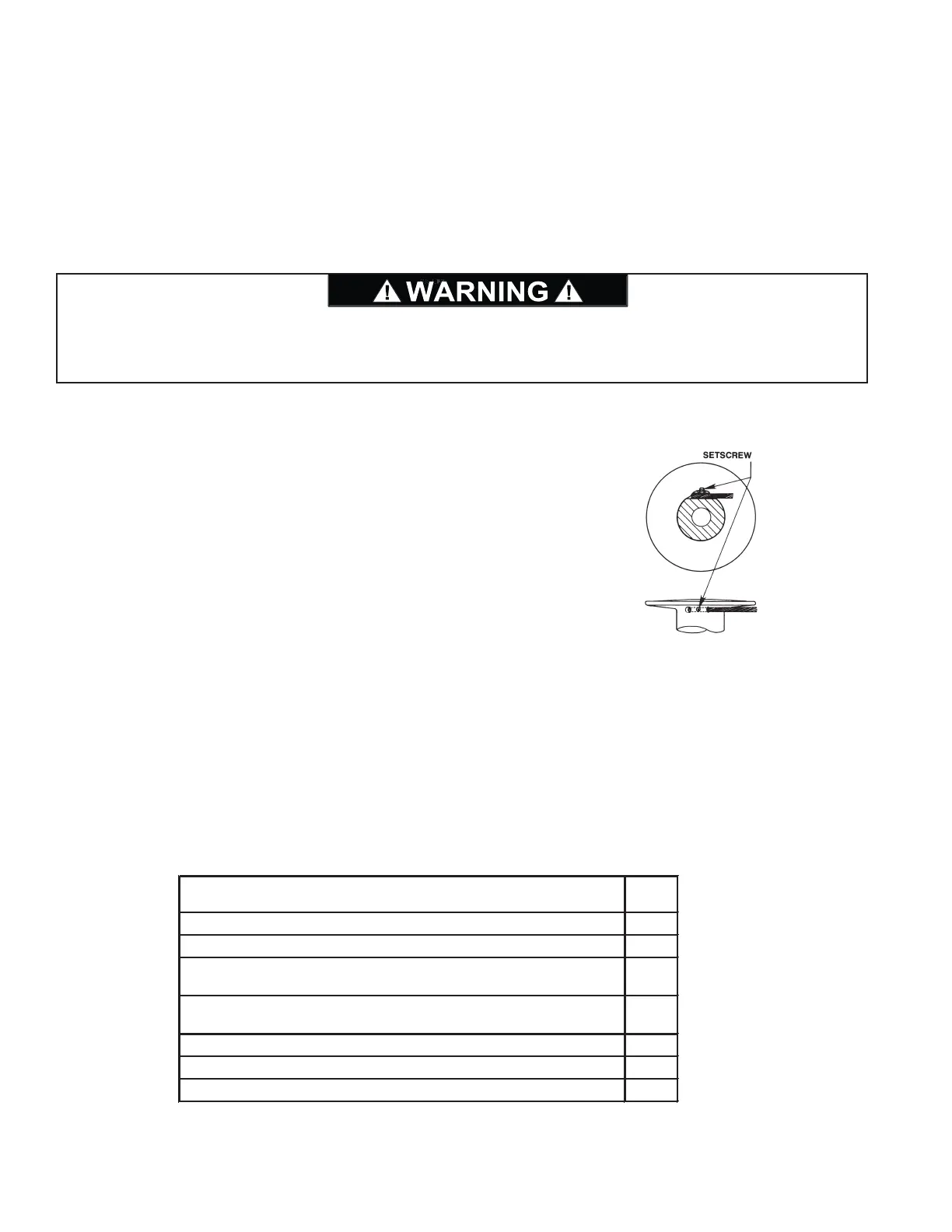
INSTALLATION OF SET SCREW CLAMPS:
Prepare the end of the wire rope as recommended by the wire rope manu-
facturer. Insert the proper size rope through the anchor hole until it is almost
fl ush with the other end. Apply “Loctite” or equivalent removable thread locking
compound to the clean, dry threads of the setscrew and install the setscrew.
Tighten the setscrew until the rope is slightly deformed and held securely.
PRE-DELIVERY CHECKLIST
Before releasing the winch to the end user, the following checklist should be reviewed and each item verifi ed.
INSPECTION
Check gear oil and refill as needed.
Lubricate all grease fittings.
Inspect winch mounting fasteners and torque
as required.
Check for loose or missing bolts, pins, keepers
and cotter pins. Replace as needed.
Check controls - adjustment and operation.
Verify winch operating pressure and flow.
Inspect for external oil leaks. Repair as needed.
3


 To Next Page