EasyManua.ls Logo

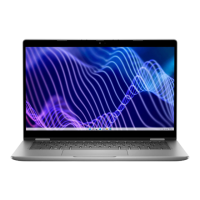
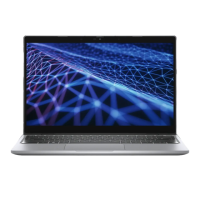
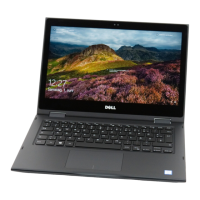
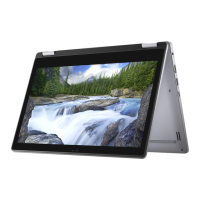
Dell Latitude 3310 - User Manual

Dell Latitude 3310
107 pages
Print Icon
To Next Page IconTo Next Page
Loading...
Dell Latitude 3310
Service Manual
Regulatory Model: P95G
Regulatory Type: P95G002
August 2021
Rev. A01

Table of Contents

Other manuals for Dell Latitude 3310

Questions and Answers

  • M
    Michael DavisJul 28, 2025
    What to do if my Dell Laptop battery is swollen?
    • S
      Sally HickmanJul 28, 2025
      If you notice that the lithium-ion battery in your Dell Laptop is swollen, you should discontinue using the laptop. Discharge the battery by disconnecting the AC adapter and allowing the battery to drain completely. Replace the swollen battery and dispose of it properly. You can also contact Dell product support to explore options for replacing the swollen battery under your warranty or service contract.
  • W
    wpattersonAug 6, 2025
    How to run ePSA diagnostics on a Dell Latitude 3310 Laptop?
    • D
      davidcollinsAug 6, 2025
      To run ePSA diagnostics on your Dell Laptop: 1. Turn on your computer. 2. As the Dell logo appears, press the F12 key. 3. In the boot menu screen, select the Diagnostics option. 4. To test a specific device, select it and click Run Tests.
  • B
    Bryan KellerAug 17, 2025
    How to perform Self-Heal on a Dell Laptop?
    • T
      Tonya FordAug 17, 2025
      To perform a Self-Heal on your Dell Laptop: 1. Remove the primary battery and the AC adapter. 2. Disconnect the CMOS battery. 3. Release the flea power by pressing and holding the power button down for 10 seconds, or leave the system idle for 45 seconds. 4. Plug in the AC adapter. 5. Update the system with the latest BIOS. 6. Perform ePSA to ensure proper functionality of the system.

Summary

Working on your computer

Safety instructions

Guidelines to protect your computer from potential damage and ensure personal safety.

Before working inside your computer

Steps to prepare the computer and workspace before performing internal service procedures.

Safety precautions

Precautions to observe before performing any disassembly or reassembly procedures.

Electrostatic discharge-ESD protection

Understanding ESD risks and methods to protect components from static damage.

Bonding

Method of connecting grounding conductors to the same electrical potential using an ESD kit.

ESD field service kit

Components and usage of the unmonitored Field Service kit for ESD protection.

Disassembly and reassembly

Base Cover

Procedure for removing and installing the base cover of the computer.

Installing the base cover

Steps to align and place the base cover back onto the computer.

Battery

Precautions and guidelines for handling Lithium-ion batteries.

Removing the battery

Step-by-step instructions for removing the battery from the computer.

Installing the battery

Step-by-step instructions for installing the battery into the computer.

Solid state drive (SSD)

Information about supported SSD form factors and their installation.

Removing the SSD

Steps to remove the SSD from the M.2 slot on the system board.

Installing the SSD

Steps to install the SSD into the M.2 bracket and secure it to the extender.

Display assembly

Procedure for removing and installing the display assembly.

Removing the display assembly

Steps to disconnect cables and separate the display assembly from the computer.

Installing the display assembly

Steps to install the display assembly and align its hinge caps on the palmrest.

System board

Procedure for removing and installing the system board.

Removing the system board

Steps to disconnect cables, remove brackets and screws, and lift the system board.

Installing the system board

Steps to incline, place, and secure the system board with screws.

System setup

Security

Options for setting and managing Admin, System, and Strong Passwords.

Secure Boot

Options to enable or disable Secure Boot and configure its mode.

Updating the BIOS

Introduction to updating the BIOS and related cautions.

Updating the BIOS in Windows

Steps to download and update the BIOS file from the Dell website.

Updating the BIOS using the USB drive in Windows

Steps to create a bootable USB and update the BIOS.

Updating the BIOS from the F12 One-Time boot menu

Steps to update BIOS using the F12 boot menu and a FAT32 USB drive.

System and setup password

Information on setting up system and setup passwords for security.

Assigning a system setup password

Steps to assign a new System or Admin Password in the BIOS setup.

Deleting or changing an existing system setup password

Procedure to delete or change an existing system or setup password.

Clearing BIOS (System Setup) and System passwords

Instructions to contact Dell technical support for clearing BIOS passwords.

Troubleshooting

Handling swollen Lithium-ion batteries

Guidelines and precautions for handling swollen Lithium-ion batteries.

Dell SupportAssist Pre-boot System Performance Check diagnostics

Overview of SupportAssist diagnostics and how to run them.

Running the ePSA diagnostics

Step-by-step instructions to run the ePSA diagnostics on the computer.

Self-Heal

Introduction to Self-Heal, an option to recover from No Post, No Power, No Video situations.

Self-Heal Instruction

Detailed steps to perform the Self-Heal procedure.

M-BIST

Information about the M-BIST diagnostics tool for system board failures.

How to run M-BIST

Steps to manually initiate M-BIST diagnostics before POST.

LCD Built-in Self Test (BIST)

Using the LCD Built-in Self Test to diagnose screen abnormalities.

How to invoke LCD BIST Test

Steps to invoke the LCD Built-in Self Test (BIST) mode.

Dell Latitude 3310 Specifications

General IconGeneral
MemoryUp to 16GB DDR4
GraphicsIntel UHD Graphics 620
ProcessorIntel Core i3-8145U
Display13.3-inch HD (1366 x 768) or FHD (1920 x 1080)
StorageUp to 512GB SSD
Operating SystemWindows 10 Pro
Battery42 Whr
PortsHDMI 1.4
WirelessBluetooth 5.0

Related product manuals