Maintenance Section
-144-
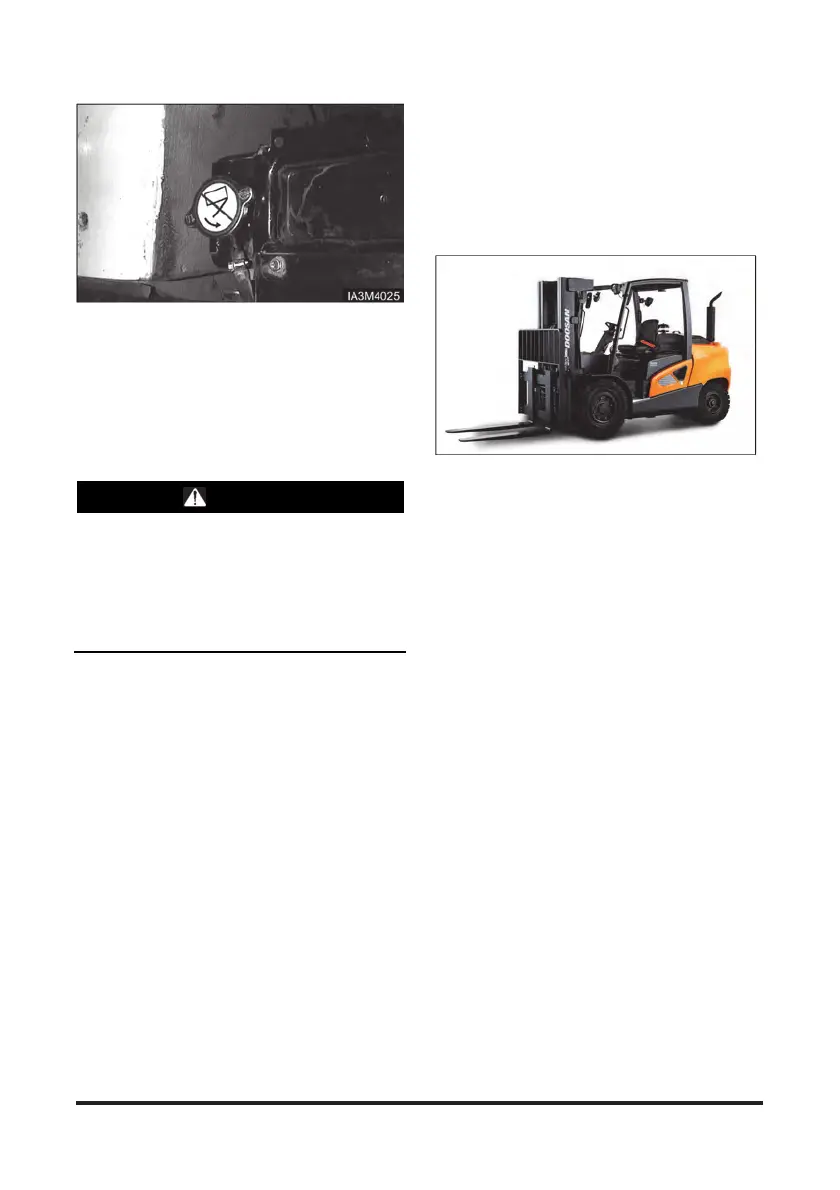
3. Start and run the engine to stabilize the coolant level
in the filter neck. If low add coolant until it reaches the
top of the filter neck. Install the radiator cap. Observe
coolant level in the expansion bottle. If necessary,
add coolant to bring the coolant to the appropriate
line on the expansion bottle.
4. Stop the engine.
5. Inspect the cooling system for leaks, hose cracks or
loose connections.
WARNING
Pressure air can cause personal injury.
When using pressure air for cleaning, wear a
protective face shield, protective clothing and
protective shoes.
Maximum air pressure must be less than 205 kPa (30
psi) for cleaning purposes.
6. Blow any dust and lint from the radiator fins.
Inspect Engine for Exhaust Leaks
Start the engine and allow it to reach operating
temperatures.
Perform visual inspection of exhaust system.
Repair any/all leaks found.
Walk - Around Inspection - Inspect
For maximum service life of the lift truck, make a
thorough walk-around inspection. Look around and
under the truck for such items as loose or missing
bolts, debris or dirt buildup, fuel, oil or coolant leaks
and cut or gouged tires.
Have any repairs made and debris removed, as
needed.
1. Inspect the tires and wheels for cuts, gouges, foreign
objects, inflation pressure and loose or missing bolts.
2. Inspect the mast and lift chains for wear, broken links,
pins and loose rollers.
3. Inspect the hydraulic system for leaks, worn hoses or
damaged lines.
4. Look for transmission and drive axle leaks on the lift
truck and on the ground.
5. Inspect the operator’s compartment for loose items
and cleanliness.
6. Inspect the instrument panel for broken gauges and
indicator lights.
7. Test the horn and other safety devices for proper
operation.
8. Inspect the cooling system for leaks, worn hoses and
debris buildup.
9. Inspect engine compartment for oil, coolant and fuel
leaks.
10. Inspect the forks.
Visually inspect forks for cracks, especially in the heel
section, around the mounting brackets, and all weld
areas.
Inspect for broken or jagged fork tips, bent or twisted
blades and shanks.
Make sure positioning lock is in place and working.
Lock the forks in position before using the truck. See
Step 7 of “Forks” in “Every 2000 Service Hours or
Yearly”.
Remove all defective forks from service.



 To Next Page