
 Need help?
Do you have a question about the Draytek Vigor2912 Series and is the answer not in the manual?
Explains the function of common web interface buttons like OK, Cancel, Clear, Add, Edit, and Delete for router configuration.
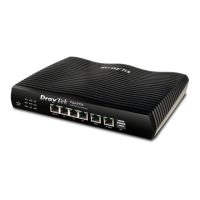
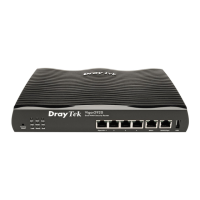
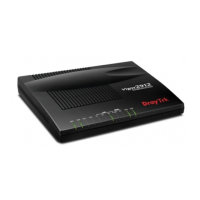
Provides an overview of the Vigor2912 and Vigor2912n router's LED indicators and physical connectors.
Guides users through the physical connection of the router, modem, and computer for initial setup.
Details the process of installing and configuring a printer to be shared via the Vigor router.
Instructions on how to access the router's web configuration interface using a web browser.
Guide on how to change the administrator password for enhanced router security.
Walks users through the initial setup of the router's WAN connection using a step-by-step wizard.
Explains how to activate services like Web Content Filter (WCF) using a wizard.
Covers accessing the web console, backing up configuration, and logging out of the router interface.
Displays the current status of LAN, WAN, and IPv6 connections on the router.
Describes the process of saving router configuration changes through the web interface.
Guides users on how to register their Vigor router on the MyVigor website for additional services.
Provides instructions on configuring IPv6 service settings for the Vigor2912 router.
Explains how to access and manage files on a USB storage device connected to the Vigor router.
Details the steps for establishing a LAN-to-LAN VPN connection using IPsec tunnels.
Guides on using Quality of Service (QoS) to manage and optimize network bandwidth.
Provides a practical example of configuring QoS settings for different traffic types.
Explains how to configure and use the Landing Page feature for customized user access.
Guides on creating an account on the MyVigor website for accessing services.
Shows how to configure firewall rules to control internet access for specific computers.
Details methods to block Facebook access using Web Content Filter and URL Content Filter.
Covers WAN configuration, including IP network basics and general setup for multiple WAN connections.
Details how to configure internet access modes (PPPoE, Static IP, PPTP, L2TP, DHCP, 3G/4G) for WAN interfaces.
Explains how to configure Virtual LANs (VLANs) for network segmentation and traffic management.
Guides on setting up load balancing policies to distribute network traffic across multiple WAN interfaces.
Covers Local Area Network (LAN) settings, including basics, general setup, static routes, VLANs, and IP binding.
Explains Network Address Translation (NAT) features like Port Redirection, DMZ Host, Open Ports, and Address Mapping.
Details firewall settings, including basics, general setup, filter rules, and DoS defense mechanisms.
Covers user-based security features for managing access and applying policies to users.
Allows defining IP objects, groups, service types, keywords, and file extensions for policy configuration.
Configuration for Content Security Management (CSM), including APP Enforcement and URL/Web Content Filters.
Features for managing network bandwidth, including session limits, bandwidth limits, and Quality of Service (QoS).
Configuration for various applications like Dynamic DNS, Schedule, RADIUS, LDAP, UPnP, IGMP, Wake on LAN, and SMS/Mail Alerts.
Covers VPN client, server setup, remote access control, IPsec, and LAN-to-LAN connections.
Guides on managing local and trusted CA digital certificates for secure authentication.
Configuration for wireless network features: basic concepts, general setup, security, access control, WPS, WDS, and advanced settings.
Manages USB devices connected to the router, including general settings, user management, file explorer, and device status.
Covers system status, TR-069, password management, backup, syslog, time settings, management, reboot, firmware upgrade, and activation.
Provides tools to view and diagnose router status, including dial-out triggering, routing tables, ARP cache, and ping.
Allows control and management of external devices connected to the Vigor router.
Guides on verifying the router's hardware status by checking power and LED indicators.
Provides steps to ensure computer's network connection settings are correctly configured.
Explains how to use the 'ping' command to check the router's link status.
Guides on verifying the correctness of ISP settings in the router's WAN configuration.
Troubleshooting steps for issues with 3G USB modem network connection.
Details how to reset the router to factory default settings via software or hardware.
Provides information on contacting the dealer for further assistance if issues persist.
 General
| VPN Support | Yes |
|---|---|
| Firewall | Yes |
| Protocols | L2TP |
| USB Ports | 1 |
| Power Supply | DC 12V |
| Operating Temperature | 0°C |
| Storage Temperature | 70°C |
| Humidity | 10% to 90% non-condensing |





 To Next Page
