2388-MANUL-V10.00.00-UTP2 Operating Manual
Page 55 of 74
4.3.5 Measuring Ultrasonic using the Ultrasonic Contact Probe
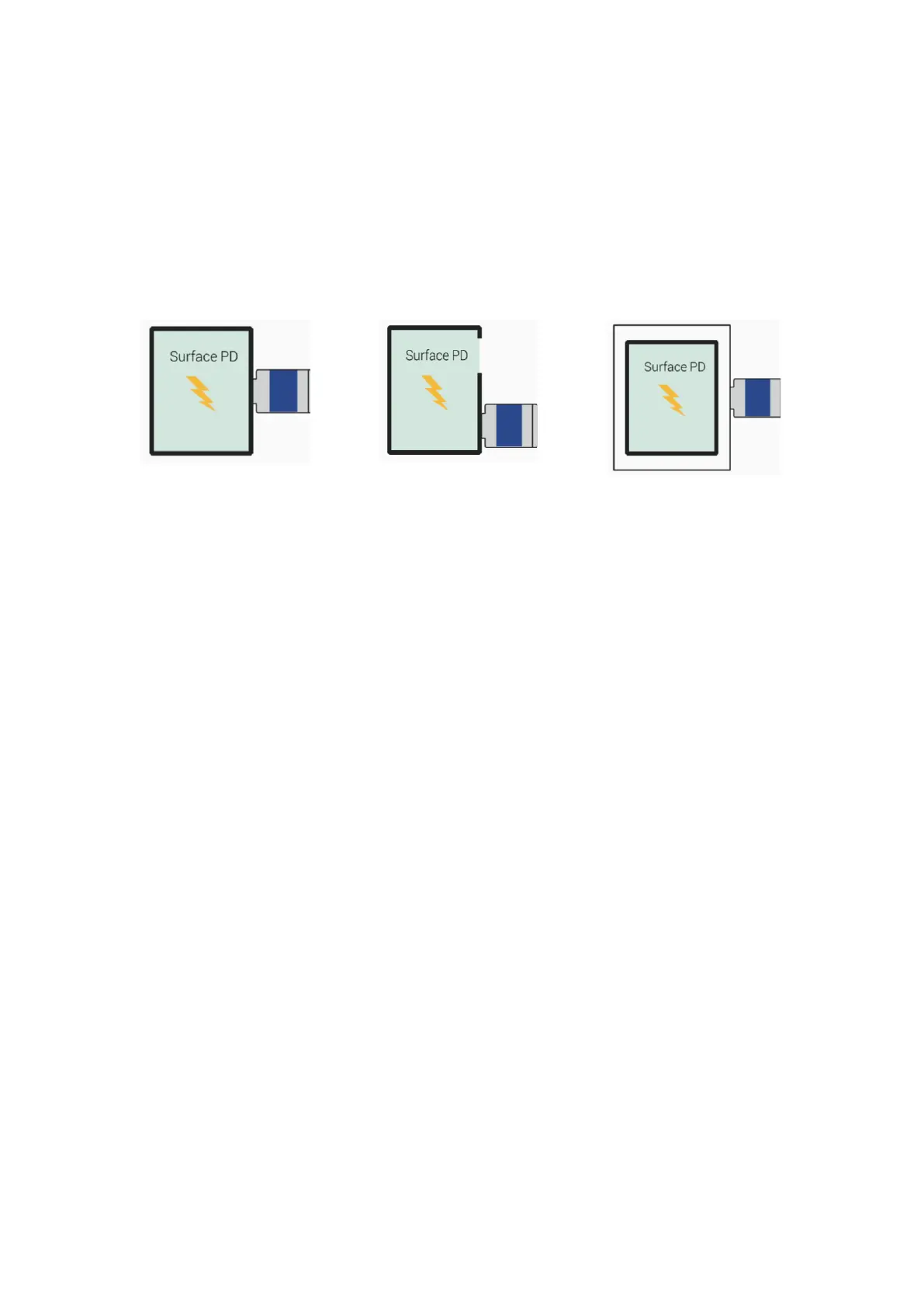
The Ultrasonic Contact Probe (UCP1) is designed to detect Partial Discharge (PD) in sealed chambers. It should
be used if there is no direct path between the PD source and instrument sensor. However, it must not be used
if the tank containing the expected PD source is separated with another layer. In cases where there is a direct
air path between the source of PD and the instrument, an airborne sensor should be used. Due to the physics
of ultrasound, in most cases using an airborne sensor may offer better sensitivity than that obtained using the
Ultrasonic Contact Probe.
Detection of Partial Discharge using the Ultrasonic Contact Probe is based on the PD pattern recognition carried
out by operators. The audio signature of a Partial Discharge detected by the Ultrasonic Contact Probe is similar
to those obtained using airborne sensors. Care must be taken to eliminate other sources that could cause the
signals from discharges to be masked, e.g. accidental movement of the probe itself or strong vibration on the
panel.
When the instrument dB values are read for comparison purposes, always use the same type of the sensor, in
the same position as previously used. The asset measuring point can be marked on the plant item to facilitate
easy location in future.
Due to the differing propagation paths of the ultrasonic signals, measurements carried out using the Ultrasonic
Contact Probe cannot be compared against measurements carried out using airborne sensors.



 To Next Page