WHY SWEEP?
Street sweeping is an essential part of sanitation.
In health, ecology and aesthetics, the community
benefits from clean streets. Clean streets reduce
dust and dust-borne contaminants, bacteria from
decomposition of organic matter, pollutants enter-
ing stormwater systems and accidents due to debris
in the roadway. Community pride is enhanced by a
clean environment. People are less likely to litter in
a clean area. Tourists have a positive first impres-
sion of the community, which may encourage them
to stay longer and return more often.
HISTORY OF SWEEPING
At the turn of the century, streets were in terrible
condition. Most were unpaved, creating dust in dry
seasons and mud in rainy seasons and harboring
disease-producing bacteria. Gradually streets were
paved with cobblestones and bricks. This decreased,
but did not eliminate dust and mud. Droppings
from horses, garbage, paper and other litter also
needed to be removed. As populations grew, so did
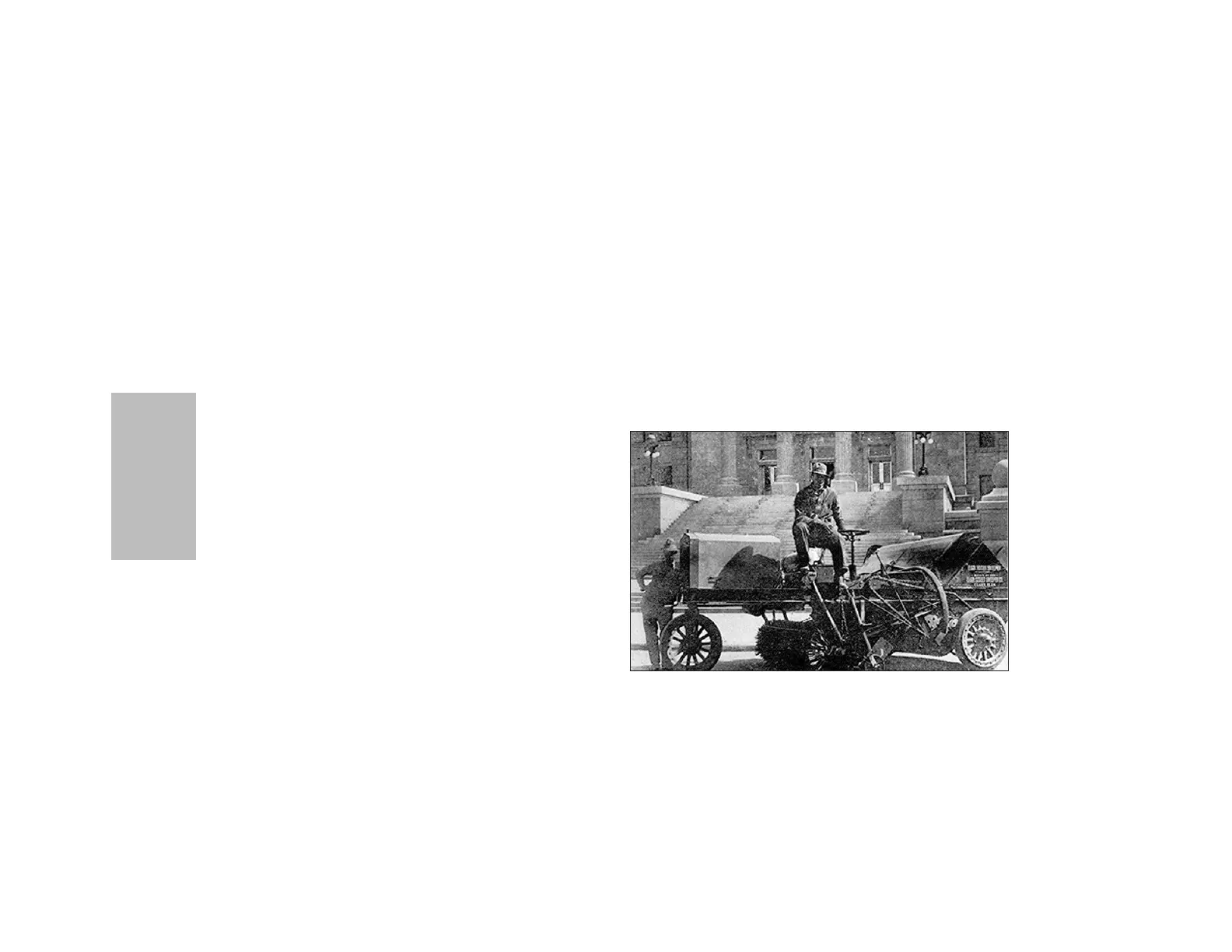
this problem. By 1914 motorized vehicles were
becoming more popular, displacing horse-drawn
vehicles and replacing one set of problems with
DESCRIPTION
D-2
HISTORY OF SWEEPING
PRINCIPLES OF OPERATION
Figure D-1
1914 Elgin Sweeper in Boise, Idaho


 To Next Page