Owner’s Manual Page 74Fuel Systems - Section I
b. Be sure the proper type and grade of fuel
as recommended by your Engine Owners
Manual is used.
c. Determine how much additional fuel is
requiredtoavoidoverow.
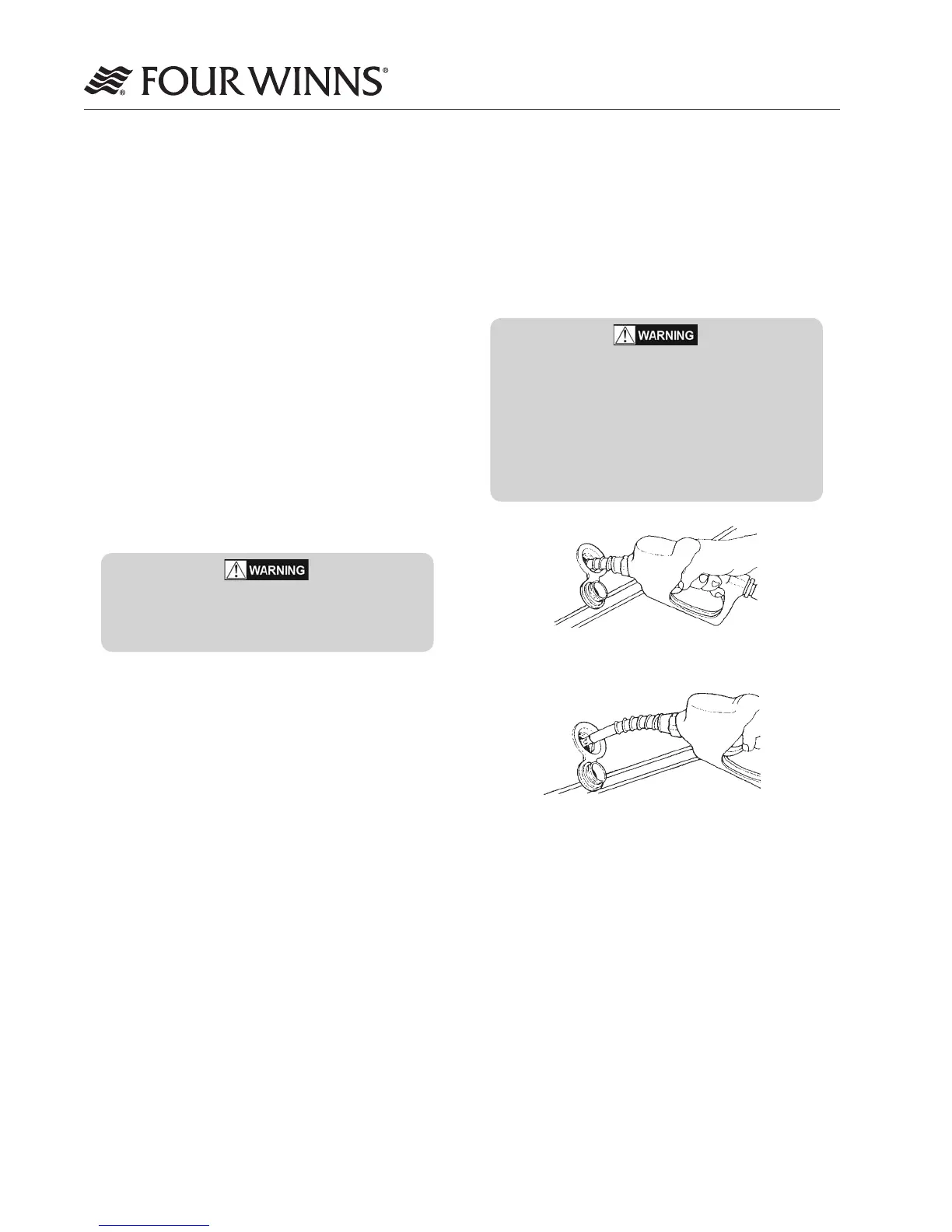
4. Duringfueling:Keepthellnozzleincontact
with the fuel opening at all times to guard against
possible static spark. See Figure I-6.
Spilled fuel is a re or explosion hazard.
DO NOT overow the tank or allow fuel spills
into the hull or bilges. Avoid overboard spills.
When tank is almost full the sound from the
fuel vent will change. The pitch will become
higher indicating the tank is close to being full.
Stop pumping fuel into the tank.
DO NOT TOP OFF.
(Nozzle in contact with fuel opening.
Grounding the fuel hose - proper)
(Nozzle not in contact with fuel opening.
Not grounding the fuel hose - Improper)
Figure I-6: Grounding Fuel Hose
5. After fueling:
a. Replaceallllcapssecurely.
b. Wipe up any spilled fuel.
c. Determine that there is no odor of gasoline
in the engine compartment or below decks
before starting machinery, turning on lights or
lighting stove. Operate the bilge blower sys-
tem for at least four (4) minutes before engine
start-up.
d. Be prepared to cast off moorings as soon
as engine is started.
B. Recommendations
Assume blended gasoline is being used and follow
these recommendations below.
1. Inspect fuel hoses often. A deteriorated hose
containing alcohol blended gasoline will normally
be soft and swollen. A deteriorating hose contain-
ing no fuel will normally be hard and brittle. In both
cases the hose should be replaced.
2. Ventilate the engine compartment before starting
the engine(s). Operate the engine compartment
blower for four (4) minutes. Then, prior to starting
the engine(s), check the bilge area for the scent of
gasoline fumes; DO NOT start the engine(s) if the
odor of gasoline is detected.
3. Frequentlyinspectthefuelsystemttings.Inspect
thefueltank,pumpandlterforsignsofleaksor
corrosion. Visually inspect for deteriorating metal
ttingsatthefuelhoseconnections.
Avoid serious injury or death from re or
explosion resulting from leaking fuel. Inspect
system for leaks at least once a year.
If areas are found within the fuel system that appear
questionable,haveaqualiedmarinetechnicianin-
spect the system. A thorough fuel system examination
should be made by an experienced marine technician
at least once a year.
I - 3 FUELING INSTRUCTIONS
1. Avoid fueling at night except in emergencies.
2. When moored at fueling pier:
a. Do not smoke, strike matches, or throw-
switches.
b. Stop all engines, motors, fans, and devices
that could produce sparks.
c. Put out all lights.
3. Before starting to fuel:
a. Ensure that boat is moored securely.




 To Next Page