• Scan your Sensor often to see how carbs, medication, exercise, illness, or
stress levels impact your Sensor glucose readings. The information you
get can help you gure out why your glucose sometimes goes too high
or too low, and how to prevent it from doing so in the future.
• Talk to your health care professional about how your insulin works. The
more you understand about your insulin, including how long it takes to
start working and how long it lasts in your body, the more likely you will
be to make better treatment decisions.
• Making a treatment decision doesn’t just mean taking insulin. Treatment
decisions can also include things like taking fast-acting carbs, eating, or
even doing nothing and scanning again later.
• Your health care professional can also help you to understand when
doing nothing and scanning again later is the right treatment decision.
For example, if your glucose is high and going up, your rst instinct may
be to take more insulin to lower your glucose, however depending on
when you last took insulin or your recent activity, the right treatment
decision may be to do nothing and scan again later. Avoid “insulin
stacking”.
When not to use Sensor Glucose readings for treatment decisions
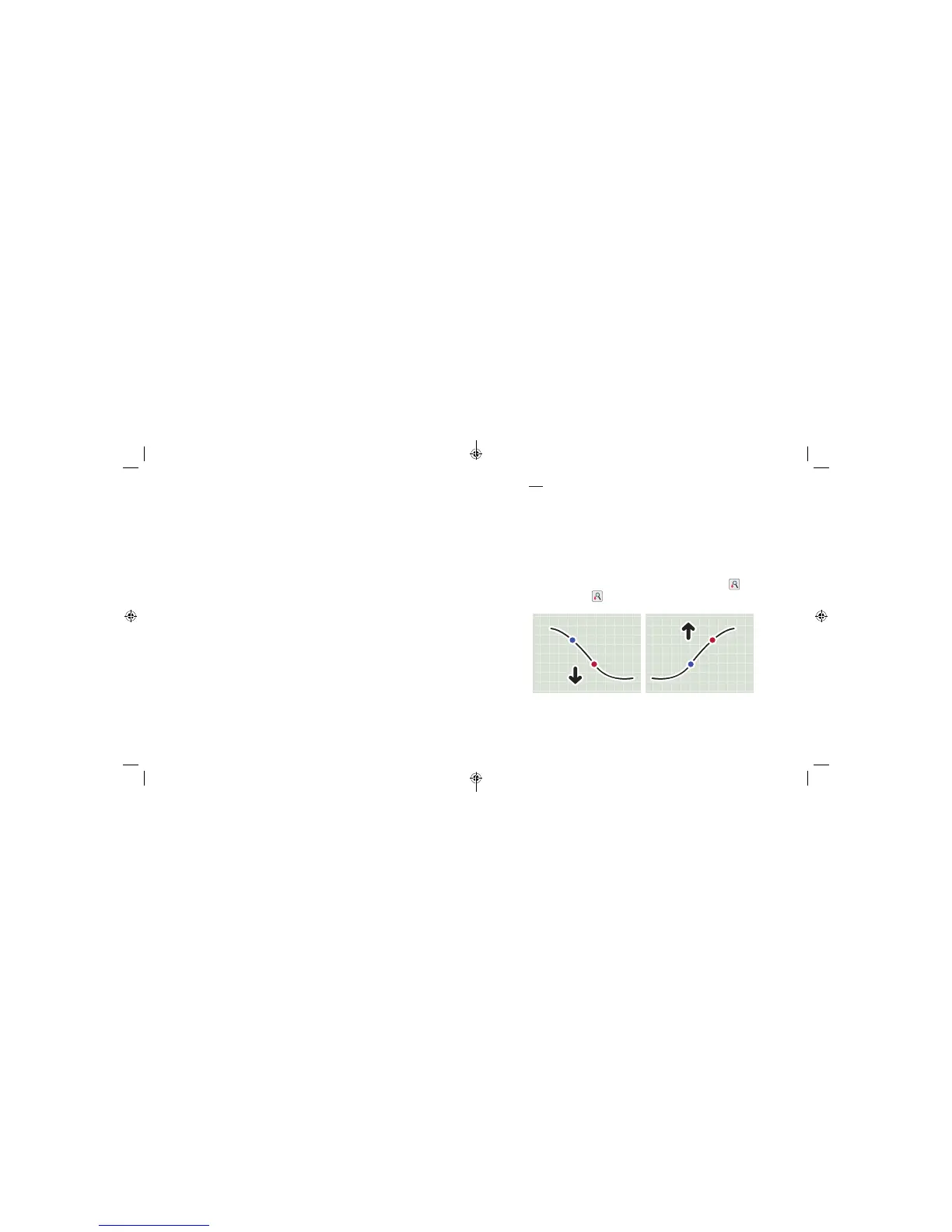
Glucose is Falling Quickly or Rising Quickly
Sensor glucose values, which are based on interstitial uid glucose levels,
can be dierent from blood glucose levels (ngersticks), particularly
during times when your blood glucose is changing quickly. For example
after eating, taking insulin, or exercising. When glucose levels are falling
quickly, glucose readings from the Sensor may be higher than blood
glucose levels. On the other hand, when glucose levels are rising quickly,
glucose readings from the Sensor may be lower than blood glucose levels.
If glucose is rising quickly or falling quickly, you will see the
symbol.
Whenever you see the
symbol, do a blood glucose test and treat
based on that result.
Glucose
Rising
Quickly
Blood Glucose
100 mg/dL
Sensor Glucose
95 mg/dL
Glucose
Falling
Quickly
Sensor Glucose
80 mg/dL
Blood Glucose
70 mg/dL
Low Glucose or Glucose Going Low message
The System lets you know about hypoglycemia or impending
hypoglycemia with a Low Glucose or Glucose Going Low message. These
messages may not accurately reect blood glucose. When there is a Low
35 36
ART38553-101_rev-A_manual.indd 35-36 2/1/18 2:13 PM


 To Next Page