Making Treatment Decisions – Advanced
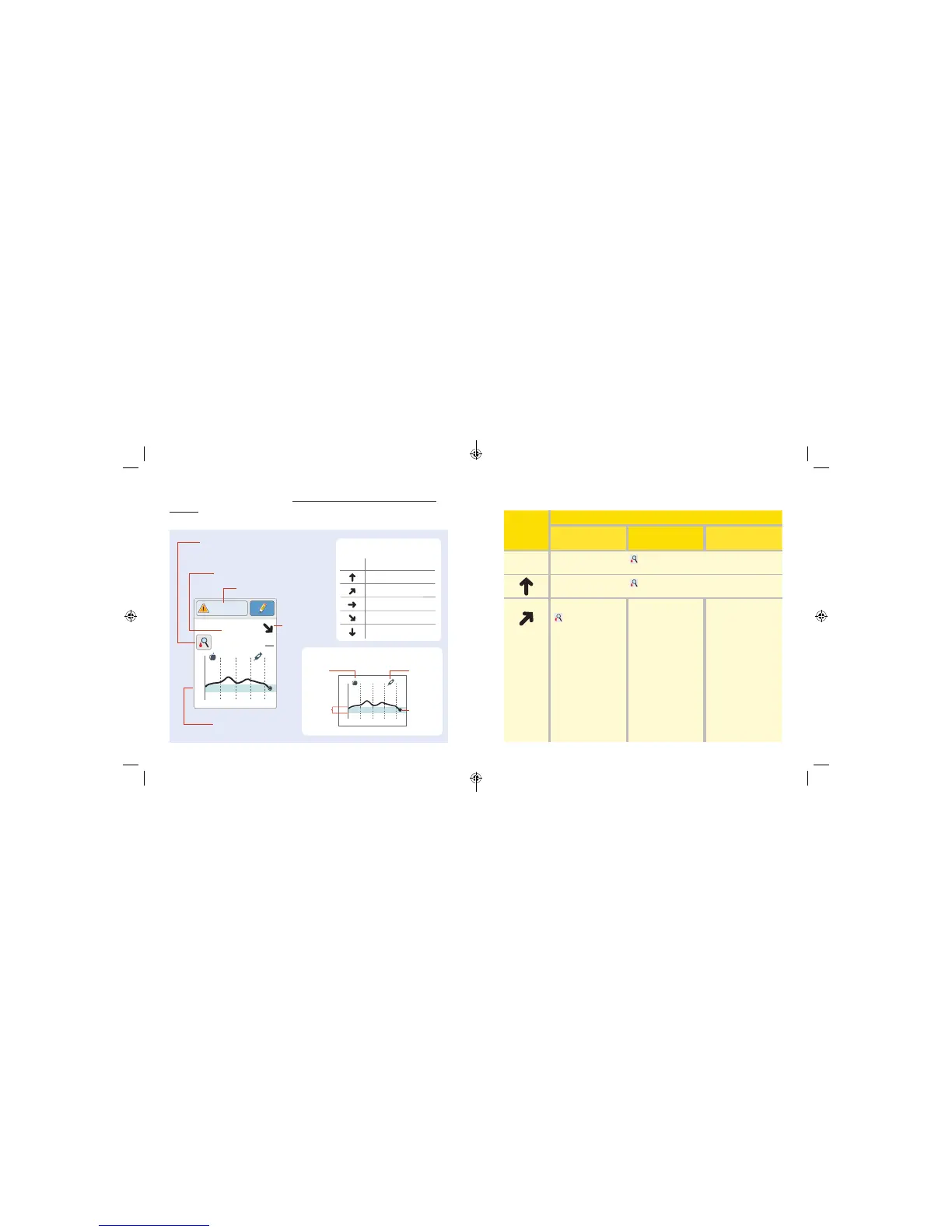
After you scan your Sensor, use all of the information on the
screen when deciding what to do or what treatment decision
to make.
350
250
150
50
82
mg
dL
2pm 6pm 10pm
350
250
150
50
mg/dL
2pm 6pm 10pm
Current Glucose
Check Blood Glucose
When you see this symbol, do a blood glucose test
before making a treatment decision
Message
Glucose Graph
Graph of your current and stored glucose readings
Food Note
Target
Glucose
Range
Rapid-Acting
Insulin Note
Current
Glucose
Glucose Trend Arrow
Direction your glucose is going
Arrow What it means
Glucose rising quickly
Glucose rising
Glucose changing slowly
Glucose falling
Glucose falling quickly
Glucose
Trend
Arrow
Glucose Graph
Glucose Going
Low
Time
This table provides some information on how you can factor the Glucose
Trend Arrow into your treatment decisions. Remember that you should
never make a treatment decision based on the Glucose Trend Arrow alone.
Glucose
Trend
Arrow
Treatment Decision Considerations
Low Glucose
(< 70 mg/dL)
Glucose in
Target Range
High Glucose
(> 240 mg/dL)
No Arrow or
No Number
You will see the
symbol. Do not treat based on Sensor
glucose reading. Do a blood glucose test.
You will see the symbol. Do not treat based on Sensor
glucose reading. Do a blood glucose test.
You will see the
symbol. Do not
treat based on Sensor
glucose reading. Do a
blood glucose test.
If you are about to eat,
take insulin to cover
your meal. Consider
taking a little more
since glucose is rising.
If you have taken
insulin recently, do
nothing and scan again
later.
Avoid “insulin stacking”.
If you are about to eat,
take insulin to cover
your meal. Consider
taking a little more
since glucose is high
and rising.
If this is between
meals, consider taking
an insulin correction
dose, unless you have
taken insulin recently. If
you have taken insulin
recently, do nothing
and scan again later.
Avoid “insulin stacking”.
39 40
ART38553-101_rev-A_manual.indd 39-40 2/1/18 2:13 PM


 To Next Page