50
“Automatic Fan Control Mode” - fan runs only
when there is a demand for heating or cooling;
“Manual Fan Control Mode” - guest can select
automatic or continuous fan operation;
“Minimum Set point” - minimum temperature
that a guest can request;
“Maximum Set point” - maximum temperature
that a guest can request;
“Auto Changeover Set Point Offset” - the
difference between the guest-selected set
point and the heat and cool changeover
temperatures;
“1st Stage Differential - Heat” - the amount
of degrees the Wall Controller has to
sense between the automatic changeover
temperature for heat and the room temperature
before a call for the 1st stage heating is
initiated;
“2nd Stage Differential - Heat” - difference
between 1st stage heating temperature and
room temperature before the 2nd stage heating
is initiated;
“1st Stage Differential - Cool” - the amount
of degrees the Wall Controller has to sense
between the automatic changeover temperature
for cool and the room temperature before a call
for the 1st stage cooling is initiated;
“Maximum Setback Temperature” - the
highest room temperature allowed when Wall
Controller is in the setback mode;
“Minimum Setback Temperature” - the
lowest room temperature allowed when Wall
Controller is in the setback mode;
“Temperature Setback Delay” - the length of
time for which the room that is in the guest
occupancy mode needs to be unoccupied
before the temperature setback is initiated;
“Incidental Occupancy Threshold” - the
minimum period of time (in minutes) for which
occupancy needs to be detected in order to
enter the “Guest Occupancy” mode;
“Night Occupancy Threshold” - the minimum
period of time during the “Night Occupancy”
period for which occupancy needs to
be detected in order to enter the “Night
Occupancy” mode;
“Night Occupancy Period” - The period of
time during the day during which the “Night
Occupancy” mode can be activated if
occupancy longer than the “Night Occupancy
Threshold” is detected;
“Auto Restore On” - Wall Controller will restore
the most recent guest settings when new
occupancy is detected;
“Auto Restore Off” - Wall Controller will NOT
restore the most recent guest and will remain
turned off settings when new occupancy is
detected;
“Setback Set points On” - Wall Controller will
maintain setback temperatures when room is
unoccupied;
“Setback Set points Off” - Wall Controller will
NOT maintain setback temperatures when
room is unoccupied;
“Incidental Occupancy” - occupancy shorter
than the “Incidental Occupancy Threshold”;
“Guest Occupancy” - occupancy longer than
the “Incidental Occupancy Threshold”;
“Temperature Setback” - Wall Controller
maintains setback temperatures and not the
guest set point temperature in order to save
energy;
“Night Occupancy Mode” - Wall Controller
status during which setback mode is disabled
if occupancy longer than “Night Occupancy
Threshold” is detected within the “Nigh
Occupancy” period;
“Automatic Temperature Changeover” - Wall
Controller automatically activates heating
or cooling to maintain the desired room
temperature;
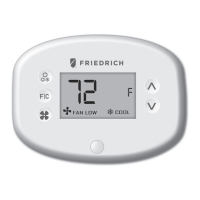
APPENDIX 2 - Glossary
VPXEMWRT2-Thermostat Manual_pkg.indd 50 2017-12-15 3:37 PM



 To Next Page