ORIUS ™ 833 User’s Guide Series Rev 3 II
A2 Description
An ORIUS™
TM
SC 200D CCD camera acquires an electron microscope image into a computer in four stages.
First a scintillator converts the electron image into a high-resolution light image. Then a lens system captures the
light from each point in the image and channels it to the CCD. The CCD then converts the transferred light
image into a second electron image. Finally, the CCD shifts that image charge row by row to the low-noise
output amplifier, readout electronics and digitizer.
Sensitivity is achieved by maintaining high efficiency at each stage of the image signal chain: light generation
in the scintillator, optical coupling by the lens, image detection by the CCD pixel and also by cooling and low-
noise readout. Resolution is achieved by minimizing light scatter in the scintillator and lens and by optimized
proximity focus at the end of the lens system using high quality, high numerical aperture optics. In addition,
since the signal chain contains no moving or flexible parts the detection efficiency has very high stability over
time.
The camera controller shown in Figure A2 (front panel view) and Figure A3 (back panel view) and an image-
acquisition computer are linked to the camera by supplied cables. Compressed air for controlling the camera
insertion and retraction is taken from the microscope as is the cooling water.
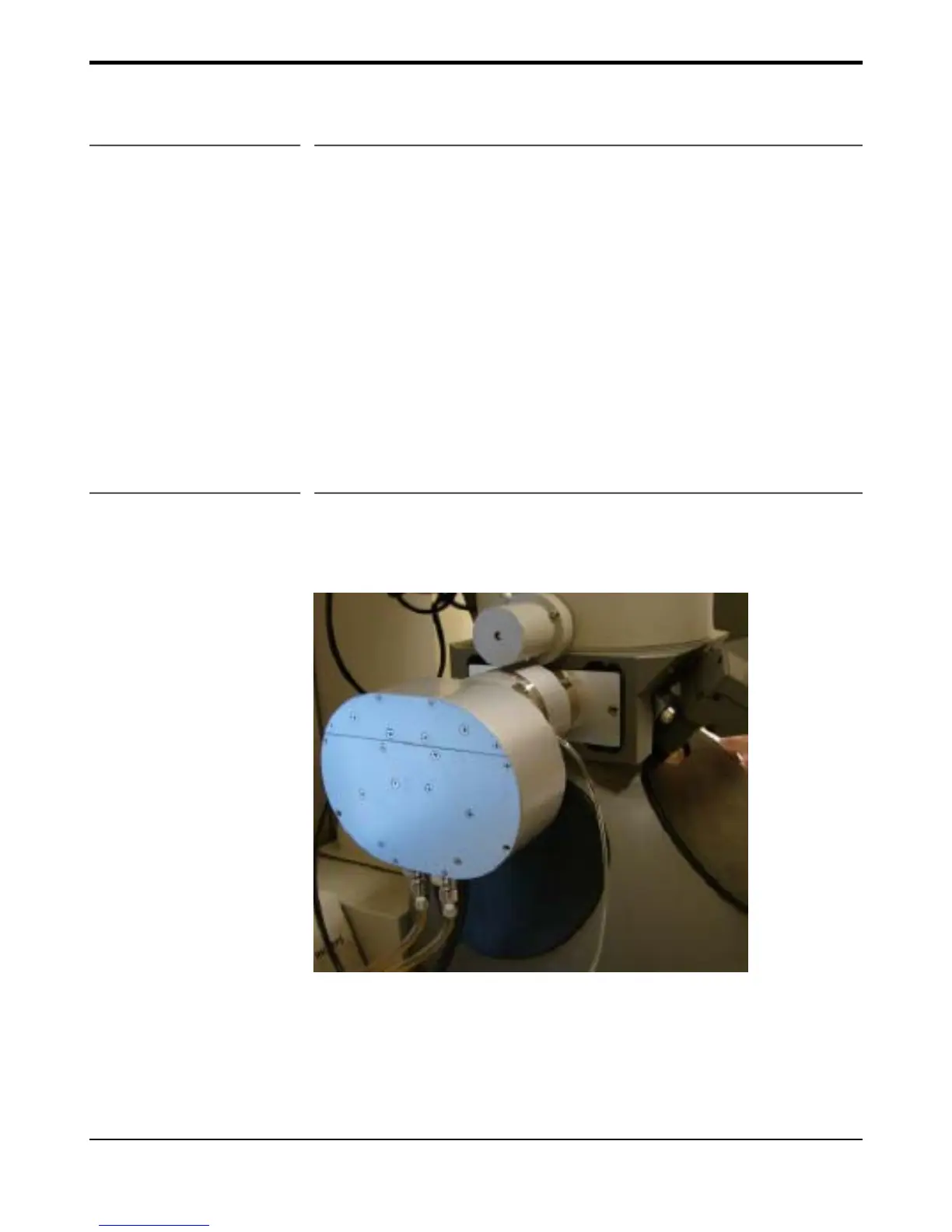
Figure A1 ORIUS™
TM
833 camera mounted on a TEM column.


 To Next Page