D-0134090-A – 2022/11
VisualEyes™ - Instructions for Use - EN Page 85
3.9.2 VORTEQ™ assessment
VORTEQ™ Assessment can be added to VisualEyes™ 505, VisualEyes™ 515 and VisualEyes™ 525, and
includes the Dynamic Visual Acuity, Dix Hallpike Advanced, Lateral Head Roll and Gaze Stabilization tests.
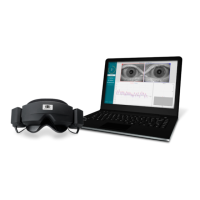
The tests all require the use of the VORTEQ™ IMU.
3.9.2.1 Dynamic Visual Acuity
This test does not require any goggle. Ensure the chair is in the sitting position and locked. Attach the
VORTEQ
TM
IMU to the headband. Before starting the test, the patient will establish his/her static acuity by
correctly defining the C character without shaking the head. The test will then proceed with testing each
direction while the patient shakes his/her head to the sound of a metronome. Have the patient smoothly
shake his/her head side to side for horizontal testing or up and down for vertical testing.
3.9.2.2 Lateral Head Roll
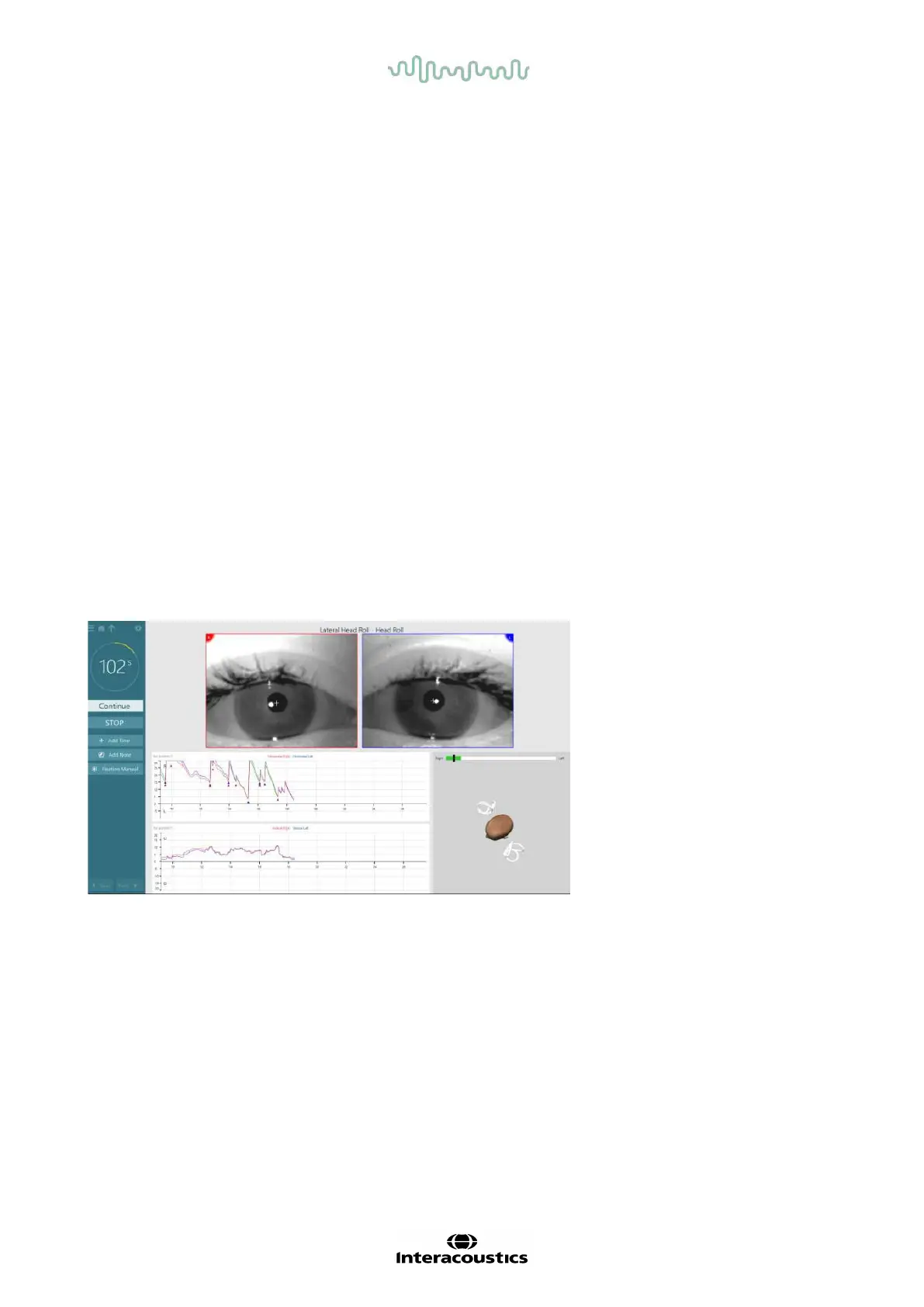
The Lateral Head Roll test is performed to identify horizontal canal BPPV, and includes the 3D head model
guide to assist in proper head placement during the test.
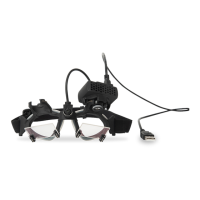
Make sure the VORTEQ™ IMU is attached to the goggle and turned on. The test is performed with the
patient supine (laying down).
1. Turn the patient’s head 45 degrees toward the right.
2. Turn the patient’s head 45 toward the left.
The black bar represents the head movement and when the head is in the correct position, the shaded area
will turn green. Once you have reached the first position, you can record for a minimum of 20 seconds. Then,
press enter and proceed to the second step. Record another 20 seconds at minimum and then stop the test.
When you have completed the test, a summary screen will appear with bar graphs representing any
nystagmus that was generated during the maneuver. Any nystagmus greater than 6 deg/sec is highlighted in
grey and represents an abnormal finding.





 To Next Page