–
76
–
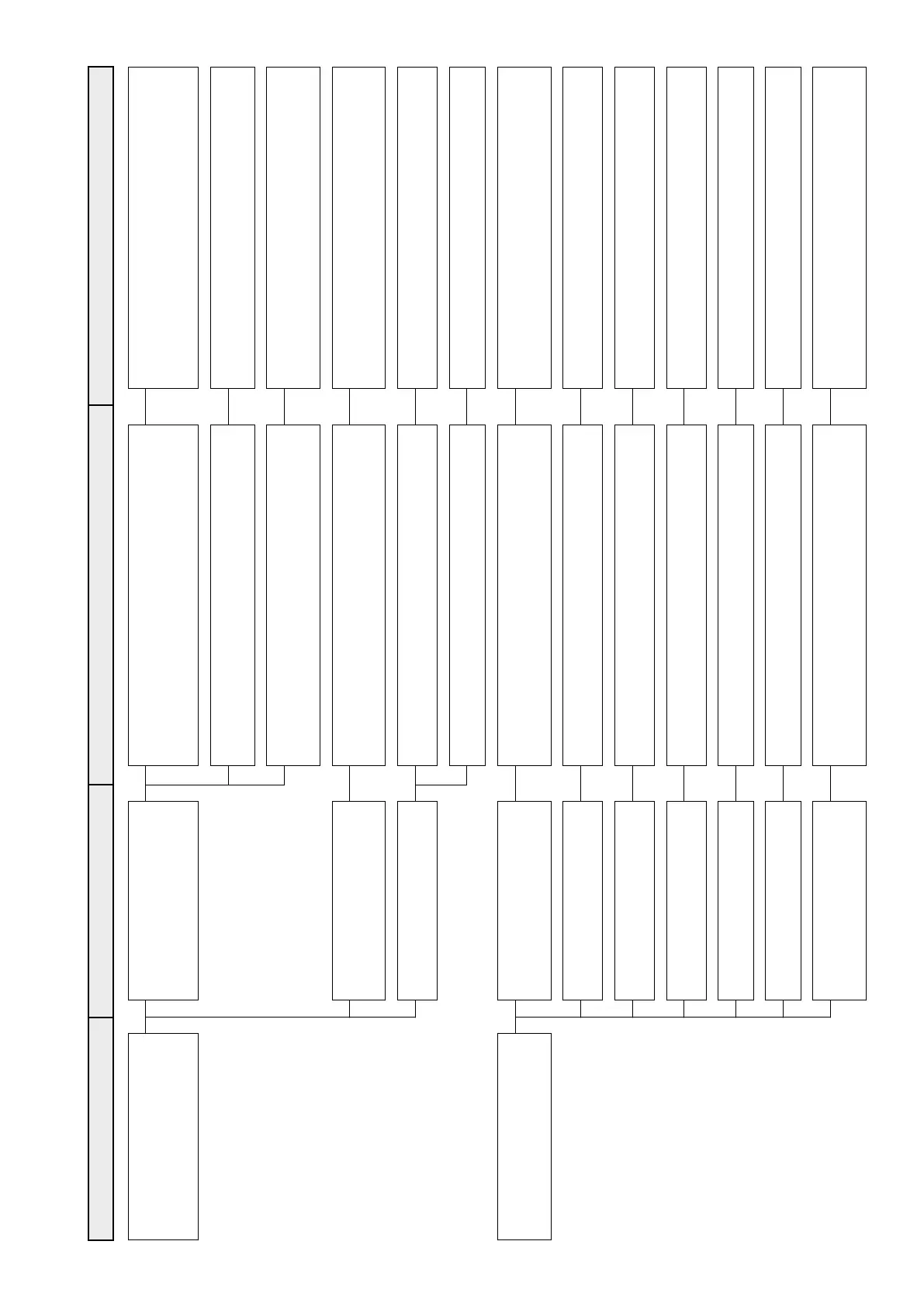
Trouble Case (1) Case (2) Check and Corrective measures
2. Looper thread breakage 2-1) Thread path 1-A) Scratches, burrs, rust, etc, on the paw of
the throat plate, stitch tongue, looper, looper
thread take-up, thread guide, or tension
discs causes friction.
Remove such scratches, burrs, etc. and carry
out thread path nishing. Replace loopers or
other components which have been deformed,
causing thread breakage.
1-B) Burrs and scratches on the end face of the
thread path pipe.
Deburr or remove scratches from the end face
of the pipe.
1-C) Scratches on the inside of the pipe. Pass the thread to the looper. Then, pull the
thread by hand to check whether the thread is
caught inside the pipe.
2-1) Adjustment of the
looper thread take-up
2-A) The looper thread take-up or thread guide
has been improperly positioned, causing
excessive thread tension.
Refer to the pertinent Standard Adjustment.
2-3) Thread tension 3-A) The looper thread tension is too high. Reduce the tension while checking the tension
balance other looper thread.
3-B) The thread tension controller is poorly ad-
justed.
Adjust the thread tension controller so that the
standard thread tension is obtained.
3. Needle breakage 3-1) Needle entry 1-A) The needle entry has not been correctly
adjusted, and the needle strikes the throat
plate or presser foot.
Correct the needle entry.
3-2) Upper looper position 2-A) The upper looper juts out too much or it is
too low.
Refer to the pertinent Standard Adjustment.
3-3) Contact with the loop-
er
3-A) The needle strikes the looper, resulting in
needle breakage.
Adjust the looper so that it does not strike the
needle.
3-4) Needle guards 4-A) A needle guard has been improperly posi-
tioned, causing the needle point to strike it.
Refer to the pertinent Standard Adjustment.
3-5) Needle No. 5-A) The needle is too thin for the materials. Replace the needle with a thicker one.
3-6) Thread tension 6-A) The thread tension is too high. Reduce the thread tension.
3-7) Height of the feed dog
or needle
7-A) The feed dog is too high, or the needle is
too low, causing the needle to deect with
resultant needle breakage.
Refer to the pertinent Standard Adjustment.



 To Next Page