TP-6835 9/1712 Section 2 Installation
2.2.3 Storage
Store the transfer switch in its protective packing until
final installation. Protect the transfer switch at a ll times
from moisture, construction grit, and metal chips. Avoid
storage in low-temperature and high-humidity areas
where moisture could condense on the unit. See
Figure 2-2 for acceptable storage temperatures.
Environmental Specifications
Operating Temperature -- 2 0 Cto70C(--4F to 158F)
Storage Temperature -- 4 0 Cto85C(--40F to 185F)
Humidity 5% to 95% noncondensing
Figure 2-2 Environmental Specifications
2.2.4 Unpacking
Allow the equipment to warm to room temperature for at
least 24 hours before unpacking to prevent condensation
on the electrical apparatus. Use care when unpacking
to avoid damaging transfer switch components.
Remove dirt and packing material that may have
accumulated in the transfer switch or any of its
components.
Note: Do not use compressed air to clean the transfer
switch. Cleaning with compressed air can cause
debris to lodge in the components and damage
the switch.
Open the enclosure door to remove the lag screws that
secure the enclosure to the wood skid. Remove any
shipping angles before attempting to operate the
transfer switch.
1600--4000 Amp Models
Open the lower front door and remove the two front lag
screws that secure the transfer switch to the skid. Then
remove the lower panel and remove the two rear lag
screws securing the enclosure to the wood skid.
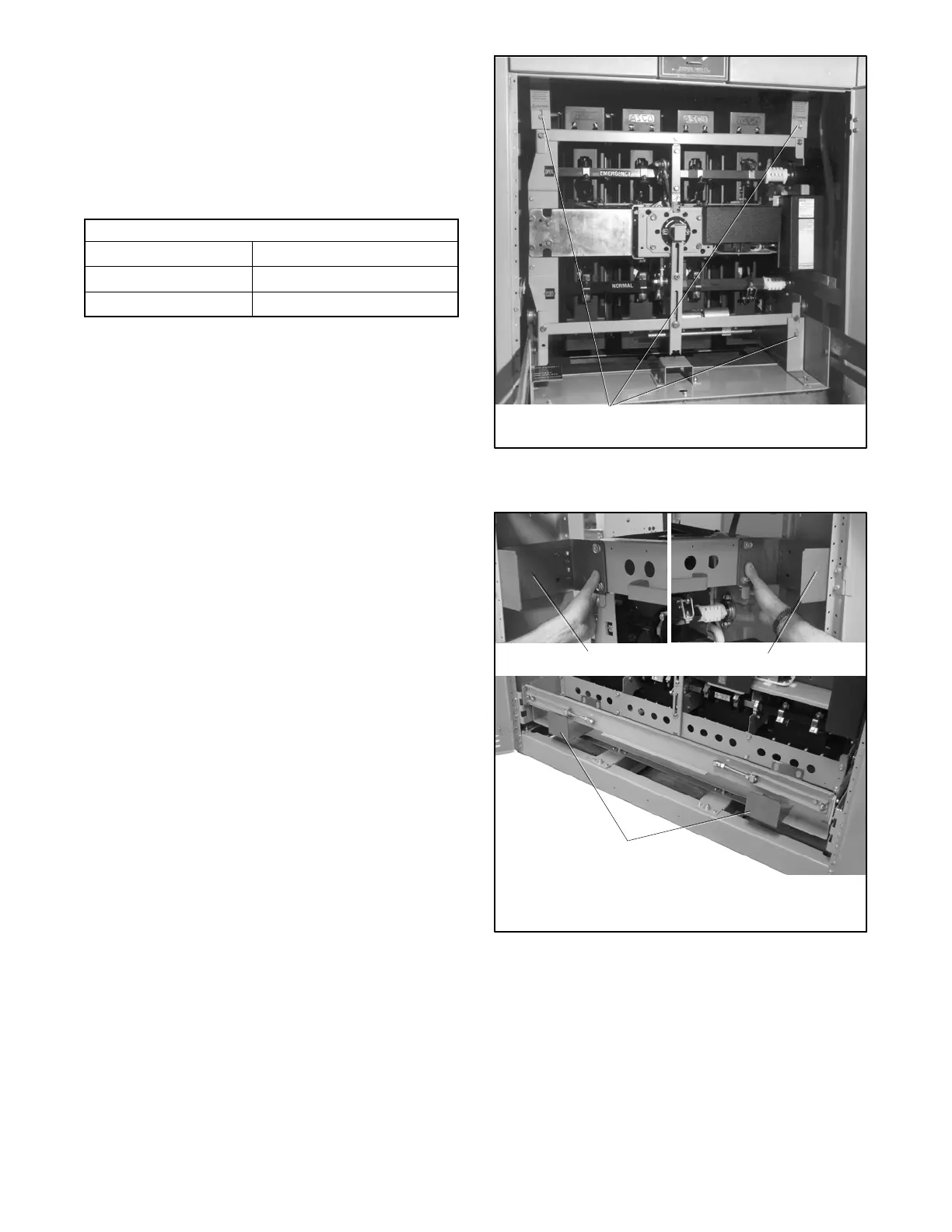
Remove any shipping angles, which are identified by a
yellow sticker, before attempting to operate the transfer
switch. See Figure 2-3.
1
1. Shipping angles, qty.3; remove
132
Figure 2-3 Shipping Angles, 1600-- 3000 Amp
Models
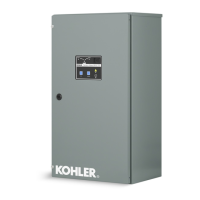
1
132
1. Remove two upper shipping brackets
2. Remove two lower shipping brackets
1
2
Figure 2-4 Shipping Brackets, 4000 Amp Models



 To Next Page