-159- v2.9
Sensors
7.1.7. EMG
Electromyography (EMG) is an electrodiagnostic medicine technique for evaluating and recording the electrical
activity produced by skeletal muscles. EMG is performed using an instrument called an electromyograph, to
produce a record called an electromyogram. An electromyograph detects the electric potential generated by
muscle cells when these cells are electrically or neurologically activated. The signals can be analyzed to detect
medical abnormalities, activation level, or recruitment order, or to analyze the biomechanics of human or animal
movement.
EMG testing has a variety of clinical and biomedical applications. EMG is used as a diagnostics tool for identifying
neuromuscular diseases, or as a research tool for studying kinesiology, and disorders of motor control. EMG
signals are sometimes used to guide botulinum toxin or phenol injections into muscles. EMG signals are also used
as a control signal for prosthetic devices such as prosthetic hands, arms, and lower limbs.
There are two kinds of EMG: surface EMG and intramuscular EMG. Surface EMG assesses muscle function by
recording muscle activity from the surface above the muscle on the skin. Surface electrodes are able to provide
only a limited assessment of the muscle activity. Surface EMG can be recorded by a pair of electrodes or by a
more complex array of multiple electrodes. More than one electrode is needed because EMG recordings display
the potential dierence (voltage dierence) between two separate electrodes. Limitations of this approach are
the fact that surface electrode recordings are restricted to supercial muscles, are inuenced by the depth of the
subcutaneous tissue at the site of the recording which can be highly variable depending of the weight of a patient,
and cannot reliably discriminate between the discharges of adjacent muscles.
7.1.7.1. Sensor features
Description: An electromyograph detects the electrical potential generated by muscle cells when these cells are
electrically or neurologically activated. The signals can be analyzed to detect medical abnormalities, activation
level, recruitment order or to analyze the biomechanics of human or animal movement.
EMG signals are used in many clinical and biomedical applications. EMG is used as a diagnostics tool for identifying
neuromuscular diseases, assessing low-back pain, kinesiology, and disorders of motor control. EMG signals are
also used as a control signal for prosthetic devices such as prosthetic hands, arms, and lower limbs.
This sensor will measure the ltered and rectied electrical activity of a muscle, depending the amount of activity
in the selected muscle.
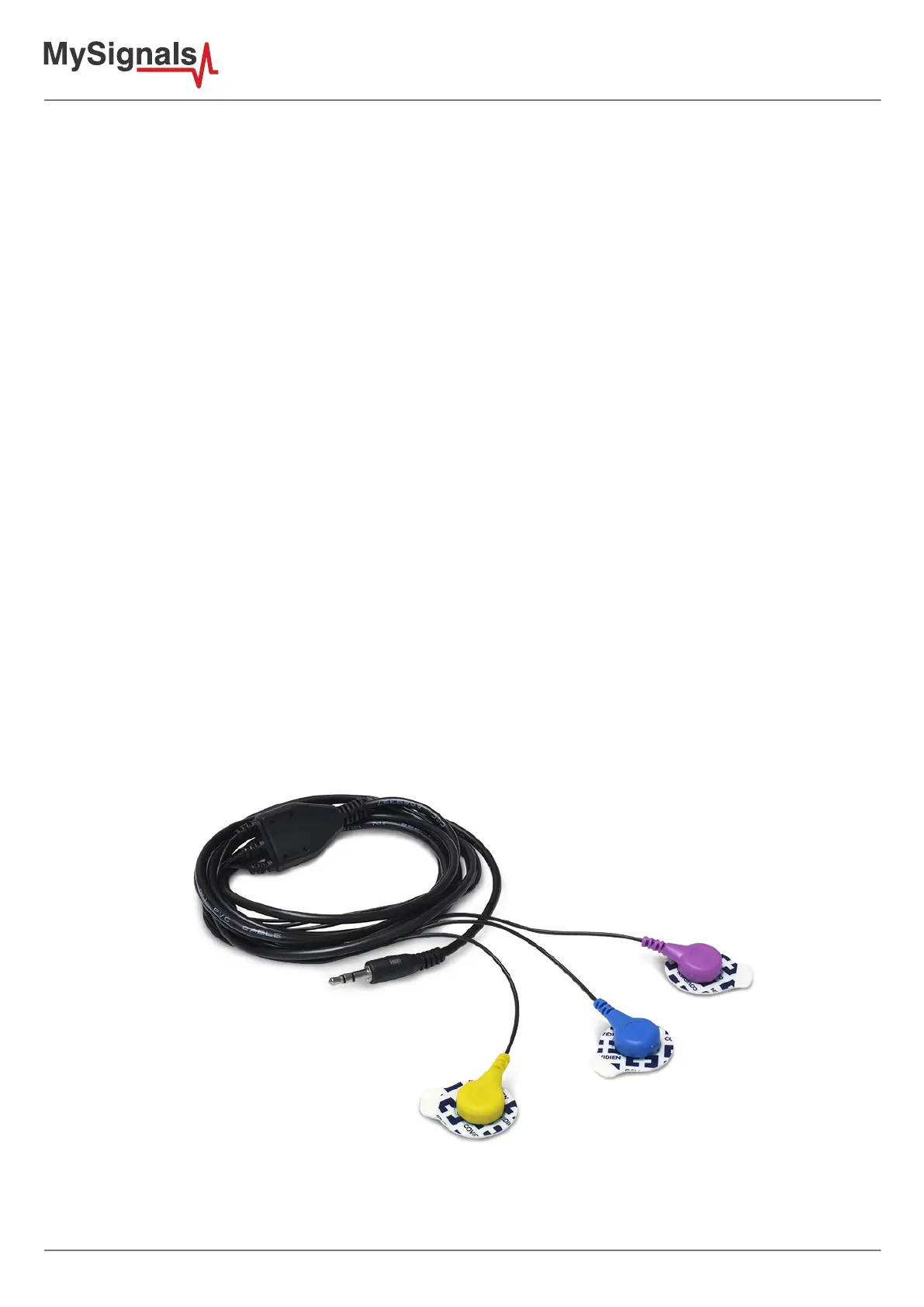
Figure: EMG sensor


 To Next Page