-195- v2.9
Sensors
7.1.10. Body Position
Positions and movements made because of their relationships to particular diseases (i.e., sleep apnea and restless
legs syndrome). Analyzing movements during sleep also helps in determining sleep quality and irregular sleeping
patterns. The body position sensor could help also to detect fainting or falling of elderly people or persons with
disabilities.
7.1.10.1. Sensor features
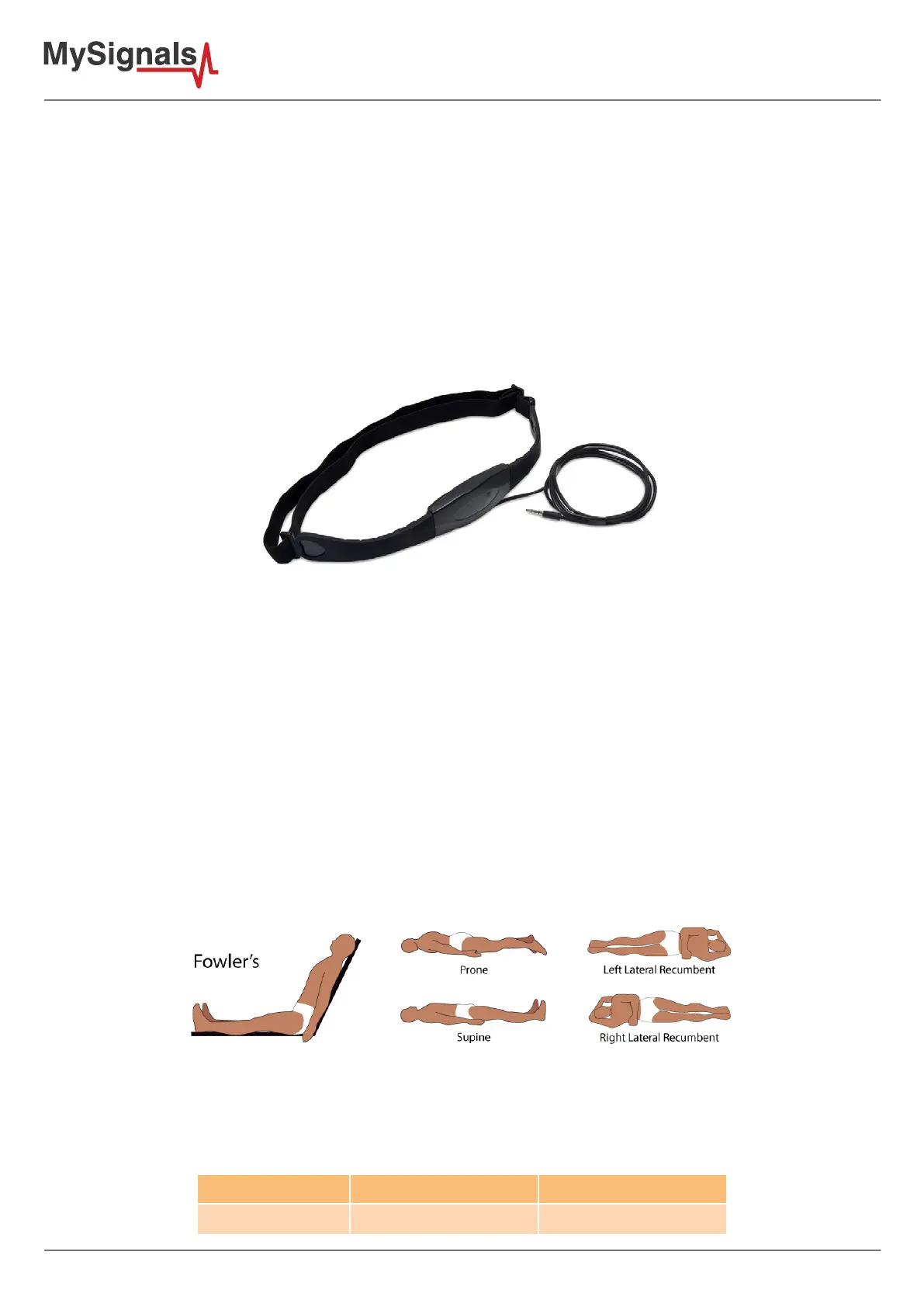
Description: The Patient Position Sensor (Accelerometer) monitors ve dierent patient positions (standing/
sitting, supine, prone, left and right.). Body Position Sensor uses a triple axis accelerometer to obtain the patient's
position.
Figure: Body Position Sensor
Body Position Sensor uses a triple axis accelerometer to obtain the patient's position. It is an ultra small triaxial, low-g
acceleration sensor I2C interface, aiming for lowpower consumer market applications. It allows measurement of
accelerations in 3 perpendicular axes and thus senses tilt, motion, shock and vibration in cell phones, handhelds,
computer peripherals, man-machine interfaces, virtual reality features and game controllers. The sensor needs to
be connected to the specic Body Position jack connector in MySignals board and it works with direct connector
power supply.
The sensor needs to be connected to the specic body position jack connector in MySignals board and it works
with direct connector power supply.
• 2.0-3.6V V supply voltage
• ±2g/±4g/±8g/±16g selectable full-scale
Body positions:
Figure: Human Body Positions
Measurement:
Parameter Unit Range
Body Position Human Body Position 5 dierent positions


 To Next Page