-95- v2.9
Sensors
7.1.2. ECG
The Electrocardiogram Sensor (ECG) has grown to be one of the most commonly used medical tests in modern
medicine. Its utility in the diagnosis of a myriad of cardiac pathologies ranging from myocardial ischemia and
infarction to syncope and palpitations has been invaluable to clinicians for decades.
The accuracy of the ECG depends on the condition being tested. A heart problem may not always show up on the ECG.
Some heart conditions never produce any specic ECG changes. ECG leads are attached to the body while the patient lies
at on a bed or table.
7.1.2.1. Sensor features
Description: The electrocardiogram (ECG) is a diagnostic tool that is routinely used to assess the electrical and
muscular functions of the heart. The sensor use “Continuous telemetry electrocardiogram" for a prolonged
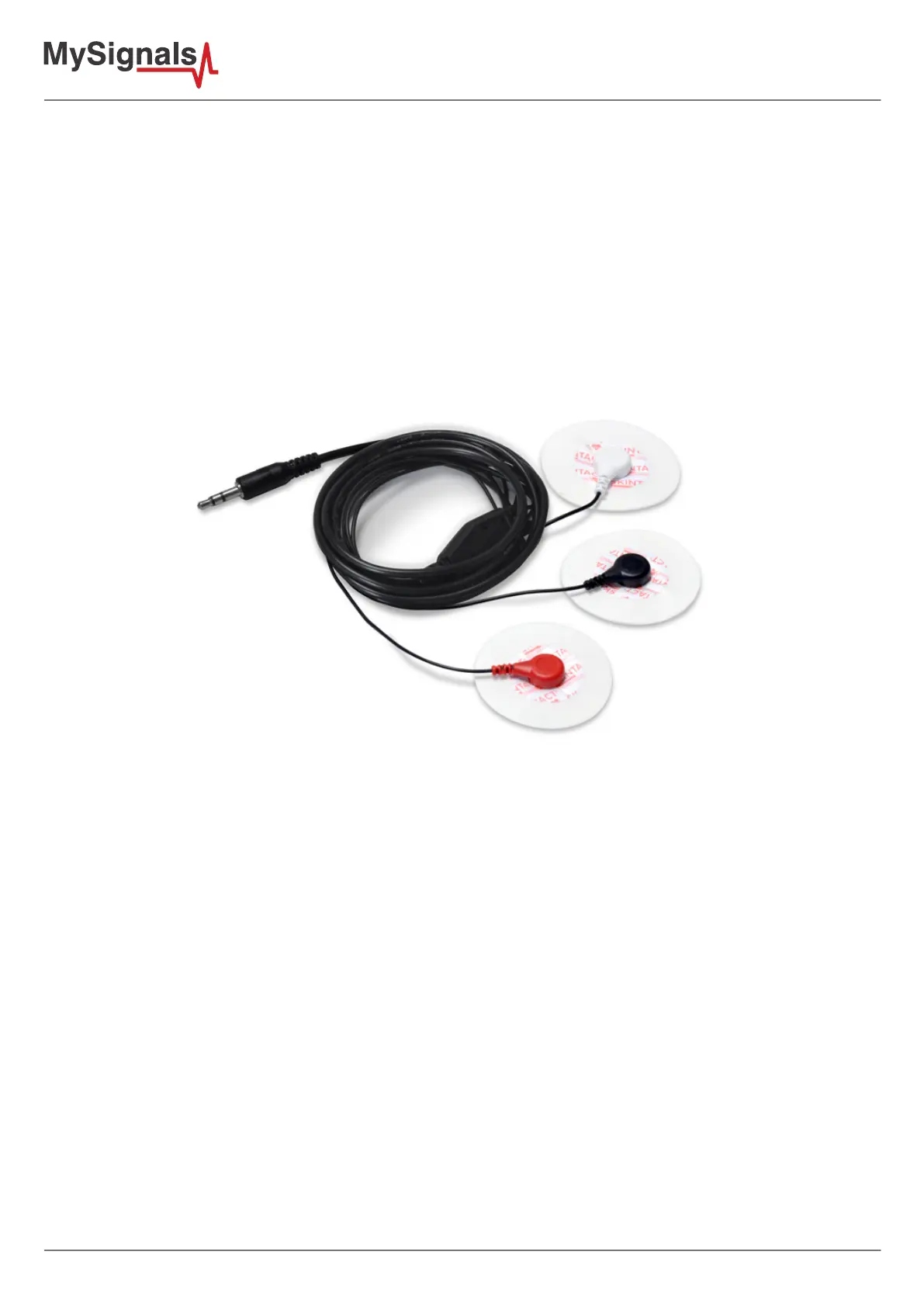
monitoring including the use of three ECG electrodes.
Figure: ECG Sensor
The sensor needs to be connected to the specic ECG jack connector in MySignals board and it works with direct
connector power supply.
What is measured or can be detected on the ECG (EKG)?
• The orientation of the heart (how it is placed) in the chest cavity.
• Evidence of increased thickness (hypertrophy) of the heart muscle.
• Evidence of damage to the various parts of the heart muscle.
• Evidence of acutely impaired blood ow to the heart muscle.
• Patterns of abnormal electric activity that may predispose the patient to abnormal cardiac rhythm disturbances.
• The underlying rate and rhythm mechanism of the heart.


 To Next Page