2 Deh umidifierde sign
2.1 Productdescription
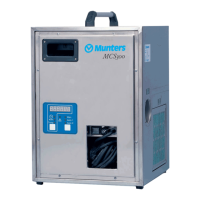
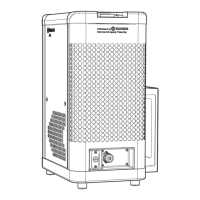
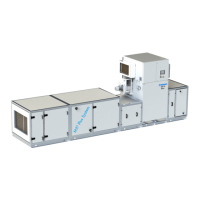
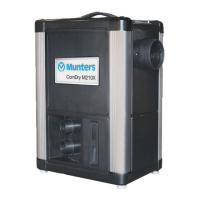
The desiccant dehumidifier has been designed to effectively dehumidify the air in environments requiring
low air humidity.
All functional components are enclosed in a corrosion resistant Aluzink
®
casing (standard) or stainless steel
casing (option) which makes installation and maintenance easy. The unit is constructed on a steel base frame
which allows the use of a fork-lift truck during transportation and installation.
The electrical control system complies with standard EN 60204-1. The electrical components are mounted
on bus bars. The dehumidifier is manufactured according to European standards and the established
requirements for CE-marking.
2.2 Principle ofoperation
1
4
2
3
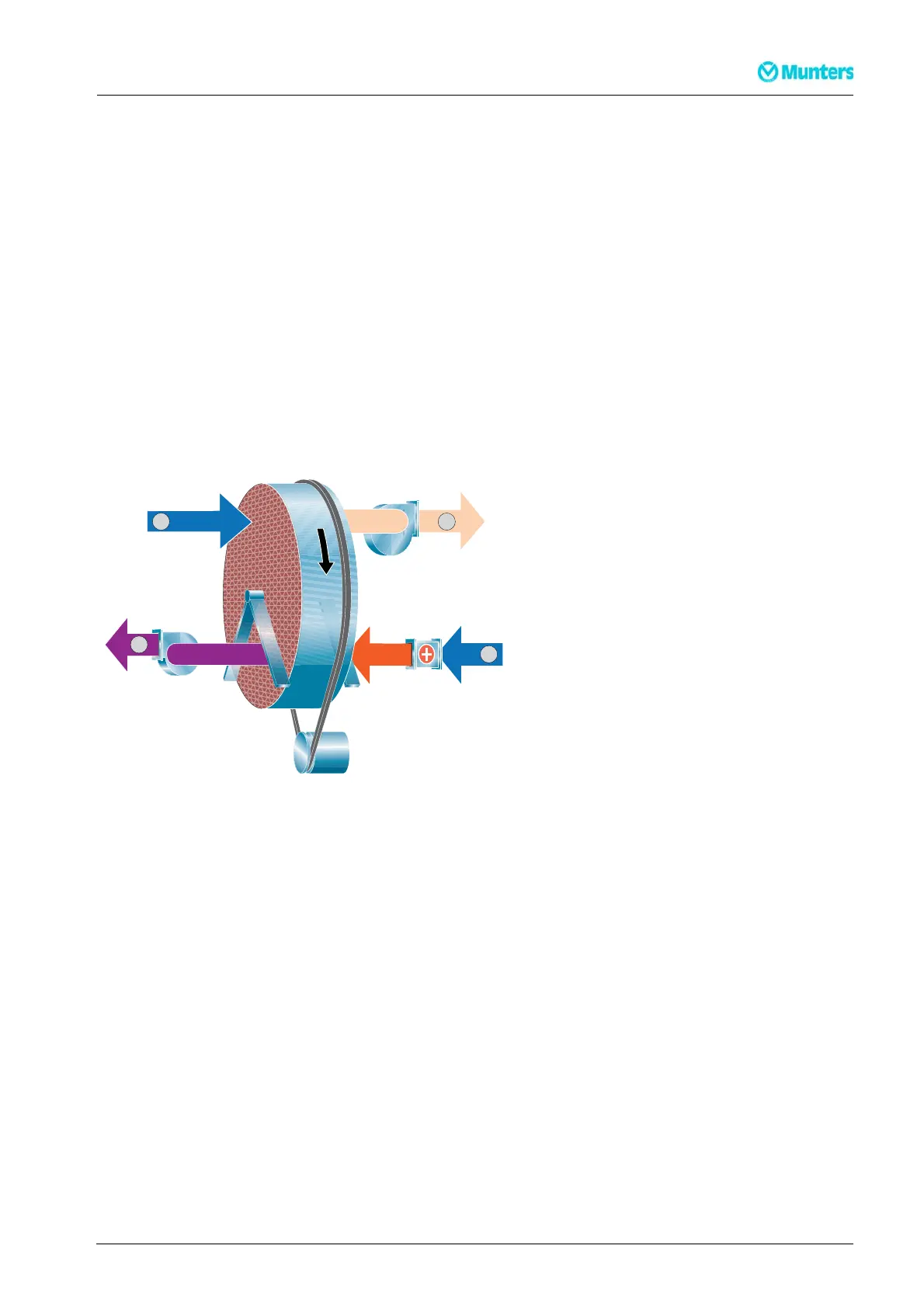
Figure 2.1 R otor principle
1. Process air
2. Dr y air
3. Reactivation air
4. Wet air
The desiccant rotor is the adsorption dehumidifying component in the unit. The rotor structure is
comprised of a large number of small air channels.
The desiccant rotor is made of a composite material that is highly effective in attracting and retaining water
vapour. T he rotor is divided in two zones. The airflow to be dehumidified, p r ocess air, passes through the
largest zone of the rotor and then leaves the rotor as dry air. Since t he rotor rotates slowly, the incoming air
always meets a dry zone on the rotor, thus creating a continuous dehumidification process.
Theairflow tha t is used to dry t he rotor, r e a c tivation air, is heated. T he reactivation air passes through
the rotor in the opposite direction to the process air and leaves the rotor a s wet air (warm, moist air). T h is
principle enables t he dehumidifier to work effectively, even at freezing temperatures.
190TEN–106 5–J1408
Dehumidifierdesign
5


 To Next Page